
How to Choose the Right Storage Container for Extra Home Storage Space
Get more room at home with container solutions
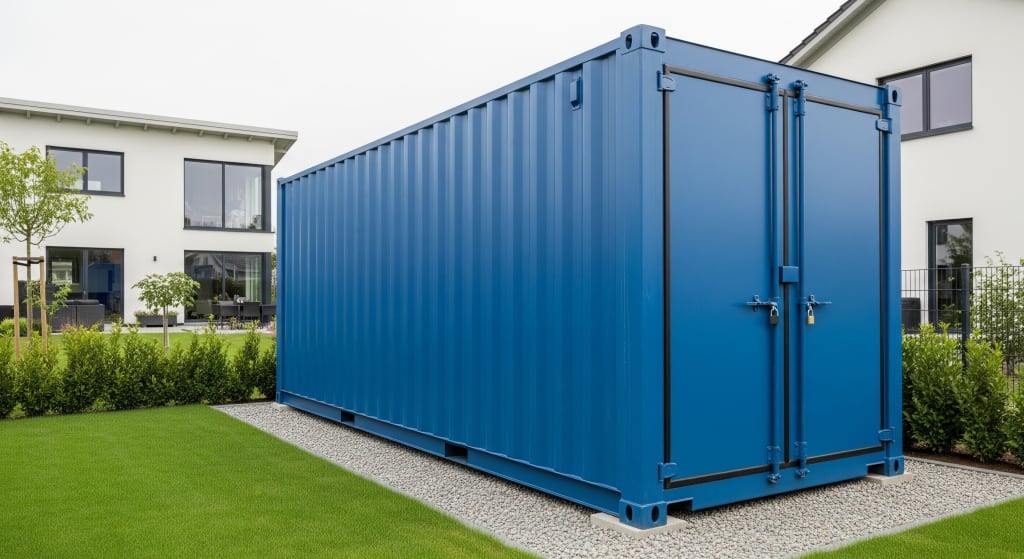
Running out of space at home is a common problem that many homeowners face. Whether it's seasonal decorations, garden tools, sports equipment, or simply accumulated belongings over the years, finding adequate storage can be challenging. Storage containers have emerged as a practical solution that offers flexibility, security, and cost-effectiveness compared to traditional storage alternatives.
Choosing the right storage container involves more than just picking the cheapest option available. The right choice depends on what you plan to store, where you'll place it, and how long you'll need the extra space.
Understanding Different Container Sizes
The most common storage containers are 10-foot and 20-foot units, each serving different storage needs. A 10-foot container provides approximately 80 square feet of floor space, making it ideal for smaller households or specific storage needs like garden equipment, bicycles, or seasonal items.
A 20-foot container offers around 160 square feet and can accommodate the contents of a small house, including furniture, appliances, and boxes. This size works well for families who need significant extra storage or are downsizing temporarily. For those with limited space or specific needs, 8-foot containers are also available, though they're less common and can be harder to find.
if you don't have the space at home for a 20 foot storage container, consider using an external storage facility where you can rent the container size you need and for a small monthly amount you have store your stuff here.
New vs. Used: Making the Right Choice
New containers offer pristine condition, consistent appearance, and often come with warranties. They're ideal if the container will be visible from the street or if you plan to modify it significantly. However, new containers come at a premium price that may not be justified for basic storage needs.
Used containers can provide excellent value for money. Most have only been used for shipping for a few years and remain structurally sound and weather-tight. The exterior may show signs of wear, rust spots, or dents, but these cosmetic issues don't affect functionality. For many homeowners, a used container offers the perfect balance of affordability and reliability.
When considering used containers, inspect them carefully for structural integrity, door operation, and weather sealing. Minor surface rust is normal and acceptable, but avoid containers with holes, significant structural damage, or doors that don't close properly.
Read more - What you can do with a standard container
Ground Preparation and Placement
Proper placement is crucial for container longevity and accessibility. The ground should be level, well-drained, and able to support the container's weight when fully loaded. A 20-foot container can weigh up to 67,000 pounds when filled to capacity.
Concrete pads provide the most stable foundation but represent a significant investment. Gravel pads offer good drainage and stability at a lower cost. Ensure the gravel is compacted and level to prevent the container from settling unevenly over time. Consider access routes for delivery and your own use. The delivery truck needs adequate space to maneuver, and you'll want convenient access to the container doors. Think about lighting, security, and how the container's placement affects your property's appearance and functionality.
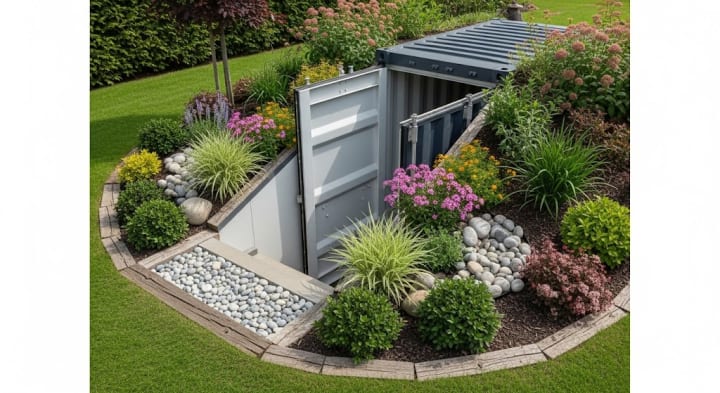
Underground Storage - Creating Hidden Space in Your Garden
For homeowners seeking a more discreet storage solution, burying a container partially or completely underground can create substantial hidden storage space. This approach works particularly well for storing items that aren't needed frequently, such as emergency supplies, seasonal equipment, or valuable items requiring extra security.
Underground placement requires significant planning and professional expertise. Proper drainage, waterproofing, and structural support are essential to prevent water damage and soil pressure issues. The container must be reinforced to handle the weight of soil above it, and ventilation systems become critical to prevent moisture buildup and ensure air quality.
Access typically involves installing a secure hatch or stairway system. Many homeowners disguise the entrance with landscaping elements like decorative covers or garden features. While this option requires a larger initial investment due to excavation and reinforcement costs, it provides unmatched security and preserves your property's visual appeal.
Modifications for Better Functionality
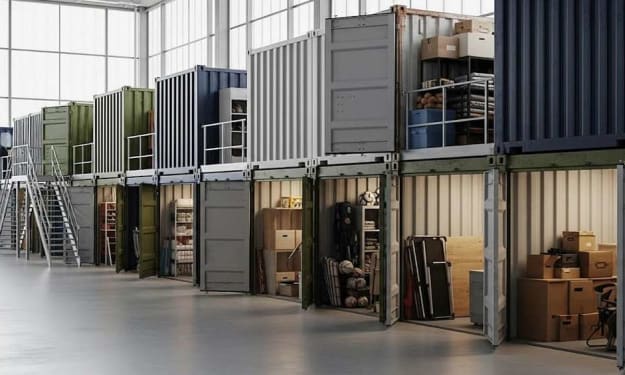
Basic containers can be enhanced with various modifications to improve usability. Additional doors can provide better access to stored items, especially in longer containers where reaching the far end can be difficult. Often you see things like this at container storage facilities.
Windows bring in natural light, making it easier to find items and creating a more pleasant environment if you'll spend time in the container. Ventilation systems help prevent moisture buildup and protect sensitive items from humidity damage. Electrical installations enable lighting, power tools, or climate control systems. Even basic electrical work should be done by qualified professionals to ensure safety and compliance with local codes.
Interior modifications like shelving, hooks, and organizational systems maximize storage efficiency. Consider your specific storage needs when planning these additions – heavy items need sturdy lower shelves, while frequently accessed items should be at eye level.
Security and Weather Protection
Security features should match the value of items you're storing. Basic padlocks provide minimal security, while heavy-duty locks and security systems offer better protection for valuable items. Some homeowners install motion-sensor lighting or security cameras around their storage containers.
Weather protection goes beyond the container's basic weather resistance. Moisture control through ventilation or dehumidifiers protects sensitive items like electronics, documents, or fabric goods. For extreme climates, insulation and climate control systems may be necessary to maintain stable conditions inside the container.
Regular maintenance extends your container's life and protects your stored items. Check door seals, inspect for rust spots, and ensure proper drainage around the container foundation. Small maintenance tasks now can prevent costly problems later and keep your extra storage space functional for years to come.
About the Creator
Keep reading
More stories from Sommersang and writers in 01 and other communities.
Why you should consider container storage facilities
Running out of space at home creates stress for countless families who struggle to balance keeping cherished belongings with maintaining comfortable living areas. Seasonal decorations pile up in closets, children's outgrown toys overflow from bedrooms, and hobby equipment transforms garages into obstacle courses. Traditional storage solutions often prove inconvenient, requiring multiple trips to distant facilities or forcing you to part with items you're not ready to lose.
By Sommersang8 months ago in 01
Telemedicine App Development Cost: 2026 Pricing Guide
Building a telemedicine app in 2026 feels like a high-stakes poker game. I have seen founders dump 200k into a platform only to realize their video lag is terrible. It is a tough pill to swallow when users start deleting your hard work.
By Sherry Walker6 days ago in 01
The Metal Horn Unicorns Make Science Magical: A Creative Gateway to the Periodic Table
Learning the periodic table can feel intimidating to many students when it is presented as a dense grid of symbols, atomic numbers, and unfamiliar terminology. Yet chemistry itself is full of wonder: elements form the building blocks of everything in the universe, from the oxygen we breathe to the gold in jewelry and the silicon in our electronics. When science education taps into imagination, storytelling, and creativity, students often discover that the periodic table is not merely a chart to memorize but a fascinating map of the natural world. This is exactly where The Metal Horn Unicorns Make Science Magical—a unique STEM resource—steps in.
By Bushra Rajpootabout 12 hours ago in 01



Comments