
How to Choose a Concrete Batching Plant That Maximizes ROI
Smart Selection Strategies to Help You Invest in the Right Concrete Batching Plant for Long-Term Profitability and Operational Efficiency

Investing in a concrete batching plant is a significant step for any contractor, construction firm, or materials supplier. While the primary goal is to produce high-quality concrete, the deeper objective is to achieve maximum return on investment (ROI)—through faster project completion, reduced operational costs, minimal downtime, and long-term profitability.
Choosing the right concrete batching plant can determine the success or strain of your concrete production operations. This article explores key considerations that help you select the most suitable plant type, capacity, and features to maximize ROI in your specific business context.
1. Define Your Operational Needs Clearly
The first step in maximizing ROI is understanding your actual needs. Ask:
What type of projects are you serving (residential, infrastructure, precast, etc.)?
How much concrete do you need daily/weekly/monthly?
Will the plant be in one location or need to move between job sites?
Are you working in an urban or remote area with logistical challenges?
This information will influence your decision between stationary, mobile, or compact plants, as well as the required output capacity (measured in m³/h).

2. Choose the Right Type of Plant
a. Stationary Batching Plant
Ideal for high-volume, long-term projects or commercial concrete production businesses. They offer high productivity and automation but require permanent foundations and a dedicated space.
b. Mobile Batching Plant
Best suited for short-term projects or construction firms that frequently move locations. They have lower setup times and relocation costs but may have slightly lower output compared to stationary setups.
c. Mini/Compact Plant
If you're entering the business or serving small-scale jobs (like rural construction or housing projects), compact concrete batching plants offer low initial cost, fast ROI, and ease of operation.
ROI Tip: Match plant type to your core business model to avoid overinvestment or underutilization.
3. Prioritize Automation and Control Systems
While manual plants may cost less initially, they significantly increase the risk of human error, material waste, and inconsistent quality. Investing in semi-automatic or fully automatic PLC-based control systems:
Improves batch accuracy and quality
Reduces labor dependency
Increases batch output per hour
Enhances operator safety
Supports real-time data logging and remote monitoring
The upfront cost of automation is offset by higher productivity and lower long-term operating costs, significantly boosting ROI.
4. Evaluate the Mixer Type and Performance
The mixer is the heart of a batching plant. Choose the right one based on your project needs:
Twin Shaft Mixer: High-intensity mixing for precast and infrastructure jobs
Planetary Mixer: Ideal for high-strength, uniform mixes
Single Shaft or Pan Mixers: Suitable for small to medium volumes and general projects
A durable, high-performance mixer ensures consistent concrete quality and reduces maintenance frequency—contributing directly to plant uptime and profitability.
5. Consider Material Handling and Storage Solutions
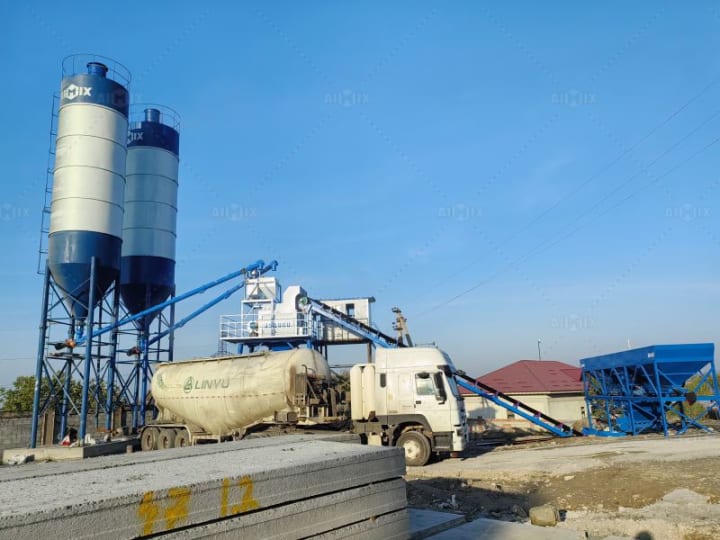
Efficient material flow is critical. Choose appropriate configurations for:
Aggregate batching bins (number and capacity)
Cement silos (on-ground or bolted)
Weighing systems (digital load cells for precision)
Conveyors or skip hoists for transport
Optimizing material storage and feeding speeds up cycle time and minimizes waste—key to maximizing throughput and profits.
6. Assess Mobility, Setup Time, and Transport Costs
For mobile or compact batching plants, factor in:
Transport cost and permits
Setup/disassembly time
Ease of integration with existing site layout
A plant that can be quickly mobilized and installed without heavy civil work saves days of idle time—translating to faster revenue generation and better ROI, especially on short-duration projects.
7. Energy Efficiency and Environmental Compliance
Modern batching plants now offer energy-saving components like:
Efficient motors and drives
Dust collection systems
Recycled water systems
Sound insulation and enclosures
These not only reduce environmental impact but also lower operating costs, helping you stay compliant and profitable in increasingly regulated markets.
8. Look at After-Sales Support and Spare Parts Availability
Choosing a plant with reliable manufacturer support ensures you avoid expensive downtime due to:
Delays in part replacements
Lack of technician availability
Incomplete training or user manuals
A supplier that provides local service, spare parts, and operator training helps you maintain production efficiency, further enhancing ROI over the plant's lifespan.
9. Check ROI-Boosting Optional Add-ons
Some optional features, though not essential, can yield major returns:
Moisture sensors for better water-cement ratios
Additive dosing systems for specialized concretes
Remote monitoring modules to track performance and maintenance
Mobile app integration for real-time control
While these add costs upfront, they pay off through quality assurance, material savings, and lower rework rates.
10. Calculate ROI Holistically
Don’t just look at the sticker price of the plant. Consider:
Initial investment
Setup and transport cost
Daily output capacity
Running and maintenance costs
Labor requirements
Average project revenue
A plant that costs more but runs faster, wastes less, and produces better concrete can deliver a faster and more sustainable return on your investment.

Conclusion
Choosing the right concrete batching plant isn't just a technical decision—it's a strategic business move. By aligning the plant's features with your project scope, location, volume, and budget, you can achieve better production efficiency, lower operating costs, and faster revenue generation.
In short, the smartest investment is not necessarily the cheapest, but the one that delivers consistent performance, reliability, and long-term value. Evaluate your options carefully—and let your ROI guide the way.
About the Creator
consrtuctionmachines
AIMIX is a customer-center-oriented heavy equipment manufacturer and supplier, devoted to production, innovation, combination, one-stop solution, etc.
https://aimixgroup.com/
Keep reading
More stories from consrtuctionmachines and writers in 01 and other communities.
Automated Lubrication Systems for Concrete Mixer Bearings
Concrete mixers are vital in construction projects. Their efficiency and longevity depend largely on regular maintenance. One crucial aspect is the lubrication of mixer bearings. Automated lubrication systems offer a reliable solution. They enhance the performance of self loading, mobile, and standard concrete mixers. This article explores the benefits and applications of these systems.
By consrtuctionmachines9 months ago in 01
Cutting Software Maintenance Costs by 30% in Long-Term Medical Device Lifecycles
In the fast-evolving healthcare technology landscape, medical device makers are under increasing pressure to deliver innovative, safe, and compliant solutions while keeping costs manageable over a product’s lifecycle. One of the biggest cost centers in long-term medical device operations is software maintenance—especially as devices become smarter, more connected, and driven by digital controls.
By Steve Waugh3 days ago in 01
Why Infrastructure as Code Is Becoming Standard Practice?
A decade ago, provisioning infrastructure often meant opening a ticket. An engineer would request a virtual machine. Operations would configure networking rules manually. Security would review firewall policies. Days or weeks later, the environment would be ready.
By Nick William4 days ago in 01



Comments
There are no comments for this story
Be the first to respond and start the conversation.