
How SolidWorks 3D Modeling Improves Collaboration Between Designers & Manufacturers
The Future of Engineering Collaboration Starts With SolidWorks 3D Modeling

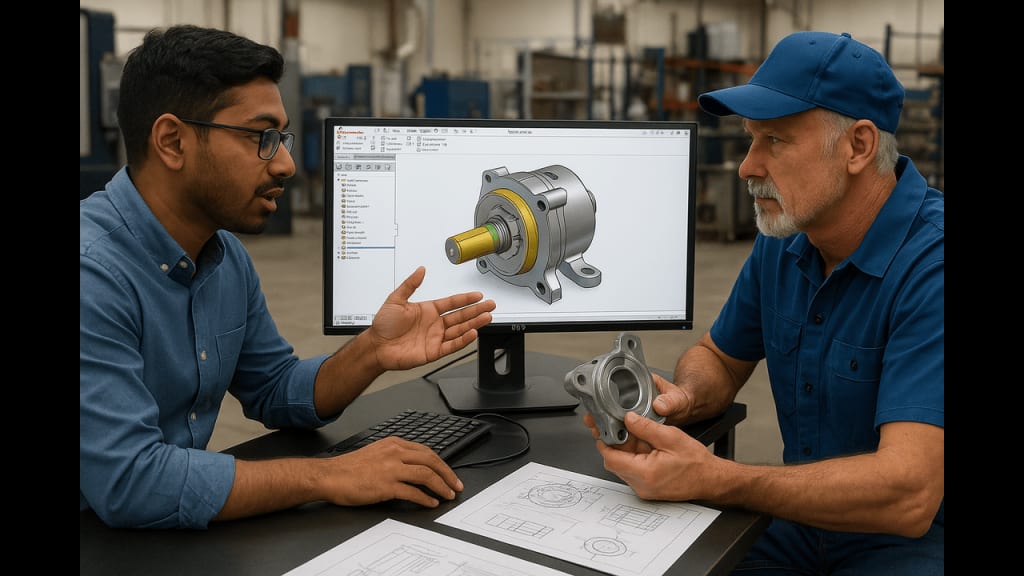
In today’s fast-paced engineering and manufacturing world, collaboration is no longer optional it’s a necessity. Design teams, manufacturers, and stakeholders must work together seamlessly to bring innovative products to market faster and with fewer errors. One of the most powerful tools driving this change is SolidWorks 3D modeling services.
As a leading software for 3D modeling, SolidWorks has transformed how design data is shared, reviewed, and modified. By enabling designers and manufacturers to work in harmony, this technology reduces costly mistakes, streamlines processes, and accelerates product delivery. But how exactly does SolidWorks bridge the gap between design intent and manufacturing execution? Let’s dive in.
What Makes SolidWorks Essential for Collaboration?
SolidWorks isn’t just a 3D product modeling software it’s a collaborative platform. Unlike traditional 2D designs, which often leave room for misinterpretation, 3D CAD modeling services provide a visual, interactive model that everyone involved can understand.
Some key benefits include:
- Real-time visualization: Stakeholders can review designs before production.
- Data consistency: A single source of truth avoids version conflicts.
- Ease of modification: Rapid iterations allow teams to adjust designs quickly.
- Cross-departmental use: Engineers, product managers, and manufacturers can all access relevant data.
These features create a transparent workflow where every decision is clear, traceable, and validated.
Why Is 2D Not Enough for Modern Manufacturing?
For decades, 2D drawings were the backbone of engineering communication. But in today’s complex manufacturing ecosystem, they come with limitations:
- Risk of misinterpretation due to lack of depth or perspective.
- Extra time required to translate 2D plans into manufacturable parts.
- Increased likelihood of errors when scaling or modifying designs.
- Limited ability to simulate real-world performance.
This is where SolidWorks 3D modeling services excel by creating a common language that both designers and manufacturers can easily understand.
How Does SolidWorks 3D Modeling Improve Communication?

Effective communication is at the heart of collaboration. With CAD 2D to 3D conversion and SolidWorks-based modeling, teams gain:
- Interactive 3D views: Manufacturers can rotate, zoom, and analyze every angle.
- Clear assembly instructions: Exploded views reduce confusion on shop floors.
- Built-in design intent: Constraints and parameters communicate the "why" behind decisions.
By reducing the ambiguity often found in 2D drawings, SolidWorks minimizes misunderstandings and prevents costly production delays.
What Role Does Simulation Play in Collaboration?
One of SolidWorks’ biggest strengths lies in its simulation capabilities. Before a product reaches the factory floor, design teams can run stress tests, material performance checks, and tolerance analyses.
For manufacturers, this means:
- Fewer surprises during production.
- Reduced need for physical prototypes.
- Assurance that parts will perform as intended.
According to Engineering.com, virtual prototyping can reduce product development costs by up to 30%, while accelerating time-to-market. This not only saves money but also builds confidence between design and manufacturing teams.
How Does SolidWorks Enable Concurrent Engineering?
Traditional engineering often followed a linear process: design → review → prototype → manufacture. But this method slows down production and leaves room for late-stage errors.
With SolidWorks 3D modeling services, teams can adopt concurrent engineering, where design and manufacturing occur in parallel. Benefits include:
- Faster feedback loops between departments.
- Early identification of manufacturability issues.
- Shorter product development cycles.
A report by PTC found that concurrent engineering can cut product launch times by nearly 40%. This speed advantage gives businesses a competitive edge.
Can SolidWorks Support Global Collaboration?
Yes SolidWorks isn’t confined to local teams. In today’s interconnected world, businesses often work with suppliers and manufacturers spread across continents. SolidWorks facilitates this by:
- Cloud-based data sharing for secure access.
- Version control to ensure everyone works with the latest model.
- Standardized file formats for easy integration with CNC machines and other tools.
This global accessibility is crucial for companies operating in the UK engineering sector, where outsourcing and cross-border collaboration are increasingly common.
What Are the Cost-Saving Benefits?
Adopting 3D CAD modeling services powered by SolidWorks can significantly reduce costs in engineering projects. Some savings include:
- Reduced rework due to fewer design errors.
- Lower prototyping expenses through digital testing.
- Optimized material usage with precise modeling.
- Shorter production timelines, which means faster revenue.
According to Tech-Clarity, companies using 3D modeling see an average 21% reduction in engineering change orders (ECOs)—a major cost driver in manufacturing.
How Does SolidWorks Foster Innovation?
Collaboration isn’t just about efficiency it’s about sparking new ideas. With SolidWorks, designers and manufacturers can brainstorm together in real time. For example:
- Manufacturers can suggest easier production methods early in the design stage.
- Designers can adapt concepts quickly based on shop-floor feedback.
- Cross-functional teams can co-create solutions tailored to customer needs.
This shared innovation process often leads to more creative, practical, and market-ready products.
What Are the Challenges of Adoption?
While the benefits are clear, transitioning to SolidWorks 3D modeling services may come with challenges:
- Training needs: Teams must be skilled in using the software.
- Initial investment: Licensing costs can be significant.
- Change management: Shifting from 2D workflows requires cultural adaptation.
However, these barriers are temporary. The long-term ROI of enhanced collaboration and reduced errors outweighs the upfront challenges.
Future Trends: Where Is SolidWorks Heading in 2025?
The CAD industry is evolving rapidly, and SolidWorks is leading the charge. Some upcoming trends include:
- AI-powered design automation for faster iterations.
- Cloud-based collaboration hubs for global teams.
- AR/VR integration to visualize designs in real-world contexts.
- Sustainable design tools to minimize environmental impact.
These innovations will further strengthen collaboration, making SolidWorks indispensable for businesses in the UK and worldwide.
Conclusion:
SolidWorks is more than just a 3D product modeling software it’s a collaborative ecosystem that brings designers and manufacturers together. By reducing errors, cutting costs, and enabling real-time communication, SolidWorks 3D modeling services are helping businesses thrive in an increasingly competitive landscape.
For companies looking to stay ahead in 2025 and beyond, investing in 3D CAD modeling services is not just a smart move it’s essential. And when guided by a leading CAD design company in the UK, the potential for innovation and growth becomes limitless.
About the Creator
Shalin Designs
Shalin Designs is a leading CAD design and drafting service provider company. We serve product design, CAD drafting, 3D CAD modeling, or sheet metal design and we specialize in all engineering design services.
Keep reading
More stories from Shalin Designs and writers in 01 and other communities.
Exploring the Future of Millwork CAD Drawings in Furniture and Interior Design
As digital transformation continues to shape architecture, furniture design, and interior construction, one area seeing rapid innovation is Millwork CAD Drawings. Whether in commercial office fit-outs or custom residential interiors, detailed millwork design has evolved from hand sketches to precision-based digital renderings. This article explores the future of millwork drafting and how Millwork CAD Drawings are revolutionizing the industries of architecture, furniture design, and interior detailing.
By Shalin Designs6 months ago in 01
Handbags: Function, Fashion, and the Rise of Modern Alternatives
Handbags are among the most enduring accessories in human history. Originally designed for practicality, they have gradually evolved into items that reflect culture, personal taste, and social change. Today, handbags exist across a wide spectrum—from everyday functional pieces to luxury-inspired designs and replicas—each serving a different purpose in modern life.
By charliesamuel2 days ago in 01
Understanding Custom Watch Straps and the Cartier Pasha Quick-Release Design
A watch strap is more than a functional component—it plays a defining role in comfort, durability, and personal expression. According to general horology references, a watch strap connects the timepiece to the wrist while influencing how the watch feels and looks in everyday use. In recent years, interest in custom watch strap support has grown, particularly among owners of luxury watches who want adaptability without compromising craftsmanship.
By charliesamuel2 days ago in 01


Comments