
How Social Media Is Quietly Rewiring Your Brain
The Hidden Cognitive Shifts Behind Every Scroll, Swipe, and Like

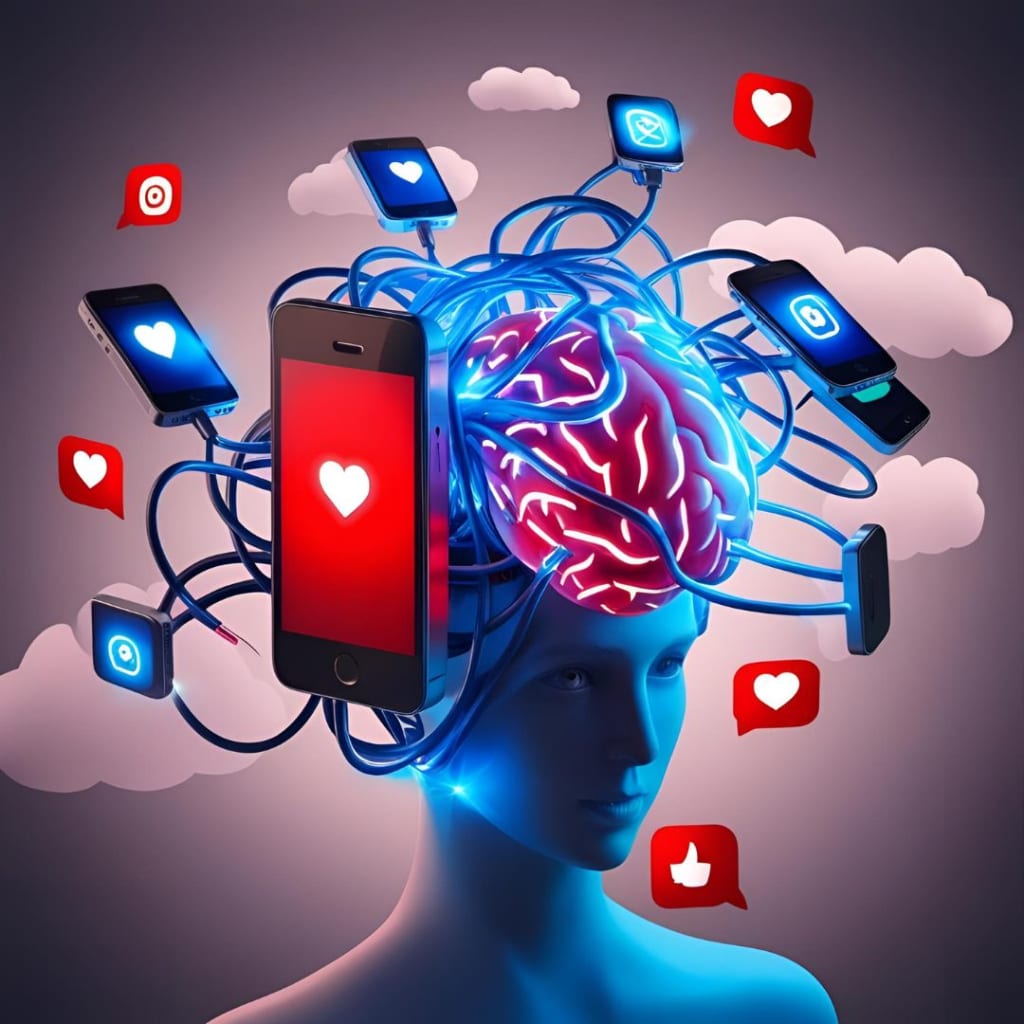
In the past two decades, social media has transformed from a niche networking tool into a daily ritual for billions. Platforms like Instagram, TikTok, Twitter (now X), and Facebook have become more than just communication hubs—they’re digital ecosystems shaping how we think, feel, and behave. While much of the focus has been on privacy, misinformation, and mental health, a quieter but more profound transformation is taking place: social media is literally rewiring our brains.
The Dopamine Loop
At the center of this neuroplastic remolding is dopamine—a pleasure and reward neurotransmitter. Each time you get a like, comment, or new follower, your brain receives a small hit of dopamine. This system, much like that experienced in gambling or drug addiction, produces a feedback loop that makes users return again and again.
The "variable reward" mechanism is central: you have no idea when the next alert is going to arrive, so each time it happens is a surprise. This surprise-ness keeps your brain in high gear, looking for updates at all times, much as a rat is pressing a lever in anticipation of food.
Shortened Attention Spans
The never-ending torrent of bite-sized content is making it increasingly difficult for our brains to concentrate. Research indicates that our collective attention span has fallen from 12 seconds in 2000 to mere 8 seconds today—lower than that of a goldfish. Sites like TikTok and Instagram Reels live on extreme short videos with maximum impact within seconds, conditioning our brains for instant gratification.
This has real-world consequences. Tasks requiring deep focus—like reading, writing, or critical thinking—are becoming increasingly difficult. Our minds, conditioned by the fast pace of social media, now crave novelty and stimulation at all times.
Altered Memory Processing
Social media also alters how we remember and store information. When we are sure that we can always "look it up" or check a post out later, we trust less in our own memory. This effect, referred to as the Google Effect, or digital amnesia, lowers the brain's motivation to store information in the long term.
Besides, by recording and posting moments on the internet, we might be subverting our own memory development. According to some research, individuals who snap a lot of photos at an event are less likely to recall the event itself—because they're more concerned with creating an image than actually being present.
Social Comparison and Self-Worth
Platforms are built to display highlight reels—vacations, successes, celebrations—while hiding the mundane or hard aspects of life. This creates a perpetual cycle of social comparison, with users comparing themselves to idealized versions of others.
Neurologically, it stimulates areas of the brain associated with social cognition and emotional processing, such as the anterior cingulate cortex and the amygdala. When those areas are over-activated, they may cause anxiety, depression, and even distortions in self-conception. Teenagers and young adults are especially susceptible, as their brains are still in formative stages of development.
Echo Chambers and Cognitive Rigidity
Social media algorithms are designed to present us with content that is consistent with our current preferences and beliefs. Although this may feel gratifying, it decreases exposure to a variety of viewpoints and perpetuates cognitive biases.
In the long term, this can contribute to cognitive rigidity—a decreased ability to change our thinking or even entertain other views. In its most extreme form, it supports ideological polarization and groupthink, diminishing our critical thinking and empathy abilities.
What Can Be Done?
Rewiring isn't bad in and of itself—neuroplasticity, the ability of our brain to change, is a tremendous thing. But knowledge is the first step toward applying it responsibly. Try these strategies:
Mindful Consumption: Establish deliberate time boundaries. Use social media as a tool, not as a default mechanism.
Digital Fasting: Step away from apps so your brain can reboot.
Use Deep Focus Elsewhere: Read full-length articles, work at hobbies, or pursue activities that involve extended concentration.
Curate Your Feed: Subscribe to accounts that inspire or teach, not those that encourage comparison or outrage.
In a world where attention is currency, your brain is the most valuable asset. Guard it accordingly
About the Creator
Muhammad Sohail
Stories have the power to change lives. I aim to transport you to new worlds, ignite your imagination, and leave you thinking long after the final chapter. If you're ready for unforgettable journeys and characters who feel real.
Keep reading
More stories from Muhammad Sohail and writers in 01 and other communities.
Sergey Brin Becomes World’s No. 3 Richest—Overtakes Jeff Bezos, Larry Ellison After Alphabet Hits $4 Trillion
Topline Sergey Brin leapfrogged Oracle’s Larry Ellison and Amazon’s Jeff Bezos on Tuesday to become the world’s third-richest person, ranking again behind fellow Google cofounder Larry Page as parent firm Alphabet stock rallied to its latest milestone.
By Dena Falken Esq5 days ago in 01




Comments
There are no comments for this story
Be the first to respond and start the conversation.