
How Professional Congress Organisers Shape Association Meetings Strategy
How data, research, and expertise from PCOs strengthen association meetings
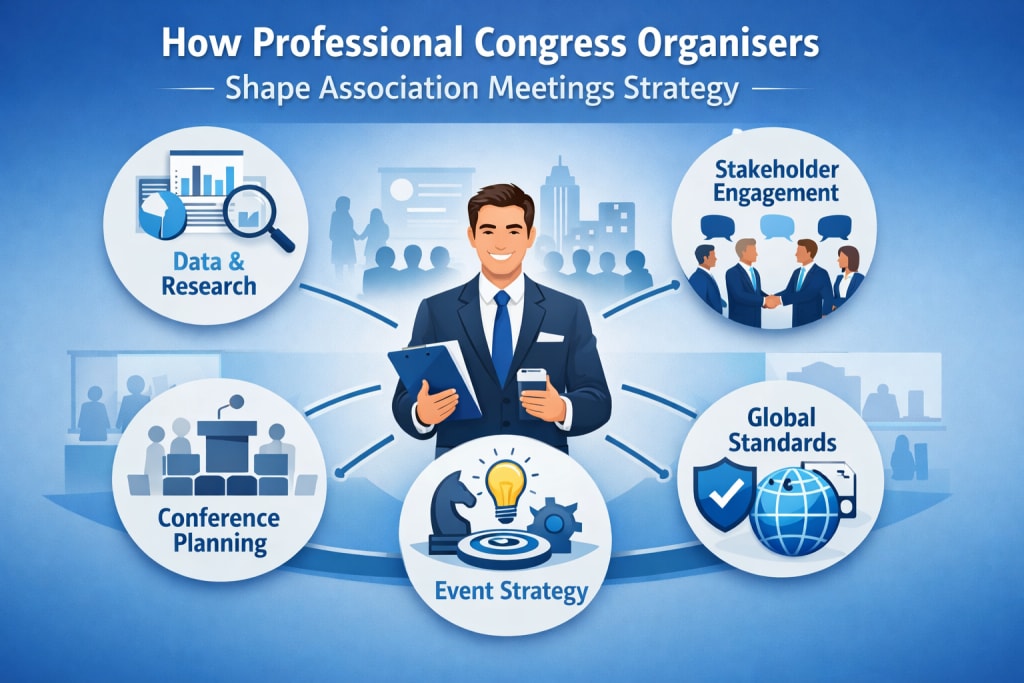
In today’s highly competitive and rapidly evolving event landscape, associations are under increasing pressure to deliver meetings that are not only engaging but also strategically aligned with long-term organisational goals. This is where Professional Congress Organisers (PCOs) play a critical role. Far beyond handling logistics, PCOs have become strategic partners who influence how associations design, plan, and execute their meetings to achieve measurable outcomes.
Understanding the Strategic Role of Professional Congress Organisers
Traditionally, congress organisers were viewed mainly as operational support providers. However, modern Professional Congress Organisers bring a strategic mindset to association meetings. They work closely with association leadership to understand objectives such as member engagement, knowledge exchange, sponsorship growth, and international visibility. By aligning event formats and content with these goals, PCOs help associations transform meetings into strategic assets rather than standalone events.
PCOs also offer continuity and institutional knowledge. Many associations host recurring annual or biennial congresses, and Professional Congress Organisers provide long-term planning insights that ensure each edition builds on the success of previous ones.
Data-Driven Association Meetings Strategy
One of the most significant ways Professional Congress Organisers shape Association Meetings Strategy is through data and research. PCOs analyse past event performance, attendee feedback, registration patterns, and sponsorship outcomes to guide future planning decisions. This data-driven approach allows associations to refine agendas, improve delegate experiences, and maximise return on investment.
Insights drawn from event industry trends and research help PCOs recommend innovative formats such as hybrid meetings, modular sessions, and personalised attendee journeys. These strategies enable associations to stay relevant while responding to changing delegate expectations.
Enhancing Content and Knowledge Exchange
Association meetings are fundamentally about knowledge sharing. Professional Congress Organisers collaborate with scientific committees, boards, and speakers to structure programmes that encourage meaningful dialogue and learning. By applying proven educational design principles, PCOs help associations create sessions that are engaging, interactive, and impactful.
In addition, many PCOs stay closely connected to industry publications and resources, including an Association Magazine for Event Planners, to stay informed about best practices. This continuous exposure to industry insights allows them to suggest content formats and themes that resonate with global audiences.
Supporting Stakeholder Engagement and Partnerships
Another critical aspect of Association Meetings Strategy is stakeholder engagement. Professional Congress Organisers play a key role in balancing the needs of multiple stakeholders, including members, sponsors, exhibitors, speakers, and partners. Through thoughtful programme design and exhibition planning, PCOs help associations create value-driven opportunities for networking and collaboration.
By leveraging current event industry trends and research, PCOs can advise on sponsorship models, digital engagement tools, and experiential formats that increase participation and long-term partnerships. This strategic approach helps associations strengthen their ecosystem and ensure sustainable growth.
Managing Risk, Compliance, and Global Standards
Association meetings often involve complex regulatory, financial, and compliance requirements, especially for international congresses. Professional Congress Organisers bring expertise in risk management, budgeting, and governance, ensuring that meetings are delivered efficiently and ethically.
Their understanding of global standards and best practices enables associations to navigate challenges related to data protection, accessibility, sustainability, and health and safety. This professional oversight allows association leaders to focus on strategy and mission rather than operational complexity.
Adapting to Change in the Event Industry
The event industry continues to evolve, influenced by technology, audience behaviour, and global disruptions. Professional Congress Organisers help associations adapt by translating event industry trends and research into practical strategies. Whether it is integrating virtual components, enhancing digital communication, or adopting sustainable event practices, PCOs guide associations through change with confidence.
By maintaining strong links with industry networks and resources such as an Association Magazine for Event Planners, PCOs stay informed and proactive, ensuring association meetings remain future-ready.
Conclusion
Professional Congress Organisers are no longer just service providers; they are strategic partners who shape the way associations plan and deliver meetings. Through data-driven insights, stakeholder engagement, risk management, and a deep understanding of Association Meetings Strategy, PCOs help associations create impactful, sustainable, and goal-oriented events.
As the event industry continues to evolve, associations that collaborate closely with experienced Professional Congress Organisers are better positioned to navigate change, enhance member value, and achieve long-term success.
About the Creator
Keep reading
More stories from Meeting Media and writers in 01 and other communities.
How to Align Association Meetings Strategy with Organizational Goals
In the competitive landscape of global events and conferences, associations are recognizing the importance of having a well-defined Association Meetings Strategy that aligns directly with their organizational goals. These meetings are more than just networking opportunities—they are powerful platforms to strengthen member engagement, share knowledge, and achieve long-term growth.
By Meeting Media7 months ago in 01
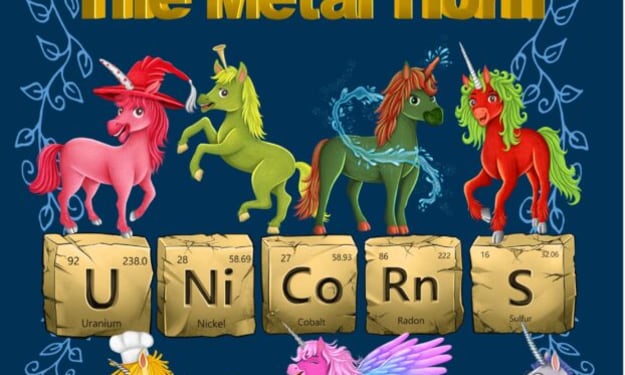
The Metal Horn Unicorns Make Science Magical: A Creative Gateway to the Periodic Table
Learning the periodic table can feel intimidating to many students when it is presented as a dense grid of symbols, atomic numbers, and unfamiliar terminology. Yet chemistry itself is full of wonder: elements form the building blocks of everything in the universe, from the oxygen we breathe to the gold in jewelry and the silicon in our electronics. When science education taps into imagination, storytelling, and creativity, students often discover that the periodic table is not merely a chart to memorize but a fascinating map of the natural world. This is exactly where The Metal Horn Unicorns Make Science Magical—a unique STEM resource—steps in.
By Bushra Rajpoot4 days ago in 01


Comments
There are no comments for this story
Be the first to respond and start the conversation.