
HOW MACHINE LEARNING CAN HELP FIGHT COVID-19?
Machine learning for covid 19

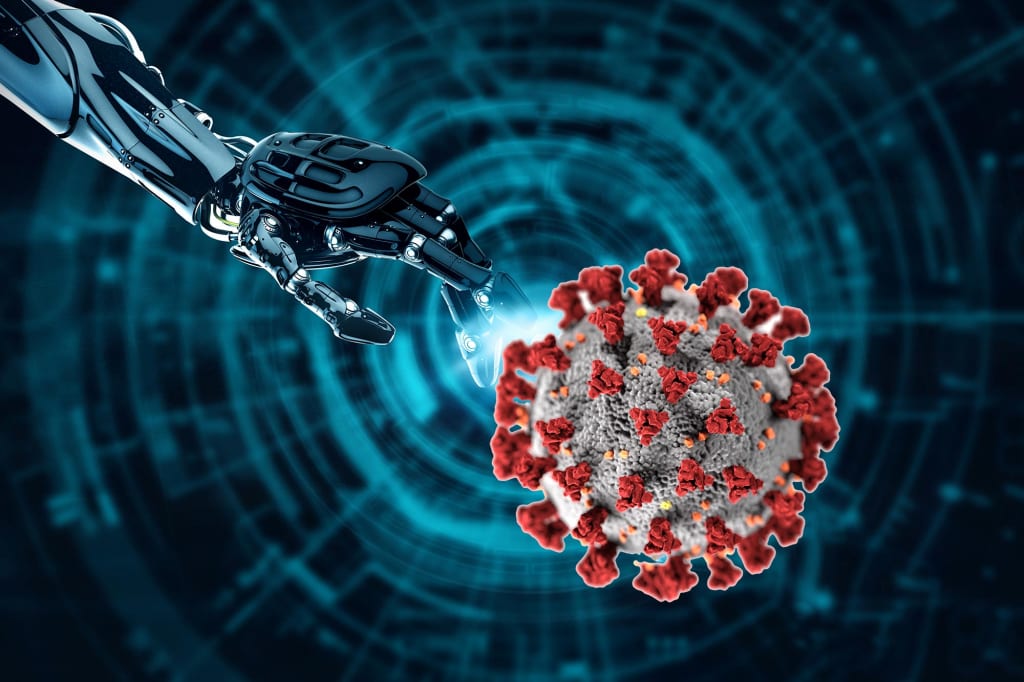
Even in a time of social distancing, information and data keep us linked together on the level of collecting and sharing meaningful knowledge and deriving solutions through machine learning. COVID-19 is inarguably the first viral pandemic in the world’s history where the Earth and its inhabitants are actually so closely connected, and communication is near-instantaneous and accessible for all.
In particular, machine learning-based approaches for detecting COVID-19 using clinical text data is a real possibility, the kind that would have been unthinkable even a few years ago.
Today, we see many devices and platforms collecting data of all types, more opportunities, flexibility, and capacity for storing and analyzing data – multiple devices for a single person with multiple platforms on those devices, with apps, social media websites, smart technology, and more.
This means that we can predict and track patterns of infection, potential risk factors, cause for concern, and get better help to those in need, more efficiently and easily. In particular, a COVID-19 dataset for machine learning can be built from public sources – even using newspapers and magazines that are reporting cases, deaths, and infections, as well as vaccination information. Feature data (such as an area’s population and urban density, or lockdown level) can be used to marshal the feature data.
HOW DATASETS HELP IN TREATMENT OPTIONS
Datasets help us to take very complex, very perplexing and – ultimately – very important data and turn it into meaningful information.
Even the very genome sequences of the coronavirus genus species can be studied, meaning the very DNA arrangement of those with COVID can be studied and an idea of the genomes of different populations around the world can be built into a large dataset.
The cost of acquiring data has gone down, as well as associated costs (such as the cost of people going for genome sequencing). Access to this kind of data means that cross-sectional tools can be applied to find out who amongst us is more pre-disposed to being at risk when it comes to a disease such as the novel coronavirus.
Mechanics of a disease’s manifestations and the mechanisms by which it arises can also be studied from the datasets - giving us the ability to identify people who would be differently sensitive or respond in a particular or unexpected way to a potential treatment or drug. Prediction accuracy has been increased through machine learning approaches such as the Vaxign reverse vaccinology tool and the more recent machine learning tool Vaxign-ML.
Deep learning, machine learning, and artificial intelligence can thus very easily make patterns across large data, very quickly narrow down possibilities, and especially help in identifying what molecules can bind to the COVID protein (and modify how it behaves) in order for treatment options to open up. This accelerates efforts to counter the harmful effects and spread of the virus.
THE POSSIBILITIES OF MACHINE LEARNING FOR COVID SOLUTIONS
Gathering and organizing data on the coronavirus and what we know about it allows for solutions to present themselves. This will result in benefits, ranging from the diffusion of the virus to patient care, such as:
• Develop treatments quicker;
• Diagnose based on priority;
• Finding existing solutions such as drugs that can treat the virus;
• Identify patterns of risk;
• Map how the virus spreads;
• Predict possible upcoming pandemics;
• Predict the spread of the disease;
• Understand the nature of viruses much better.
It is quite interesting to note that machine learning can allow us to get ahead of three specific kinds of risk when it comes to the virus:
1. The infection risk: The risk of individuals or groups testing positive for the coronavirus.
2. The outcome risk: The risk of ineffective treatments for individuals or a group and the associated negative effects (particularly fatal ones).
3. The severity risk: The risk of individuals or groups developing severe and complicated symptoms of the virus, prompting hospitalization.
HOW CAN MACHINE LEARNING AID IN THE VACCINE ROLLOUT?
As early as May 2020, studies were being conducted to apply machine learning strategies for vaccine candidate prediction within both structural and non-structural proteins of COVID proteomes that showed multiple non-structural protein candidates for vaccine purposes.
In other words, by studying viral-host protein-protein interactions and training machine learning algorithms with protein data, the virus-host PPIs for H1N1and HIV were predicted, without having to map the complete virus-host interactome. Essentially, the first step for any movement towards relief is understanding how the virus interacts and reacts with human physiology.
With the vaccines now being deployed in many countries and a global push for vaccine rollout, machine learning can play a major role with timelines and schedules, streamlining communication between the governments, healthcare providers and patients. Machine learning can also help make the prioritization process automated, easy, fair and transparent, cost-effective, and ultimately, help in expansion. It allows for decisions to be made that are much more economical, much more rational, and much more acceptable than random choice (at worst) and tough decisions (at best).
It is also worth noting that the COVID virus is global, and thus the vaccine is being rolled out at a scale hitherto unseen in the world, thus requiring much more efficient use of resources, meaning that the existing capacity of those in charge of the health of hundreds of thousands, if not millions at a time, is expanding and increasingly utilizing artificial intelligence and machine learning.
ENHANCING PATIENT COMMUNICATION
With millions of concerned people all over the world, prioritization is key when it comes to knowing whom to allot more time to – something we have mentioned a few times before.
Machine learning has, again, provided an efficient and cost-effective solution. Automated chatbots have been set up all over the world to help with COVID symptom checklists, information on where to get tested, what precautions and measures to take, how to self-isolate, and learn more about governmental procedures, suggestions, and requirements.
As we move further towards vaccines and a stronger idea of the virus, it is machine learning that will help us make sure our solutions are scalable, timely, and economical.
Image credit to: scitechdaily.com
About the Creator
James Kirk Egypto
SEO I Linkbuilding I Outreach Specialist | Writer
Keep reading
More stories from James Kirk Egypto and writers in 01 and other communities.
BEST WAYS TO EARN MONEY ONLINE
In the digital age, there are many ways to be tech-savvy, but there is arguably no better way to prove that you are tech-savvy than actually earning money online. There is more to the internet than just cat videos and funny memes, you can actually earn money online. It’s not easy making money in any way but if you use these amazing methods you too can make money online.
By James Kirk Egypto6 years ago in Lifehack
How to Choose the Best Mobile App Development Company in Canada 2026
Choosing the right app development partner in 2026 isn’t just a procurement decision—it’s a strategic move that can define whether your digital product scales or stalls. The Canadian tech ecosystem has matured rapidly, with agencies offering everything from rapid MVP builds to enterprise-grade platforms powered by AI and cloud-native architectures.
By alan michaela day ago in 01
Replica Designer Handbags and Luxury Designer Purses: A Cultural Perspective
Handbags are among the most consistently used personal items in modern life. While often discussed in relation to fashion, their significance extends far beyond visual appeal or brand recognition. Handbags function as everyday tools, supporting routine activities such as work, travel, and social engagement. Within this broader context, conversations around Replica Designer Handbags and Luxury Designer Purses reflect changing attitudes toward access, value, and practicality rather than simple questions of trend or status.
By charliesamuel6 days ago in 01



Comments
There are no comments for this story
Be the first to respond and start the conversation.