
How Does DevOps Transform the Healthcare Industry
Discover how DevOps transforms healthcare with faster delivery, enhanced security, and innovation in Healthcare Software Development and digital care systems.

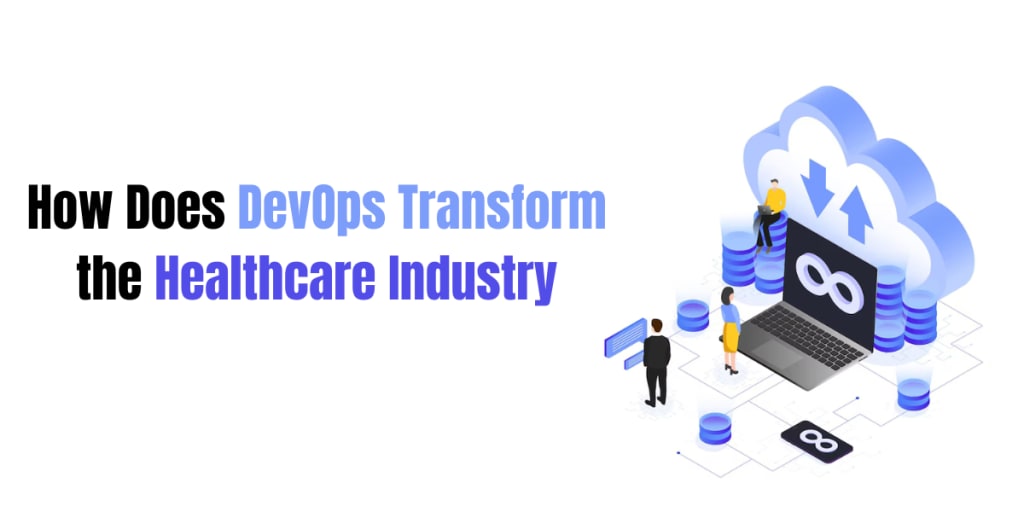
The healthcare industry is undergoing a significant digital transformation, with a growing reliance on robust software systems to manage everything from patient records to remote consultations. In this context, DevOps has become a transformative approach that accelerates innovation, enhances reliability, and ensures regulatory compliance.
By integrating development and operations teams through automation and collaboration, DevOps is redefining the standards of software delivery in healthcare. This article explores how DevOps is revolutionizing the healthcare sector with detailed insights into practices, tools, technologies, and their application in healthcare software.
Bridging Silos: DevOps Culture in Healthcare
One of the most critical shifts DevOps brings to healthcare is the cultural transformation. Traditional software development in healthcare environments often suffers from departmental silos, where development, operations, and security teams function independently. This disjointed approach delays the delivery of features and makes systems more prone to failure.
DevOps fosters a culture of shared responsibility, transparency, and collaboration. In a DevOps-driven healthcare organization, cross-functional teams work together from ideation to deployment, significantly reducing friction and accelerating time-to-market for digital health solutions.
Accelerated Software Delivery with CI/CD Pipelines
In healthcare, where responsiveness to regulatory updates and clinical needs is crucial, speed in delivering software is vital. DevOps introduces Continuous Integration and Continuous Deployment (CI/CD) pipelines that automate the build, test, and release process. Instead of waiting weeks or months for deployment, development teams can deliver updates multiple times a day.
This continuous delivery model is particularly beneficial for systems like Electronic Health Records (EHRs), where the timely implementation of new features or regulatory changes is essential. CI/CD pipelines not only reduce time but also improve code quality through automated testing and real-time feedback.
Ensuring Security and Compliance through DevSecOps
Security is non-negotiable in healthcare due to strict regulations such as HIPAA, GDPR, and other regional data protection laws. DevOps in healthcare evolves into DevSecOps by integrating security into every stage of the software lifecycle. Security checks are no longer a post-development activity but are embedded from the first line of code.
Automated tools scan for vulnerabilities, enforce compliance policies, and apply encryption standards throughout the development process. This proactive approach minimizes the risk of data breaches, ensures continuous audit readiness, and significantly strengthens the security posture of healthcare applications.
The Role of Infrastructure as Code in Scalability
Infrastructure as Code (IaC) is a DevOps practice that allows teams to define, manage, and provision infrastructure using machine-readable files. In the healthcare domain, where applications must scale to accommodate fluctuating patient loads or emergency surges, IaC offers unmatched flexibility and consistency.
Tools such as Terraform and AWS CloudFormation enable rapid provisioning of secure, compliant, and reproducible infrastructure. For example, during the COVID-19 pandemic, many healthcare providers expanded their telemedicine capabilities using IaC to quickly deploy additional backend services across multiple regions without compromising quality or security.
Automation Across the Healthcare Development Lifecycle
Automation is the cornerstone of DevOps, and its role in healthcare cannot be overstated. Automated testing ensures software integrity before it reaches production, eliminating bugs that could affect patient care. Healthcare organizations can leverage tools like Jenkins for orchestration, Selenium for functional testing, and Ansible for configuration management.
This automation streamlines the healthcare software development lifecycle by ensuring repeatable and error-free processes. From patient registration portals to clinical decision support systems, automation enhances reliability and allows IT teams to focus on innovation rather than maintenance.
Real-Time Monitoring for Operational Excellence
Monitoring and observability are essential to maintaining the performance and availability of healthcare systems. DevOps emphasizes real-time performance monitoring, enabling healthcare IT teams to detect issues proactively and ensure seamless user experiences.
Tools like Prometheus and Grafana offer in-depth visibility into system metrics, while the ELK stack (Elasticsearch, Logstash, and Kibana) provides log analysis for quick troubleshooting. This is particularly crucial in applications like telehealth platforms, where even minor disruptions can negatively impact patient care. Continuous monitoring ensures high availability and builds trust among patients and providers.
Enhancing Collaboration and Feedback Loops
Healthcare organizations function through the collective efforts of clinicians, developers, administrators, and support staff. DevOps introduces streamlined communication channels and faster feedback loops that help deliver better software aligned with user needs.
Whether it's refining a patient scheduling system or optimizing a mobile health app, DevOps ensures that every stakeholder can provide input early and often. This close collaboration minimizes misunderstandings, reduces rework, and results in more user-friendly and clinically relevant software solutions.
Supporting Cloud-Native Healthcare Solutions
The shift to cloud infrastructure has opened new possibilities for healthcare innovation. DevOps supports cloud-native development, enabling organizations to leverage the scalability, redundancy, and elasticity of cloud platforms. Services like AWS, Azure, and GCP offer managed solutions that integrate with DevOps pipelines, making it easier to deploy containerized applications, store large health datasets, and maintain uptime.
Cloud-based Healthcare Software Development allows institutions to deploy global telemedicine services, data analytics platforms, and AI-driven diagnostic tools with reduced capital expenditure and greater operational efficiency.
MLOps for AI-Powered Healthcare Insights
Artificial Intelligence and Machine Learning are rapidly becoming vital in diagnostics, patient risk stratification, and personalized medicine. DevOps principles extend into MLOps, which governs the operationalization of ML models.
MLOps automates the end-to-end ML pipeline, from data collection to model deployment and monitoring. This ensures that predictive analytics tools in healthcare are not only accurate but also scalable and maintainable. Tools like MLflow and TensorFlow Extended streamline workflows, enabling quick iteration and deployment of algorithms that assist in disease detection or treatment optimization.
Scaling Telemedicine and Remote Care Platforms
Telemedicine has seen explosive growth, and DevOps is key to supporting its continuous evolution. These platforms must integrate video conferencing, secure data exchange, real-time diagnostics, and EHR access.
DevOps enables quick deployment of new functionalities, integration with third-party systems, and consistent user experiences across devices. For instance, updates to mobile health apps can be pushed without downtime using blue-green deployment strategies. With DevOps, healthcare providers can respond to patient feedback more rapidly and ensure that digital care remains as effective as in-person consultations.
Empowering IoMT and Wearable Device Integration
The rise of the Internet of Medical Things (IoMT) and wearable health devices introduces a new layer of complexity in healthcare IT. These devices generate a vast volume of real-time data that must be processed, visualized, and acted upon.
DevOps practices facilitate the integration of APIs, management of data pipelines, and deployment of scalable backend systems to support these functionalities. Whether it's tracking heart rates, oxygen levels, or medication adherence, DevOps ensures that wearable data can be securely and efficiently used to support clinical decision-making.
Advancing Interoperability with Microservices
Healthcare systems often suffer from poor interoperability, with disparate platforms failing to communicate effectively. DevOps encourages the use of microservices architecture, where applications are built as a suite of loosely coupled, independently deployable services.
This structure allows healthcare developers to create APIs that facilitate data exchange between lab systems, billing software, pharmacy apps, and EHRs. Technologies like Docker and Kubernetes enable efficient containerization and orchestration of these microservices, promoting flexibility and enhancing system-wide compatibility.
Challenges in DevOps Implementation in Healthcare
Despite its many advantages, implementing DevOps in the healthcare industry is not without challenges. Regulatory compliance remains one of the most significant hurdles. Ensuring HIPAA-compliant CI/CD pipelines, managing data encryption, and maintaining access logs all require meticulous attention.
Another challenge is organizational resistance to change. Many healthcare institutions operate on legacy systems and lack the internal expertise to transition to a DevOps model. Training staff, rethinking workflows, and getting executive buy-in are essential steps in overcoming these barriers. Moreover, ensuring patient data security while enabling agile development demands a fine balance between speed and caution.
Future Outlook: DevOps as a Pillar of Healthcare Innovation
The future of healthcare will be increasingly digital, data-driven, and patient-centric. DevOps provides the foundational framework to support this transition. As the demand for real-time healthcare services, remote monitoring, and predictive diagnostics grows, DevOps will continue to drive innovation in healthcare software development.
From building smart hospital systems to automating patient outreach campaigns, the opportunities are immense. Healthcare organizations that embrace DevOps not only gain a competitive edge but also improve patient safety, satisfaction, and outcomes.
About the Creator
Chirag Akbari
Chirag Akbari, CEO of Quixom Technology, is a visionary leader driving innovation and AI growth. With multiple C-level roles, he champions a customer-first approach and empowers teams to lead in the evolving IT landscape.
Keep reading
More stories from Chirag Akbari and writers in 01 and other communities.
The Future of Enterprise Software: AI-Driven, Agile, and Cloud-Native
Introduction Enterprise software is the backbone of modern businesses, powering everything from customer relationship management to financial operations and supply chains. Traditionally, these systems were static, on-premise, and difficult to scale. However, rapid digital transformation and the demand for smarter, more flexible tools are redefining the future of enterprise applications. Today, organizations are gravitating toward AI-driven, agile, and cloud-native software to improve agility, automate processes, and gain a competitive advantage.
By Chirag Akbari8 months ago in 01
Cost to Develop an App Like TikTok: Full Guide (2026)
So, you reckon you have the next billion-dollar idea? You want to build a TikTok killer. Join the club, mate. In 2026, everyone and their grandmother is trying to pivot to video, thinking a simple app wrapper and a few API calls will print money.
By Sherry Walker4 days ago in 01



Comments
There are no comments for this story
Be the first to respond and start the conversation.