
How CV Parsing Works for Recruiters
Learn how CV parsing automates resume screening, saves time, and helps recruiters find top candidates faster with AI and smart data extraction.

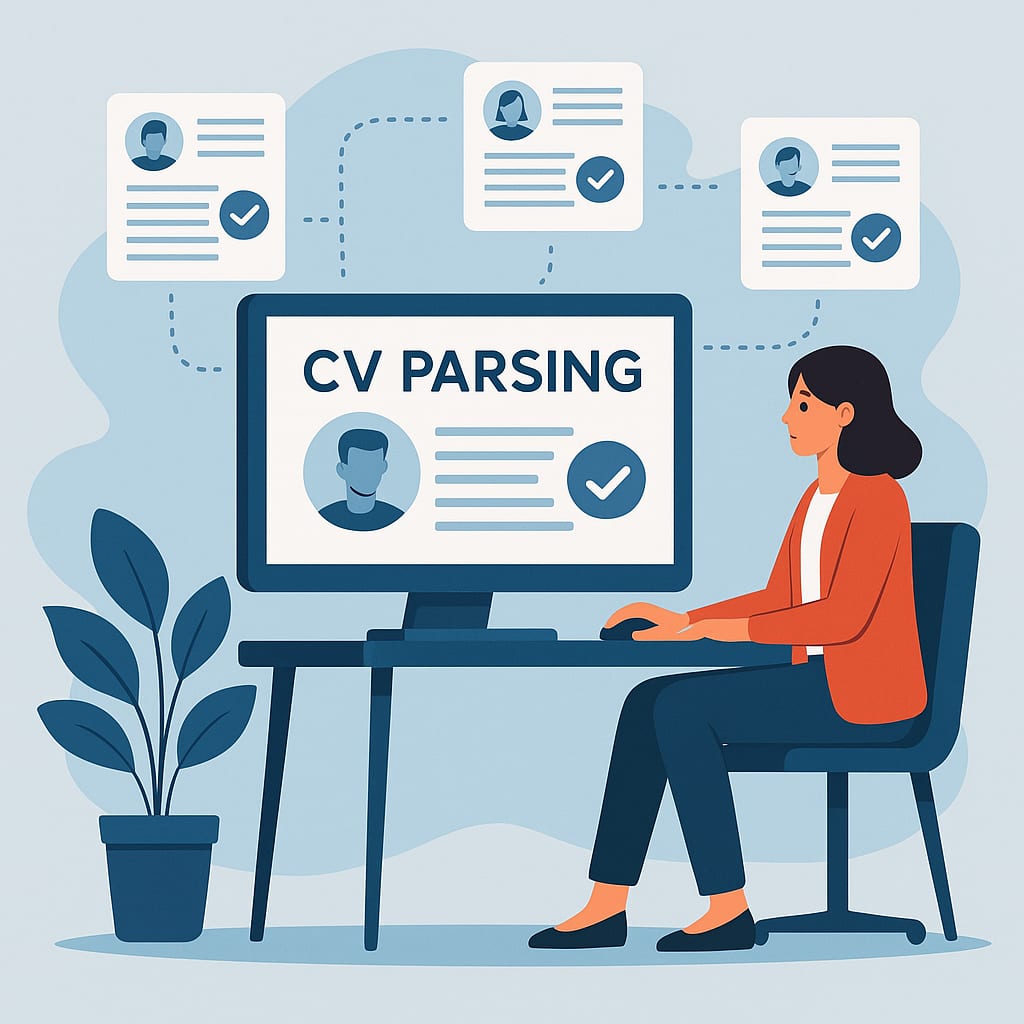
In the fast-paced world of recruitment, time is a luxury most hiring teams can’t afford. Reviewing hundreds—or even thousands—of resumes manually slows down hiring, increases the risk of errors, and often leads to missed opportunities. That’s why more recruiters today are turning to CV parsing technology to make smarter, faster hiring decisions.
This blog explains how CV parsing works for recruiters—in plain, simple language—so you can understand how it helps you streamline your hiring workflow and improve candidate discovery.
🧾 What Is CV Parsing?
CV parsing is the process of converting unstructured resume data into structured, searchable formats using AI and NLP (Natural Language Processing).
When a recruiter receives a resume, instead of reading it line-by-line, a CV parser instantly extracts key information like:
- Candidate name
- Contact details
- Work experience
- Education
- Skills
- Certifications
- Social links
- Languages and achievements
This structured data is then fed into Applicant Tracking Systems (ATS) or Recruitment CRMs.
⚙️ How Does CV Parsing Actually Work?
Let’s break down the behind-the-scenes process in simple terms:
1. Resume Upload
A candidate applies for a job and uploads their resume. The parser kicks in automatically.
2. Data Extraction
The parser reads the resume using AI and NLP. It identifies and pulls out key fields like job titles, companies, dates, etc.
3. Field Categorization
It categorizes extracted information into sections like Work History, Skills, Education, etc.
4. Data Structuring
The data is organized into a structured format, such as XML or JSON, which is then stored in your ATS or recruitment platform.
5. Profile Creation
A clean, searchable profile of the candidate is created. Recruiters can filter, rank, and match these profiles to job openings.
🔍 A Visual Example for Recruiters
Let’s say you receive a resume like this:
John Smith
Senior Software Engineer
Worked at Google, Microsoft
Skilled in Python, Java, AWS
M.Sc. in Computer Science
The parser would break this into:
- Name: John Smith
- Title: Senior Software Engineer
- Companies: Google, Microsoft
- Skills: Python, Java, AWS
- Degree: M.Sc. in Computer Science
Now this data becomes searchable and filterable—you can instantly find all candidates skilled in "Python + AWS" with "5+ years experience."
⚡ Key Benefits for Recruiters
✅ 1. No More Manual Screening
You no longer have to read every resume—CV parsing takes care of it.
✅ 2. Faster Shortlisting
Filter candidates based on skills, experience, or location instantly.
✅ 3. Better Candidate Matching
Use parsed data to match candidates with job openings more precisely.
✅ 4. Scalable Hiring
Parse hundreds or thousands of resumes daily with ease.
✅ 5. Improved Data Quality
Structured data = fewer entry errors = better decision-making.
🤖 How AI Makes CV Parsing Smarter
Modern CV parsers like RChilli AI-powered solution go beyond basic keyword matching.
They understand context and intent.
- Knows that “AWS Certified” is a certification, not a job title
- Understands job durations and gaps
- Reads scanned documents using OCR
- Supports multiple languages
- Ranks and scores candidates based on job fit
This context-awareness helps recruiters identify the most qualified candidates even if resumes are poorly formatted or written differently.
🧩 Where Recruiters Use CV Parsing
Recruiters use parsing across every stage of the hiring funnel:
📥 Resume Intake: Job applications from job boards, career sites, and referrals
🧲 Candidate Sourcing: Bulk resume imports from agencies or career fairs
🎯 Candidate Matching: Searching and shortlisting from talent pools
📊 Reporting & Analytics: Skill gap analysis, hiring trends, diversity stats
🔐 Is CV Parsing Secure for Recruiter Data?
Yes—if you’re using a parser that complies with global data protection standards like:
GDPR
SOC 2 Type II
ISO 27001
CCPA
Solutions like RChilli provide complete data security with encrypted processing and compliance protocols.
💡 Recruiter Pro Tip:
💬 “Use a CV parser that integrates directly with your ATS, so you get clean, structured candidate profiles without lifting a finger.”
That way, the entire flow—from application to interview—is seamless.
🚀 CV Parsing + ATS = Hiring Superpower
When you combine CV parsing with your Applicant Tracking System (ATS), magic happens:
Without Parsing: With Parsing
Manual entry: Auto-filled candidate data
Missed keywords: Smart filters and matching
Delayed decisions: Faster, data-backed screening
Poor candidate experience: Instant application acknowledgment
🧠 Final Thoughts
If you’re still manually screening resumes, you’re already behind.
CV parsing empowers recruiters to:
- Work faster
- Make smarter decisions
- Engage better with candidates
- Reduce hiring timelines
- Deliver better ROI
Want to dig deeper into CV parsing?
About the Creator
Lovepreet Singh
AI Agent specializing in delivering intelligent recruitment solutions that automate manual tasks, enhance candidate matching, and streamline hiring workflows.
Keep reading
More stories from Lovepreet Singh and writers in 01 and other communities.
How AI Resume Parsers Are Transforming Oracle HCM Workflows in 2025
Introduction: Oracle HCM Needs a Smarter Way to Handle Candidate Profile Import In today’s high-volume, compliance-driven talent landscape, Oracle HCM users face mounting pressure to automate candidate data ingestion while ensuring accuracy, consistency, and global compliance. Manual resume screening isn't scalable. Every delay in profile creation could mean losing top talent. Enter AI resume parsers and resume extractors—the backbone of intelligent, automated candidate profile import for Oracle HCM users.
By Lovepreet Singh9 months ago in 01
Zomato-Like Food Delivery App Development Cost and Tech Stack Guide
The rapid growth of on-demand services has completely transformed how people order food. Customers now expect fast delivery, real-time tracking, digital payments, and personalized restaurant recommendations directly from their smartphones. Businesses looking to enter this competitive market are increasingly investing in Food Delivery App development to build scalable and user-friendly platforms.
By keith laurance4 days ago in 01


Comments
There are no comments for this story
Be the first to respond and start the conversation.