
How Can Predictive Maintenance of Smart Stone Crushing Plant Prevent Millions in Downtime Costs?
Smart Stone Crushing Plant Prevent Millions in Downtime Costs

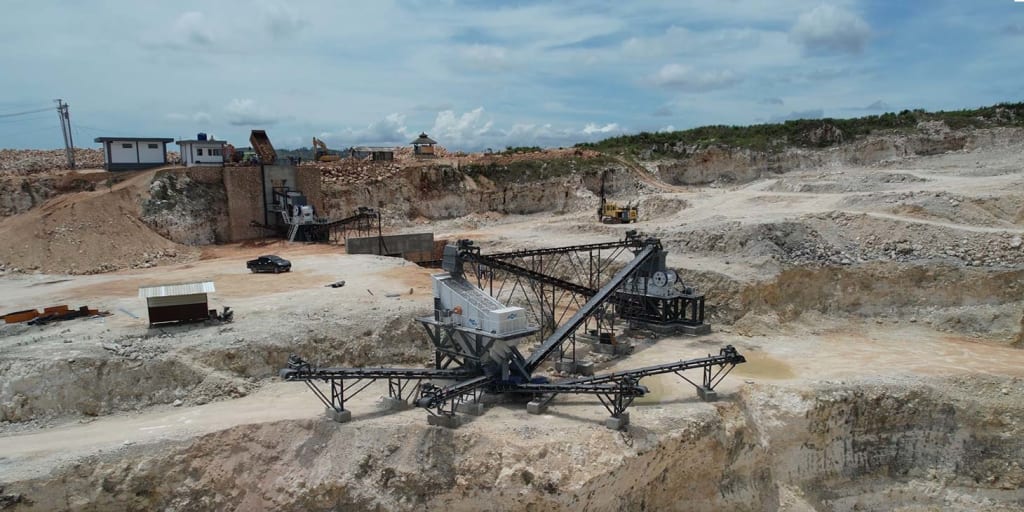
The crushing plant of the 21st century doesn’t merely pulverize rock—it thinks. At the nexus of artificial intelligence, advanced sensors, and industrial IoT lies predictive maintenance, the silent sentinel guarding against catastrophic failures in modern stone crusher plant. These smart systems analyze vibration patterns, thermal signatures, oil quality, and equipment strain in real time. Machine learning models detect deviations far before a human operator could blink at an odd noise or minor motor lag. This fusion of technology empowers operators not only to monitor but also to preempt—transforming stone crushing from brute mechanical repetition into a finely-tuned, self-aware industrial symphony.
By embedding high-resolution sensors on critical components—bearings, motors, shafts, and hydraulic systems—smart plants generate torrents of diagnostic data. Algorithms interpret these data streams and deliver actionable foresight, flagging anomalies that indicate potential breakdowns. Operators receive alerts not after a failure, but before it begins to gestate. A hairline crack in a jaw crusher, a subtle oil contamination in the gearbox—these are no longer surprise disruptions, but solvable forecasts. Predictive analytics turns downtime from a dreaded inevitability into a calculated impossibility.
Downtime: The Invisible Cost Crusher
Downtime in a stone crushing plant is not a mere hiccup—it is a hemorrhage. When a crusher grinds to an unplanned halt, the conveyor belts still, loaders idle, and contractual timelines shatter. Each hour lost can tally tens of thousands of dollars, not only in stalled production but in cascading costs: emergency repairs, overtime labor, and missed delivery penalties. A plant processing 500 tons per hour, paused for a single day, can bleed upwards of $50,000—before repairs even commence.
Consider the case of a quarry in Southeast Asia that experienced a sudden motor burnout in its cone crusher. Lacking predictive maintenance, the failure was detected only post-mortem. Production ceased for 48 hours. The aftermath? $140,000 in revenue loss, $25,000 in urgent repairs, and strained client relations. These aren’t theoretical numbers—they are real-world consequences of reactive maintenance mindsets.
Preventing Millions in Losses Through Intelligent Intervention
Smart predictive systems rewrite this narrative. With condition-based monitoring and scheduled interventions, faults are not discovered too late—they’re nullified in advance. When AI models detect early-stage wear on a rotor or forecast declining pressure efficiency in hydraulic cylinders, maintenance crews are deployed strategically, during planned lulls. Instead of catastrophe, you get control.
The return on investment is profound. Plants that adopt full-spectrum predictive maintenance report a reduction in unplanned downtime by up to 60% and maintenance cost savings north of 30% annually. Over five years, this translates into millions preserved, not only in direct savings but through optimized throughput and sustained asset longevity.
Moreover, this smart approach extends component lifespan. Motors run cooler, gearboxes grind smoother, and gravel crushers endure longer. Maintenance stops evolve into surgical precision events—shorter, safer, and far less frequent. And unlike traditional preventive models that rely on fixed schedules, predictive maintenance adapts to the real condition of machinery, eliminating wasteful part replacements and unnecessary labor.
In an industry where every second of uptime equates to profit, predictive maintenance isn’t a luxury—it’s a mandate. In the smart stone crushing plant, foresight isn’t science fiction. It’s daily practice. And it’s saving millions.
About the Creator
consrtuctionmachines
AIMIX is a customer-center-oriented heavy equipment manufacturer and supplier, devoted to production, innovation, combination, one-stop solution, etc.
https://aimixgroup.com/
Keep reading
More stories from consrtuctionmachines and writers in 01 and other communities.
Exploring the Construction Market: Concrete Mixer Prices Across Nigeria
Nigeria's construction industry is booming, driving demand for efficient concrete mixers. Understanding mixer prices across the country helps builders plan budgets effectively. This article explores various mixer types, focusing on self-loading mixers, and examines factors influencing prices. By understanding these dynamics, buyers can make informed decisions and optimize their investments.
By consrtuctionmachines10 months ago in 01
Architecting On-Demand Pickup and Delivery Platforms
The rapid growth of digital commerce has transformed how businesses interact with customers. In today’s fast-paced world, consumers expect services that are convenient, fast, and accessible from their smartphones. This shift in expectations has fueled the rise of on-demand pickup and delivery platforms, which enable businesses to move goods quickly and efficiently between locations.
By Nayel Basim Al Shehhiabout 8 hours ago in 01
A System That Isn’t Working Challenge Winners
Systems promise order. They organize behavior, distribute opportunity, and suggest that if everyone follows the rules, things will work. The entries in A System That Isn’t Working look closely at what happens when that promise begins to slip.
By Vocal Curation Team5 days ago in Resources



Comments