
How Bluetooth work!!! Part 1\2
Bluetooth is a fascinating technology that already has a positive and inspiring tone. However, if you want me to rephrase it to sound more motivational, I can say the possibilities enabled by Bluetooth technology are truly fascinating and limitless!

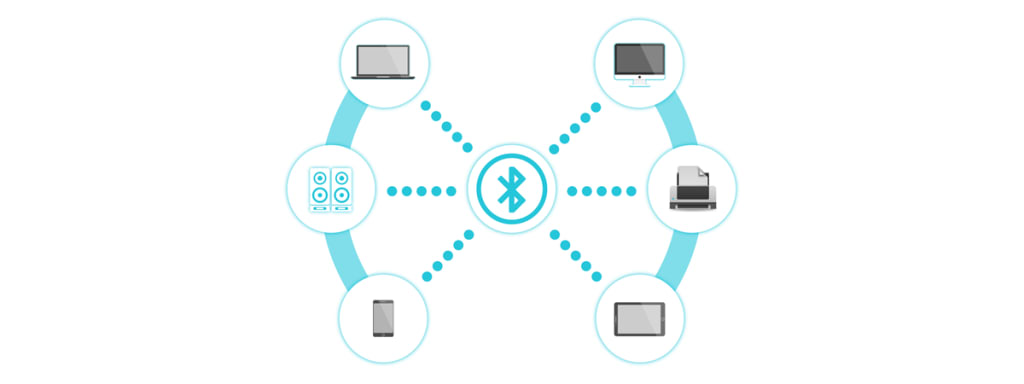
Bluetooth is a fascinating technology.
When you listen to music on wireless headphones, your smartphone uses Bluetooth technology to wirelessly transmit millions of 1s and 0s every second. This transmission is made possible by the use of electromagnetic waves, which are invisible to the human eye and have a wavelength of approximately 123 millimeters. These waves are capable of passing through obstructions, such as walls, much like visible light passes through glass.
The process of transmitting data wirelessly via Bluetooth begins with your smartphone generating binary 1s and 0s. Bluetooth designates a wavelength of 121 millimeters as a 1 and a wavelength of 124 millimeters as a 0. Your smartphone then generates two wavelengths and alternates between them approximately one million times per second. This allows it to communicate around one million 1s and 0s to your earbuds every second. The antennae and circuitry in your earbuds and smartphone are specifically designed to sense and transmit these wavelengths.
It's important to note that electromagnetic waves do not travel in a single direction like a sinusoidal wave but rather in all directions like an expanding sphere. When your smartphone switches between frequencies, it's like a lightbulb rapidly changing between two different frequencies of millimeter-length electromagnetic waves. This enables your smartphone and wireless headphones to work in any direction.
To better understand how Bluetooth works, we can use four visualizations. The first visualization shows us the frequency and wavelength of the electromagnetic wave. The second visualization shows us the data being sent. The third visualization shows us the true near-omnidirectional emission of electromagnetic waves from your smartphone and headphones. Lastly, the fourth visualization helps us see that these two devices are emitting and receiving electromagnetic waves along the same frequencies.
Overall, the use of Bluetooth technology provides a wireless means of transmitting data between devices using electromagnetic waves. It's a fascinating process that has revolutionized the way we communicate wirelessly.When you listen to music on wireless headphones, your smartphone uses Bluetooth technology to wirelessly transmit millions of 1s and 0s every second. This transmission is made possible by the use of electromagnetic waves, which are invisible to the human eye and have a wavelength of approximately 123 millimeters. These waves are capable of passing through obstructions, such as walls, much like visible light passes through glass.
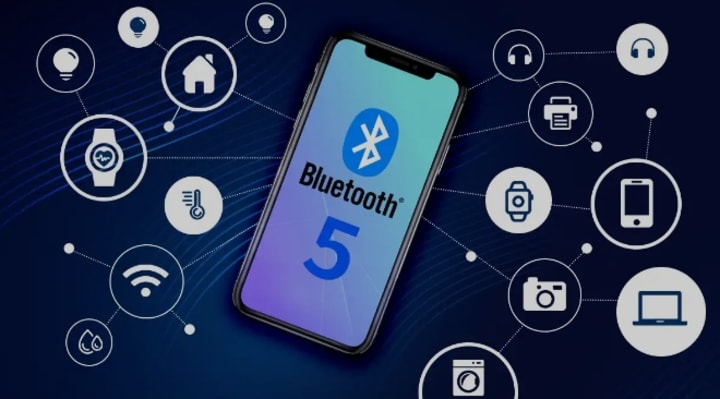
The process of transmitting data wirelessly via Bluetooth begins with your smartphone generating binary 1s and 0s. Bluetooth designates a wavelength of 121 millimeters as a 1 and a wavelength of 124 millimeters as a 0. Your smartphone then generates two wavelengths and alternates between them approximately one million times per second. This allows it to communicate around one million 1s and 0s to your earbuds every second. The antennae and circuitry in your earbuds and smartphone are specifically designed to sense and transmit these wavelengths.
It's important to note that electromagnetic waves do not travel in a single direction like a sinusoidal wave but rather in all directions like an expanding sphere. When your smartphone switches between frequencies, it's like a lightbulb rapidly changing between two different frequencies of millimeter-length electromagnetic waves. This enables your smartphone and wireless headphones to work in any direction.
To better understand how Bluetooth works, we can use four visualizations. The first visualization shows us the frequency and wavelength of the electromagnetic wave. The second visualization shows us the data being sent. The third visualization shows us the true near-omnidirectional emission of electromagnetic waves from your smartphone and headphones. Lastly, the fourth visualization helps us see that these two devices are emitting and receiving electromagnetic waves along the same frequencies.
Overall, the use of Bluetooth technology provides a wireless means of transmitting data between devices using electromagnetic waves. It's a fascinating process that has revolutionized the way we communicate wirelessly.
1\2
About the Creator
Keep reading
More stories from Gheorghita G. I. and writers in 01 and other communities.
How Bluetooth work!!! Part 2\2
This frequency range is shared by other medical and industrial devices, such as your microwave which uses a frequency of 2.45 Gigahertz. When your microwave is turned on, it can interfere with the signal transmitted by your smartphone to your wireless headphones, causing them to lose track of the data being transmitted.Did you know that Bluetooth operates in a frequency range of 2.4 Gigahertz to 2.4835 Gigahertz?
By Gheorghita G. I.2 years ago in 01
Understanding Ceramic Components: Materials, Manufacturing, and Modern Applications
Ceramics have been used by human societies for thousands of years, evolving from simple pottery into highly engineered materials used in advanced industries. Today, the word ceramic refers not only to traditional objects but also to technical materials designed for precision, durability, and performance. Modern discussions around ceramic components reflect this long history of innovation and adaptation.
By charliesamuel4 days ago in 01
How a Healthcare 4.0 Strategy Is Reshaping Patient-Centered Care
Healthcare is undergoing one of the most profound transformations in modern history. Advances in artificial intelligence, connected devices, data analytics, and cloud computing are reshaping how care is delivered, managed, and experienced. Hospitals, clinics, and healthcare organizations are no longer limited to traditional systems; instead, they are moving toward digitally connected ecosystems that focus on efficiency, predictive insights, and personalized treatment.
By Steve Waugh5 days ago in 01
TUS NUA - ch 53
TUS NUA – ch 53 New Beginnings – Mia and Midnight (*)(*)(*) Finola knew Ali’s brother-in-law needed to put his mind at rest. She fed her arm through his and led him outside. “We’ll sit here. If you like, I can put a block around us so our conversation will be private.”
By Margaret Brennan6 days ago in Fiction




Comments
There are no comments for this story
Be the first to respond and start the conversation.