
How Blockchain Technology is Shaping the Future of POS Systems in 2026
How Blockchain Technology is Shaping the Future of POS Systems in 2026

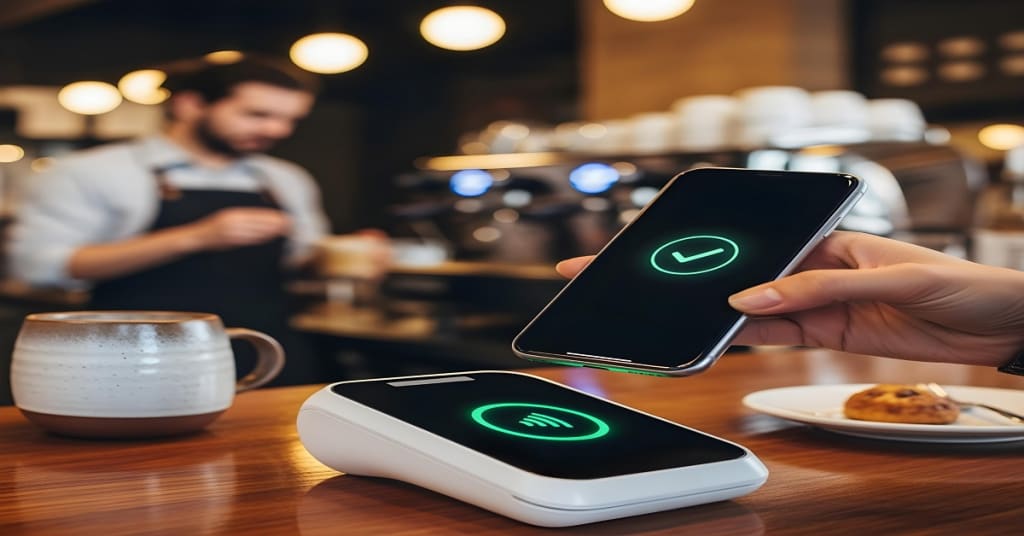
The Point of Sale (POS) system is the backbone of any business that handles transactions. Traditionally, POS systems have relied on centralized servers and third-party intermediaries to process payments, manage inventories, and track customer data. However, as technology continues to evolve, new innovations are drastically changing how POS systems operate. One of the most promising technologies in this transformation is blockchain.
Blockchain, the decentralized and immutable ledger system popularized by cryptocurrencies like Bitcoin, is increasingly being recognized as a game-changer for POS systems. By 2026, blockchain technology is expected to play a pivotal role in improving the security, efficiency, transparency, and scalability of POS systems, offering businesses and customers a more seamless and secure experience. But how exactly is blockchain shaping the future of POS?
1. Enhanced Security: Protecting Transaction Data
One of the biggest challenges in POS systems today is ensuring the security of transaction data. Cybersecurity breaches, data theft, and credit card fraud are ongoing threats that businesses face daily. Blockchain offers a powerful solution by providing a decentralized, transparent, and immutable ledger.
In a blockchain-based POS system, every transaction is recorded in a "block" and added to a "chain" of previous blocks. This process ensures that all data is tamper-proof and cannot be altered without consensus from the network participants. For businesses, this means that payment information and transaction records are more secure, as there is no central point of failure for hackers to target.
Moreover, blockchain’s encryption features make it difficult for malicious actors to gain unauthorized access to sensitive customer data. As consumers grow more conscious of data privacy, blockchain-powered POS systems can provide a higher level of trust, encouraging them to engage in transactions more freely.
2. Lower Transaction Costs: Eliminating Intermediaries
Traditional POS systems rely on payment gateways, banks, and credit card companies to process payments. These intermediaries charge transaction fees, which can add up quickly, especially for small businesses. Blockchain technology can significantly reduce or even eliminate the need for intermediaries by enabling direct peer-to-peer transactions.
In blockchain-based POS systems, payments can be made directly between the customer and the merchant using cryptocurrencies or digital tokens. These transactions are processed without the need for banks or payment processors, reducing fees associated with payment processing.
For businesses, this could mean considerable savings. As blockchain adoption increases, especially in the retail and hospitality industries, we may see a shift away from traditional banking networks, leading to lower transaction costs and greater profit margins for merchants. Additionally, cryptocurrencies like Bitcoin and Ethereum are becoming more stable and easier to integrate into POS systems, further facilitating this shift.
3. Faster Transactions: Real-Time Processing
Speed is essential in POS transactions, especially in high-volume environments like retail or hospitality. Traditional POS systems can experience delays due to network congestion, payment processor issues, or international currency conversions. Blockchain can help eliminate many of these bottlenecks, allowing for faster, real-time processing of payments.
Unlike traditional payment methods, which may take days to settle (especially in cross-border transactions), blockchain transactions are verified almost instantly. Once a transaction is initiated, it can be confirmed and recorded on the blockchain in seconds, significantly reducing the waiting time for both merchants and customers.
Moreover, blockchain networks are continuously improving to handle larger volumes of transactions. By 2026, blockchain technology is expected to be more scalable, capable of processing thousands of transactions per second, ensuring that businesses can rely on it even during peak hours or large-scale events.
4. Transparency and Fraud Prevention: Building Trust with Consumers
Blockchain’s transparency feature is another key benefit for POS systems. In traditional POS systems, transactions are often processed behind closed doors, with limited visibility for customers and businesses alike. Blockchain changes that by providing an open ledger that all participants can access.
Each transaction on a blockchain network is recorded in real-time and is visible to all parties involved, providing an immutable history of actions. This transparency can significantly reduce fraud, as any attempt to alter transaction data would be immediately noticeable. Additionally, blockchain allows businesses to track their inventory and financial transactions in a verifiable and transparent manner, ensuring greater accountability.
For customers, this level of transparency fosters trust. Consumers will feel more secure knowing that their transactions are being processed with integrity, and that they can verify the details of each purchase if needed. This trust can help enhance customer loyalty, encouraging repeat business and positive word-of-mouth.
5. Decentralized Systems: Reducing Single Points of Failure
Centralized POS systems are vulnerable to system outages, data breaches, and server failures. A single point of failure in the system can bring an entire business to a halt, affecting both the merchant and the customer experience. Blockchain solves this problem by distributing data across a network of nodes (computers), meaning there is no single point of failure.
With a decentralized POS system, even if one node fails or is compromised, the rest of the network can continue to operate smoothly. This redundancy ensures greater uptime and reliability for POS systems, reducing the likelihood of disruptions during critical sales periods.
Additionally, blockchain’s decentralized nature makes it harder for bad actors to manipulate the system. This is particularly important in sectors like retail, where consumers expect seamless and secure transactions.
6. Smart Contracts: Automating Payments and Agreements
Smart contracts are self-executing contracts with predefined terms and conditions written directly into code. These contracts can be used within blockchain-based POS systems to automate various processes, such as inventory management, payment processing, and loyalty rewards.
For example, a POS system could automatically process a payment once a customer’s purchase is confirmed, ensuring a smooth and instantaneous transaction. Additionally, smart contracts could be used to trigger discounts, loyalty rewards, or even automatically update inventory levels, saving time for both the customer and the merchant.
Smart contracts also reduce the risk of human error and eliminate the need for intermediaries in complex transactions, further streamlining the POS process.
7. Future Prospects: Adoption in 2026 and Beyond
By 2026, blockchain technology is expected to be fully integrated into mainstream POS Software Development Services. We are already seeing pilot projects and prototypes emerge in various industries, from retail to hospitality, showcasing the potential of blockchain-powered POS solutions. The integration of digital currencies, tokenization, and decentralized finance (DeFi) platforms will further cement blockchain as a critical component of the future POS landscape.
Merchants and developers who adopt blockchain early will have a competitive edge, offering customers faster, more secure, and cost-effective payment options. As consumer demand for privacy and efficiency grows, blockchain's role in POS systems will continue to expand, bringing about a new era of financial transactions.
Conclusion
Blockchain technology holds immense promise for the future of POS systems. Its ability to enhance security, reduce costs, speed up transactions, and foster transparency makes it an ideal solution for businesses looking to streamline operations and build trust with customers. As we look toward 2026, blockchain will undoubtedly play a critical role in shaping the next generation of POS systems, bringing about a more secure, efficient, and decentralized payment ecosystem. For businesses that want to stay ahead of the curve, embracing blockchain technology could be the key to future success.
About the Creator
shane cornerus
Shane Corn is the SEO Executive at Dev Technosys, a Flower Delivery App Development company with a global presence in the USA, UK, UAE, and India.
Keep reading
More stories from shane cornerus and writers in 01 and other communities.
How AI and Machine Learning Are Transforming Mobile Banking Apps
Mobile banking has evolved from a convenience feature into a core financial service. In 2026, the real driving force behind this evolution is Artificial Intelligence (AI) and Machine Learning (ML). These technologies are reshaping how users interact with banking apps, how banks detect fraud, manage risk, and deliver personalized financial experiences.
By shane cornerus9 days ago in 01
Brook Lang on Thermal Energy Storage
As renewable energy adoption accelerates, the challenge of storing energy when the sun is not shining or the wind is not blowing has become increasingly urgent. While lithium-ion batteries dominate headlines, another powerful solution is gaining traction: thermal energy storage. By capturing and storing heat or cold for later use, thermal storage systems are emerging as cost-effective and scalable “grid batteries” that support a more resilient and flexible energy system.
By Brook Lang Seattle6 days ago in 01




Comments
There are no comments for this story
Be the first to respond and start the conversation.