
How AI-Powered Digital Experience Solutions Are Transforming Museums and Cultural Spaces
Institutions use artificial intelligence to create personalized, interactive learning environments for visitors.

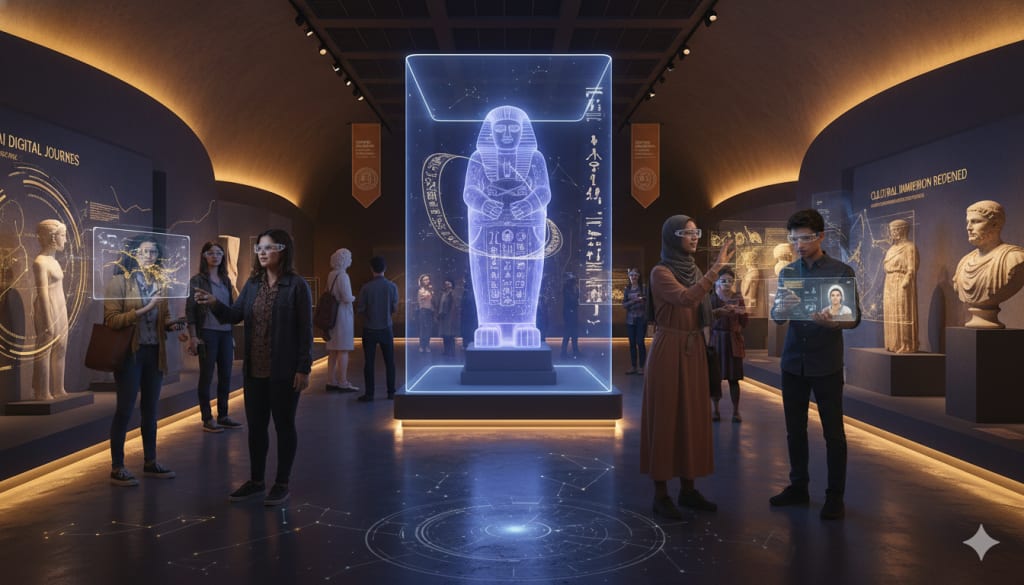
Museums traditionally operated as static repositories. Curators placed objects behind glass. They printed small placards with dates and brief descriptions. Visitors walked through the rooms and read the text. Every person received the exact same information in the exact same format.
Today, cultural institutions use AI-powered digital experience solutions to change this model. Artificial intelligence processes data in real-time to adjust the environment for the user. The technology tracks visitor movement, answers spoken questions, and translates ancient texts. This creates a responsive environment. The museum adapts to the visitor.
Creating the AI Visitor Experience
Standard audio guides offer a linear track of recorded information. The user punches in a number and listens. AI visitor experience systems replace these static audio tracks with dynamic conversational agents.
When a visitor enters a gallery, an application on their smartphone tracks their physical location using Bluetooth beacons. The AI identifies the specific painting the visitor is looking at. The user asks the application a question out loud, such as, "What kind of paint did the artist use here?" The AI analyzes the museum's database, formulates an accurate answer, and speaks it back to the user through their headphones.
This interaction allows visitors to direct their own learning. A child might ask about the animals in a painting. An art student might ask about the brushstroke techniques. The AI delivers precise answers to both users instantly.
AI Personalization for Museums
Large museums overwhelm visitors. A person cannot see every exhibit in a single day. Institutions solve this problem through AI personalization for museums.
Before arriving, a user downloads the museum application. The user selects three areas of interest, such as "Ancient Egypt," "Textiles," and "Interactive Exhibits." The user also inputs their available time limit. The AI processes these variables and generates a custom map. It calculates the walking distance between rooms and plots the most efficient route.
If the museum becomes crowded in a specific wing, the application detects the high volume of mobile devices in that area. The AI updates the user's map in real-time. It routes the user to a quieter exhibit first to avoid the crowd. This active management reduces visitor fatigue and prevents congestion in popular galleries.
Building an Immersive Experience
Physical artifacts often lack context. A stone tool sitting on a shelf provides little information about its daily use. Museums use augmented reality (AR) to build an immersive experience around these objects.
A user holds a tablet up to a display of a fossilized dinosaur skeleton. The tablet's camera captures the skeleton. The AI recognizes the specific bone structure. The screen then overlays a digital reconstruction of muscles, skin, and movement onto the physical bones. The user watches the digital dinosaur walk across the physical room through the tablet screen.
This method applies to historical ruins as well. AI-powered museums use computer vision to analyze crumbling statues or fragmented pottery. The software projects light directly onto the artifact to fill in the missing pieces visually. It restores the original colors without damaging the physical object. The technology shows the user exactly how the item looked when it was newly created.
Digitizing and Archiving Collections
The public only sees a small percentage of a museum's total collection. The majority of items remain in storage archives. AI-first museum solutions help institutions digitize these hidden items.
Curators use AI image recognition to scan thousands of photographs, letters, and physical objects. The AI automatically tags each item with descriptive metadata. It identifies faces in historical photographs. It translates handwritten letters from the 1800s into searchable digital text.
This process makes the entire archived collection accessible to the public through online databases. Researchers and students can search the digital catalog and find specific artifacts instantly. The American Alliance of Museums documents how this digital transformation expands an institution's educational reach far beyond its physical building.
Implementing the Technology
Cultural institutions possess deep historical knowledge. They rarely possess internal software engineering teams. To implement these complex systems, museums partner with a digital experience solutions provider.
These technology firms handle the data architecture. They connect the museum's private historical database to secure AI models. They ensure the AI only uses verified historical facts and prevents the system from generating false information. Companies like ViitorCloud are helping businesses solve this problem by building custom frameworks. As a custom AI development company, they integrate these AI models directly into the museum's existing mobile applications and ticketing systems.
These AI-powered solutions require rigorous testing. Developers must train the algorithms to recognize diverse accents and languages for the voice-activated guides. They must optimize the augmented reality features to run smoothly on standard consumer smartphones.
The Human Benefit
Technology in cultural spaces serves a specific purpose. It removes barriers to learning.
Static displays require the user to adapt to the museum. They require the user to read small text in a specific language. AI-powered digital experience solutions force the museum to adapt to the user. The technology translates text into the user's native language. It reads descriptions aloud for visually impaired visitors. It allows people to ask direct questions and receive immediate, factual answers.
By automating the delivery of information, AI allows museums to fulfill their core mission. They educate the public. They make history, art, and science accessible, understandable, and highly relevant to every individual who walks through the doors.
About the Creator
ViitorCloud Technologies
As a leading software development company, we’ve empowered 500+ startups, SMBs, and enterprises to transform their operations. Upgrade your business with our AI-First Software and Platforms that automate and scale, keeping you future-ready.
Keep reading
More stories from ViitorCloud Technologies and writers in 01 and other communities.
How AI-Powered Design Is Changing Digital Experience Creation
Software design traditionally required human designers to manually draw every screen. A team created fixed layouts and navigation paths. Every user saw the exact same interface, regardless of their specific goals. This approach is inefficient for complex applications. Today, AI-powered design alters this entire process. It introduces algorithms that assemble interfaces dynamically. The software builds the screen based on the specific needs of the person using it in real time.
By ViitorCloud Technologiesa day ago in 01
ICO Marketing Explained: A Beginner’s Roadmap for 2026
The blockchain industry continues to evolve rapidly, and Initial Coin Offerings (ICOs) remain one of the most powerful fundraising mechanisms for blockchain startups and Web3 projects. Even though the crypto market has matured significantly over the past decade, ICOs in 2026 are experiencing a resurgence due to improved regulatory clarity, stronger investor protection frameworks, and advanced marketing technologies that help projects reach a global audience. However, launching a successful ICO is not just about developing a great blockchain product; it requires a well-structured marketing strategy that builds trust, generates awareness, and attracts the right investors. ICO marketing has transformed dramatically compared to the early days of crypto fundraising. In the past, many projects relied on hype and aggressive promotion to raise funds, but today's investors are far more informed and cautious. They expect transparency, detailed roadmaps, credible teams, and strong community engagement before investing in a token sale. As a result, ICO marketing in 2026 focuses on strategic storytelling, community building, influencer collaborations, data-driven campaigns, and regulatory compliance.
By Jack santoa day ago in 01
Taxi Booking App Development Cost: Full Guide (2026)
Building a ride-sharing platform today is like trying to fix a plane while it is flying. You want a piece of that Uber pie, but the entry price is steep. I have seen founders dump six figures into a "simple" app only to watch it crash during the first load test.
By Sherry Walker3 days ago in 01



Comments
There are no comments for this story
Be the first to respond and start the conversation.