
How AI Integration Is Quietly Reshaping Our Everyday Lives
From personal assistants to predictive healthcare, artificial intelligence is no longer the future—it’s now.
I still remember the first time I spoke to an AI. It was Siri on my iPhone 4S, and I asked her to “call Mom.” The simplicity of that moment didn’t register as groundbreaking at the time. But now, over a decade later, we’re living in an era where AI isn’t just executing voice commands—it’s anticipating them.
AI integration has evolved far beyond smart assistants. It’s become a silent partner in how we shop, work, travel, and even care for our health. The technology has slipped seamlessly into our daily lives, often without us realizing just how much it’s changed the way we interact with the world.
AI at the Grocery Store? Yes.
Take your last online shopping experience, for example. Ever noticed how eerily accurate the recommendations have become? That’s AI analyzing your behavior—purchase history, browsing time, even the time of day you tend to shop—and predicting what you might want next. The personalization isn’t magic. It’s machine learning, quietly working behind the scenes.
But it’s not just online. Physical stores are using AI to optimize shelf stocking, monitor customer movement patterns, and even predict which products will trend next month based on local buying behavior. In short, AI is reconfiguring retail.
Your Doctor Might Already Use AI
Healthcare might be one of the most transformative sectors benefiting from AI integration services. From predictive diagnostics to AI-assisted surgeries, technology is stepping in to assist—not replace—medical professionals.
Consider radiology. Algorithms can now analyze X-rays and MRIs at lightning speed, flagging potential concerns for doctors to investigate. AI can’t yet match human intuition, but it’s an excellent second set of (digital) eyes that never sleeps.
And then there’s personalized medicine. AI tools are being used to scan through patient histories and genetic data to recommend tailored treatments. For patients with chronic illnesses or rare diseases, this can mean earlier detection and more effective care plans.
Office Life, Upgraded
We often think of AI in grand terms, but its true strength lies in enhancing small, routine tasks that accumulate over time.
In the workplace, AI-powered tools are managing schedules, automating repetitive tasks like data entry, and even suggesting strategic decisions based on analytics. For creatives, AI is assisting with writing, design, and even video editing. And for recruiters, algorithms now screen resumes faster than any human could.
These tools don’t just make us more productive—they also open up time for deeper, more meaningful work. That’s the promise of AI: not to replace us, but to support us.
The Ethical Echo
Of course, no article about AI is complete without a nod to the ethical questions it raises. Data privacy, algorithmic bias, and job displacement are not small concerns. Integrating AI responsibly is the challenge that companies, governments, and individuals must face together.
Transparency is key. So is inclusivity. AI should serve all of humanity—not just the privileged few who build and benefit from it.
So, What Comes Next?
AI is no longer a buzzword; it’s a utility. Much like electricity in the 20th century, it’s becoming something we just expect to work.
But the next wave? That’s where it gets interesting.
We’re on the cusp of seeing AI integrate with quantum computing, edge devices, and even emotional intelligence. Imagine AI systems that can understand not just your words but your mood. Imagine education tailored to how you learn best, in real time. Imagine a world where your tech understands you.
I don’t have all the answers, and honestly, neither does anyone else. But one thing’s for sure: AI isn’t just reshaping industries—it’s reshaping us.
Closing Thought:
We often look for technology in flashy packaging: robots, sci-fi gadgets, flying cars. But the real revolution happens quietly. AI integration doesn’t always announce itself—but make no mistake, it’s here. And it’s changing everything.
About the Creator
Keep reading
More stories from Henry White and writers in 01 and other communities.
AI Chatbot Development Services: Making Conversations Smarter
Have you ever chatted with a computer program that seemed almost human? That's an AI chatbot! These smart programs are changing how businesses talk to customers. Let's look at how companies are using AI chatbot development services to make better chatbots.
By Henry Whiteabout a year ago in 01
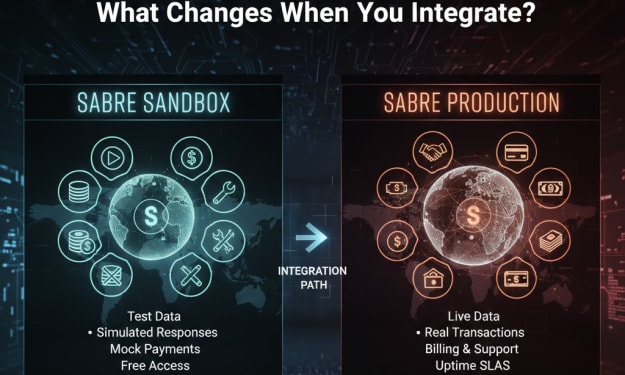
Sabre API Sandbox vs Production: What Changes When You Integrate?
Building a travel booking platform is exciting, but the real challenge begins when you move from testing to handling real users and real bookings. Many teams feel confident while working in a test environment, only to face unexpected issues when they go live. This is especially common when working with travel technology platforms, where data accuracy, pricing, and booking behavior can change dramatically outside a testing setup.
By Nico Gonzalezabout 10 hours ago in 01
The Battery of Trust: How Phone Charging Habits Relate to Honesty in Location Sharing
Hey there. Over years of building location-sharing tools, I've noticed a pattern that rarely gets discussed: the link between a phone's battery life and the health of a relationship built on digital trust. It sounds odd, right? But think about it. The most common technical excuse for a location tracker failing is, "My phone died." While sometimes true, this dead battery can often be a symptom, not just a cause—a digital tell that signals a deeper disconnect.
By Olivia Martinez5 days ago in 01
Instructions Included Challenge Winners
For the Instructions Included challenge, we asked writers to tell a story through instructions and to trust the form to carry what could not be said outright. Across the top entries, that trust paid off in many different ways.
By Vocal Curation Team5 days ago in Resources


Comments
There are no comments for this story
Be the first to respond and start the conversation.