
How AI Automates the Legal Drafting Process
Learn how AI automates legal drafting, streamlines contracts improves accuracy, reduces errors, and saves time with smart templates and predictive analytics.

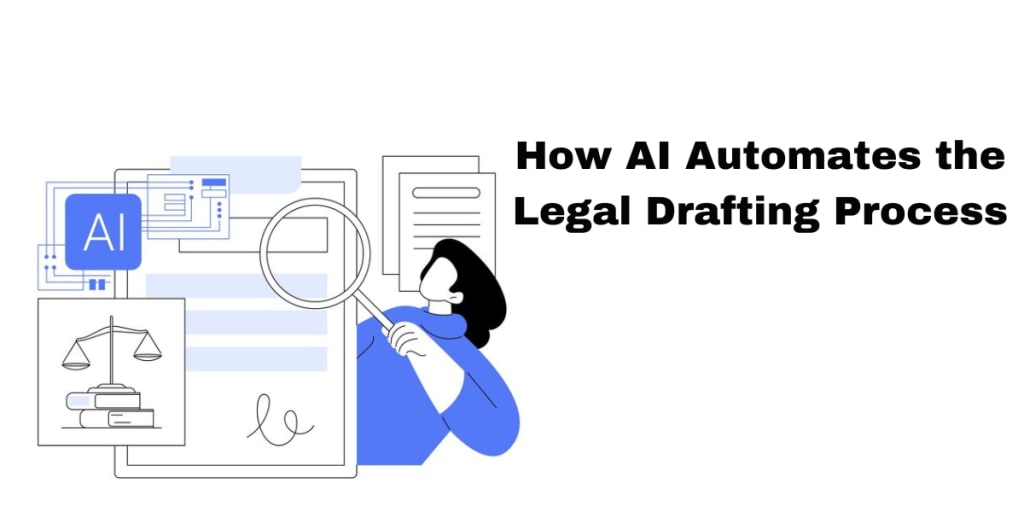
Like all other sectors, the legal industry is also undergoing a paradigm shift, embracing digital transformation with open arms. Not to mention that artificial intelligence is at the epicenter of these technological enhancements, automating and streamlining various operations. Legal drafting is one such daunting and time-consuming process that involves creating legal documents, and contracts, writing bail applications, preparing agreements, and much more. But we must thank artificial intelligence and machine learning solutions for comprehensively transforming how legal professionals draft documents with speed, accuracy, and efficiency.
In this article, we are going to explore how artificial intelligence is automating the legal documentation process and what key benefits it brings to law firms, businesses, and legal practitioners.
Let’s First Understand the Legal Drafting Process
For long, legal drafting has been one of the most pain-taking and laborious tasks because it includes articulating the facts and legal terms in a precise manner without any errors. The process requires in-depth knowledge of the law, and meticulous attention to every detail, and may include substances that may go in the favor or against the defendant or petitioner while hearing in the courtroom. Also, after creating the document, reviewing it, and making corrections takes considerable time.
However, it’s time to say goodbye to the manual and mundane process of document revision and welcome AI in legal drafting that can significantly save a lot of time and effort. Hence, many legal professionals now are looking to draft documents automatically and stay on top of the landscape.
Advantages of Artificial Intelligence in Legal Drafting
1. Time-Efficiency
Artificial Intelligence speeds up the legal drafting process by making it possible to automate repetitive and time-consuming work such as the generation of standard contracts, document review, and clause analysis. With such efficiency, legal teams can manage more work in terms of quantity without compromising on quality.
2. Cost Saving
AI in legal drafting reduces the extent of human resource utilization for several tasks related to legal drafting, thus bringing down the costs of operations in law firms and businesses. Tasks that would have taken hours in manual labor could be handled by AI tools to save time and money.
3. Accuracy Enhancement and Risk Minimization
Artificial Intelligence tools can identify mistakes and discrepancies that human drafters may miss. This improvement increases the overall quality of legal documents and helps to minimize the chances of legal disputes due to poorly drafted agreements. Moreover, AI systems can ensure adherence to industry standards, regulations, and best practices, which also reduces the likelihood of errors.
4. Better Client Service
The saved time will allow lawyers to focus more on client relationships, offer personal services, and deal with more complex issues effectively. AI will improve overall productivity and make firms deliver results to their clients much faster, improving satisfaction and loyalty.
5. Streamlined Collaboration
Artificial Intelligence enables legal teams to work in better collaboration since it supports sharing and versioning of documents in real time. Also, AI systems can sense any alteration in the document which, in turn, ensures that every member is aligned and helps both communication and efficiency.
Challenges and Considerations
AI in legal drafting may offer a plethora of advantages but there are some challenges and considerations that must be recognized in terms of using this technology in the process of legal drafting.
1. Over-Dependency on the Technology
Artificial intelligence is seen as a significant boon for the legal industry but as you know over-dependency on any technology can have negative impacts too. Excessive reliance on AI tools can lead to a loss of critical human insight. While AI can handle many tasks, it cannot replace the nuanced understanding of legal professionals who can interpret complex legal language and handle unique, high-stakes situations.
2. Ethical Concerns
Most companies develop AI tools and systems with attention to meticulous details so that they can responsibly handle sensitive data. Legal documents often contain confidential information; hence, AI tools must follow privacy and confidentiality standards to avoid legal and ethical violations due to reckless disclosure.
3. High Initial Setup Costs
Investing in AI tools is a one-time affair but the costs can considerably increase if the training and integration process with the existing systems is complex. This is one of the prime reasons why many law firms abstain from adopting AI solutions.
Automating Contract Creation and Templates
One of the primary ways AI is transforming the legal drafting process is through the automation of contract creation. AI systems can generate standard contract templates by analyzing previous agreements and the unique requirements of a specific case. These tools can automatically insert relevant clauses, adjust the language, and propose modifications based on the user’s preferences and the nature of the transaction.
For example, AI-powered contract drafting software can quickly assemble contracts for routine legal processes such as non-disclosure agreements (NDAs), employment contracts, or rental agreements, eliminating the need for lawyers to draft each contract from scratch. This automation drastically reduces the time spent on repetitive tasks, allowing lawyers to focus on higher-value work.
Legal Document Review and Clause Analysis
AI is not only useful in generating legal documents but also in reviewing them. Traditionally, reviewing legal documents to identify clauses, errors, or ambiguities required meticulous human effort. However, AI-powered document review systems can analyze documents at scale, providing quick and accurate insights.
AI systems can scan through entire contracts to identify critical clauses such as confidentiality agreements, dispute resolution provisions, or indemnity clauses. These systems can even compare documents to previous versions or industry standards to highlight any deviations or risks, enabling legal teams to make informed decisions quickly.
AI can also assist in clause analysis, where the system compares different contracts to identify any changes in legal language, helping to ensure that all necessary clauses are included and correctly drafted. This automated analysis saves time and helps legal professionals ensure that no important elements are overlooked.
Conclusion
There is no denying that artificial intelligence systems have automated and streamlined the legal drafting process, providing substantial improvements in speed, accuracy, and efficiency. Law practitioners and legal professionals can create any document just by typing the right prompt in the space and getting it within a matter of seconds. Also, they can add the names of the defendant, and complainant, their addresses, important dates, name of the court, etc.
AI allows legal professionals to focus on higher-value work that requires human judgment. As it continues to evolve, we can view its significant impact on the legal industry in driving innovation and transformation in how legal documents are drafted and managed.
About the Creator
Deep Karia
Deep Karia, Director at Legalspace, leads innovation in India's legal ecosystem with AI-driven solutions, streamlining legal research, automating workflows, and advancing cloud-based services for enhanced efficiency in legal practices.
Keep reading
More stories from Deep Karia and writers in 01 and other communities.
How Legal Technology is Changing India’s Legal Landscape?
Technology has revolutionized almost every industry in recent years, and the legal sector is no different. The legal industry is undergoing a significant transformation due to legal technology as the world moves toward a more digital-first approach.
By Deep Kariaabout a year ago in 01
How to Become a Mobile App Developer in 2026
The Google ecosystem has undergone a tectonic shift where mobile development is no longer defined by syntax proficiency but by Agentic Optimization. This structural realignment means that risk exposure for developers now hinges on their integration into the Trust Graph rather than mere technical stack knowledge.
By Devin Rosario6 days ago in 01
Best Animation Brands: Top Players Shaping the Animation World
The animation industry is one of the most dynamic and influential sectors in entertainment. Over the years, animation studios have created masterpieces that have redefined storytelling and visual artistry. From classic hand-drawn films to cutting-edge CGI experiences, the best animation brands continue to captivate audiences across the globe. In this article, we’ll dive deep into the best animation studios, exploring their contributions, creative techniques, and what makes them stand out in the world of animation.
By Backlinks Cart7 days ago in 01



Comments
There are no comments for this story
Be the first to respond and start the conversation.