
How AI and Tokenization Are Powering the Next Generation of Web3 Platforms?
How AI and Tokenization Are Shaping the Future of Web3 Innovation

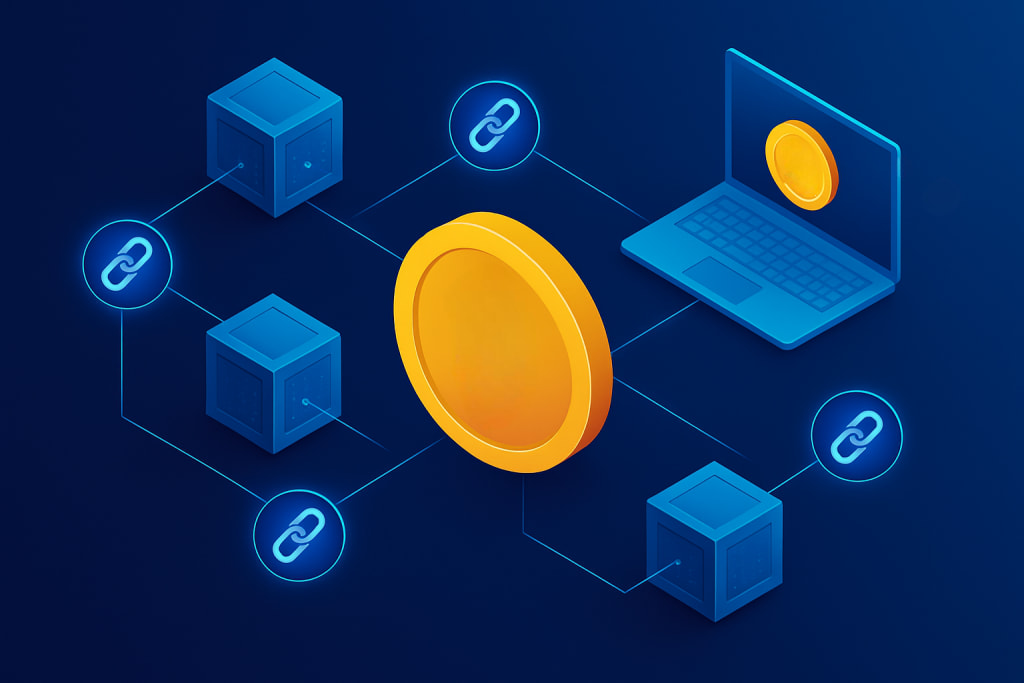
The Web3 revolution has introduced a new era of digital interaction where decentralization, ownership, and transparency take center stage. As blockchain technology continues to evolve, two transformative forces Artificial Intelligence (AI) and Tokenization are now driving the next wave of innovation across decentralized ecosystems. These technologies, when combined, are redefining how digital platforms function, enabling smarter automation, secure ownership of assets, and frictionless value exchange in a trustless environment.
AI’s ability to analyze vast datasets, automate decisions, and enhance user experiences blends seamlessly with tokenization’s power to represent real and digital assets on blockchain networks. Together, they are shaping a more intelligent, efficient, and inclusive digital economy. From decentralized finance (DeFi) and gaming to healthcare, supply chain, and real estate, the synergy of AI and tokenization is fueling the next generation of Web3 platforms that promise to transform industries at scale.
Understanding Web3 and Its Core Principles
Web3 represents the next evolution of the internet, built on blockchain technology and designed to return control and ownership to users. Unlike Web2, where centralized entities dominate data and digital interactions, Web3 relies on decentralized protocols that empower individuals through transparency, security, and direct participation. Smart contracts, decentralized applications (dApps), and token-based economies lie at the core of Web3’s infrastructure.
The core idea behind Web3 is to create a user-centric digital ecosystem where data is owned by the individual rather than stored and monetized by corporations. This structure allows for greater autonomy and trust, as all transactions and operations occur transparently on immutable ledgers. AI and tokenization further enhance these principles by making decentralized systems more intelligent and economically viable, ensuring that the future of the internet is both user-driven and self-sustaining.
The Role of AI in Modern Web3 Ecosystems
Artificial Intelligence has already proven its transformative impact across industries, but within Web3 ecosystems, its influence is particularly profound. AI enhances the decentralized web by optimizing decision-making, improving data interpretation, and ensuring that complex blockchain networks operate efficiently.
AI algorithms can analyze blockchain data to detect anomalies, prevent fraud, and optimize decentralized trading strategies. They also enable predictive analytics that support investment decisions in DeFi protocols or NFT marketplaces. Furthermore, AI-driven oracles bridge the gap between on-chain and off-chain data, ensuring smart contracts execute actions based on reliable, real-world information.
In Web3 social platforms, AI personalizes content and recommendations while maintaining privacy through decentralized data ownership models. AI-powered governance models, such as decentralized autonomous organizations (DAOs), benefit from intelligent systems that predict community trends and support transparent decision-making.
The Concept of Tokenization and Its Impact on Digital Economies
Tokenization refers to the process of representing assets whether tangible like real estate and art or intangible like intellectual property as digital tokens on a blockchain. Each token signifies ownership, value, or rights to an asset, making it transferable, divisible, and tradable within digital ecosystems.
By enabling fractional ownership, tokenization lowers barriers to entry and democratizes investment opportunities. For example, an investor can own a small share of a luxury property or artwork through tokenized assets. In the context of Web3, tokenization creates economic incentives that fuel decentralized ecosystems, allowing users to contribute to networks and earn value directly.
This mechanism not only enhances liquidity but also introduces transparency and traceability across industries. Combined with AI, tokenization becomes even more powerful, as smart algorithms can evaluate tokenized assets in real time, assess market conditions, and enable automated governance and trading mechanisms.
How AI Enhances the Efficiency of Tokenized Ecosystems
Tokenized ecosystems generate massive amounts of transactional and behavioral data, making them ideal candidates for AI-driven optimization. AI can process and interpret this data to enhance operational efficiency, reduce risks, and maximize returns for participants.
Machine learning models, for instance, can predict market trends, evaluate token performance, and automate yield strategies in decentralized finance platforms. AI also plays a key role in token valuation and risk management by continuously analyzing on-chain metrics and external data sources. Moreover, it can identify fraudulent activities or market manipulation, ensuring a secure environment for users.
In asset tokenization, AI algorithms assist in the verification and assessment of underlying assets, providing more accurate valuations. This fusion of intelligence and tokenization ensures that digital assets maintain real-world credibility and utility, paving the way for more trust and adoption in Web3 markets.
Smart Contracts and AI Automation in Web3 Platforms
Smart contracts self-executing agreements coded on blockchains form the backbone of Web3 operations. When integrated with AI, these contracts become more adaptive, context-aware, and capable of complex decision-making.
AI can enable dynamic smart contracts that modify their terms based on changing conditions. For example, an AI-enhanced lending protocol could automatically adjust collateral requirements based on real-time market data or borrower risk profiles. Similarly, in decentralized insurance systems, AI could assess claim validity using predictive models and automate payouts without manual intervention.
By embedding AI into smart contracts, Web3 platforms achieve higher levels of automation and reliability, reducing human error while ensuring transparency. This integration marks a critical step toward fully autonomous digital ecosystems that can self-manage based on pre-defined, data-driven logic.
AI-Driven Data Privacy and Security in Decentralized Networks
One of the most significant challenges in the Web2 era has been data misuse and privacy breaches. Web3 addresses this issue through decentralized data ownership, and AI further strengthens it with advanced encryption, anomaly detection, and privacy-preserving computation techniques.
Federated learning, for example, allows AI models to learn from distributed data sources without transferring sensitive information. This ensures that users retain control of their personal data while still contributing to global AI systems. In blockchain networks, AI can also detect irregularities and potential cyberattacks by analyzing transaction patterns in real time.
Moreover, AI supports the implementation of zero-knowledge proofs, where users can validate information without revealing actual data. This combination of AI-driven security and blockchain transparency creates a trustless, yet highly secure, Web3 environment.
Tokenization of Real-World Assets (RWA) in Web3
The tokenization of real-world assets (RWAs) is one of the most promising applications of blockchain and a key pillar in the evolution of Web3. Real estate, commodities, intellectual property, and even carbon credits can now be represented as tokens, enabling global participation and liquidity.
AI enhances this process by automating asset appraisal, monitoring market fluctuations, and assessing portfolio risks. For example, AI-powered tokenization platforms can instantly evaluate a property’s market value using real-time data and integrate this information into a blockchain-based token offering.
In addition, AI can track tokenized assets over time, ensuring regulatory compliance, maintenance status, and ownership validation. This makes RWAs more transparent, efficient, and accessible, setting the stage for a fully digitized global economy.
Decentralized Finance (DeFi) Empowered by AI and Tokenization
Decentralized finance, or DeFi, has emerged as one of the most significant Web3 innovations, providing financial services without intermediaries. Tokenization fuels DeFi by enabling assets to be represented and traded digitally, while AI optimizes these systems for efficiency and profitability.
AI can predict liquidity trends, identify arbitrage opportunities, and manage risks in lending and borrowing protocols. Automated trading bots powered by machine learning execute transactions based on real-time analytics, ensuring better returns for users. Tokenized assets, such as stablecoins or yield-bearing NFTs, allow users to engage in innovative financial activities that were previously restricted to institutions.
This powerful combination ensures that DeFi platforms remain agile, scalable, and user-focused, making decentralized finance more intelligent and adaptive to market dynamics.
AI and Tokenization in Web3 Gaming and the Metaverse
Web3 gaming and metaverse ecosystems are rapidly evolving through the integration of AI and tokenization. Players can now own in-game assets as NFTs, trade them across platforms, and earn rewards through play-to-earn models.
AI enhances gaming environments by personalizing experiences, creating adaptive gameplay, and managing complex in-game economies. It also powers realistic NPCs (non-playable characters) that learn from player behavior, enhancing immersion and interactivity. Tokenization, on the other hand, provides economic infrastructure by representing digital assets such as skins, weapons, or land as tradable tokens.
Together, AI and tokenization are giving rise to player-driven economies where users truly own and monetize their digital experiences, blurring the lines between virtual and real-world economies.
AI-Enabled Governance and DAOs in Tokenized Ecosystems
Decentralized Autonomous Organizations (DAOs) are the governance structures of Web3, allowing communities to manage platforms collectively through token-based voting mechanisms. AI introduces intelligence into this governance layer by analyzing member behavior, sentiment, and proposals to improve decision-making.
AI can forecast the outcomes of governance proposals or identify patterns that might indicate manipulation or bias. Natural language processing (NLP) tools can summarize complex DAO discussions, ensuring that members stay informed and make educated decisions.
This integration enhances democratic participation and transparency while ensuring that DAOs function efficiently and align with community goals. As AI becomes more advanced, it will play a pivotal role in scaling decentralized governance models for global participation.
Cross-Chain Interoperability and AI-Optimized Tokenized Networks
The future of Web3 lies in interoperability the ability for different blockchains to communicate seamlessly. Tokenized assets often exist across multiple chains, and managing them efficiently requires intelligent coordination. AI facilitates this by analyzing network congestion, optimizing transaction routes, and ensuring liquidity across ecosystems.
AI-driven cross-chain bridges can predict optimal transfer paths for assets, reducing gas fees and transaction delays. In addition, AI can assist in dynamic asset swaps between tokenized ecosystems, enhancing fluidity and accessibility for users.
This fusion of AI and interoperability creates a unified Web3 environment where digital assets and data move freely, supporting scalable and interconnected digital economies.
The Rise of AI Agents in Tokenized Web3 Platforms
AI agents autonomous, intelligent programs capable of performing complex tasks are becoming integral to the Web3 ecosystem. These agents can interact with blockchain smart contracts, manage wallets, trade assets, and make governance decisions on behalf of users.
For example, in tokenized markets, an AI agent can analyze trends and execute trades to maximize portfolio performance. In DAOs, AI agents can propose and vote on initiatives aligned with user preferences. By combining autonomy with blockchain transparency, these agents eliminate inefficiencies and expand the capabilities of decentralized ecosystems.
Notably, companies like Blockchain App Factory are pioneering in the development of such AI-driven Web3 solutions, integrating smart automation and tokenization frameworks to power the next generation of decentralized platforms.
AI and Tokenization in the Creator Economy
The creator economy is being transformed by Web3 as artists, musicians, and developers gain ownership over their digital works through NFTs and token-based royalties. AI amplifies this transformation by automating content creation, recommendation, and monetization processes.
For example, AI can generate personalized music or artwork that can then be tokenized as NFTs, allowing creators to monetize instantly. Tokenization ensures creators retain ownership and earn ongoing royalties each time their work is resold.
This synergy promotes a sustainable, transparent, and fair ecosystem where creativity is directly rewarded without intermediaries. The AI-tokenization duo is empowering creators globally, redefining how digital value is generated and distributed.
The Future Outlook: Building Smarter, Tokenized Web3 Platforms
The fusion of AI and tokenization is still in its early stages, but its potential is vast. In the near future, we can expect AI-powered decentralized platforms capable of self-governance, real-time adaptation, and cross-industry interoperability.
Tokenization will continue to redefine ownership, liquidity, and investment models across sectors. Combined with AI’s predictive and cognitive capabilities, Web3 platforms will become more user-centric, sustainable, and intelligent. This evolution will not only revolutionize digital economies but also redefine trust, collaboration, and innovation in the global digital landscape.
Conclusion
AI and tokenization are the twin pillars propelling the Web3 revolution forward. Together, they are creating a decentralized internet that is not only transparent and secure but also intelligent and adaptive. From finance and governance to art, gaming, and beyond, these technologies are reshaping how people interact, transact, and create value in the digital world.
As developers, investors, and innovators continue to explore this synergy, one thing is certain the next generation of Web3 platforms will be more dynamic, efficient, and human-centric than ever before. The convergence of AI and tokenization is not just powering the future of Web3; it’s defining it.
About the Creator
Jack santo
I am a Blockchain, Crypto, NFT, Metaverse, etc., enthusiast.
Keep reading
More stories from Jack santo and writers in 01 and other communities.
How Leading Banks Are Leveraging Blockchain to Drive the $16 Trillion Real-World Asset Tokenization Revolution?
Tokenization of real-world assets is emerging as one of the most transformative trends in global finance. By converting ownership rights of physical and financial assets into digital tokens on a blockchain, banks can enable fractional ownership, near-instant settlement, and programmable financial instruments. These innovations have the potential to unlock liquidity in traditionally illiquid markets such as real estate, private credit, art, and other alternative assets. Analysts estimate that tokenized assets could reach up to $16 trillion by 2030, capturing a significant portion of the global financial ecosystem. This figure has prompted leading banks to invest heavily in research, pilot programs, and full-scale deployment strategies for tokenized real-world assets.
By Jack santo3 months ago in 01
How Do You Know If Someone Unfriended You on Snapchat?
When someone unfriended or removes you on many social media platforms, such as Facebook or Instagram, you could recognize a notable difference with Snapchat. Usually, social media platforms make it clear if someone has unfriended or removed you. But in Snapchat, it is difficult to determine if someone has unfriended you as you won’t receive any notification.
By Intelligent Creator5 days ago in 01
The Best Head Shaver of 2026, According to User Reviews
For those who shave their heads regularly, the difference between a high-quality tool and a frustrating one is immediately noticeable. Issues like tugging, irritation, uneven patches, and constant cleanup were once unavoidable. However, in 2026, these problems have become much less common.
By CEO A&S Developers3 days ago in 01


Comments
There are no comments for this story
Be the first to respond and start the conversation.