
History of Wall Clocks and how they're being used for Home Decor these days!
Should you?
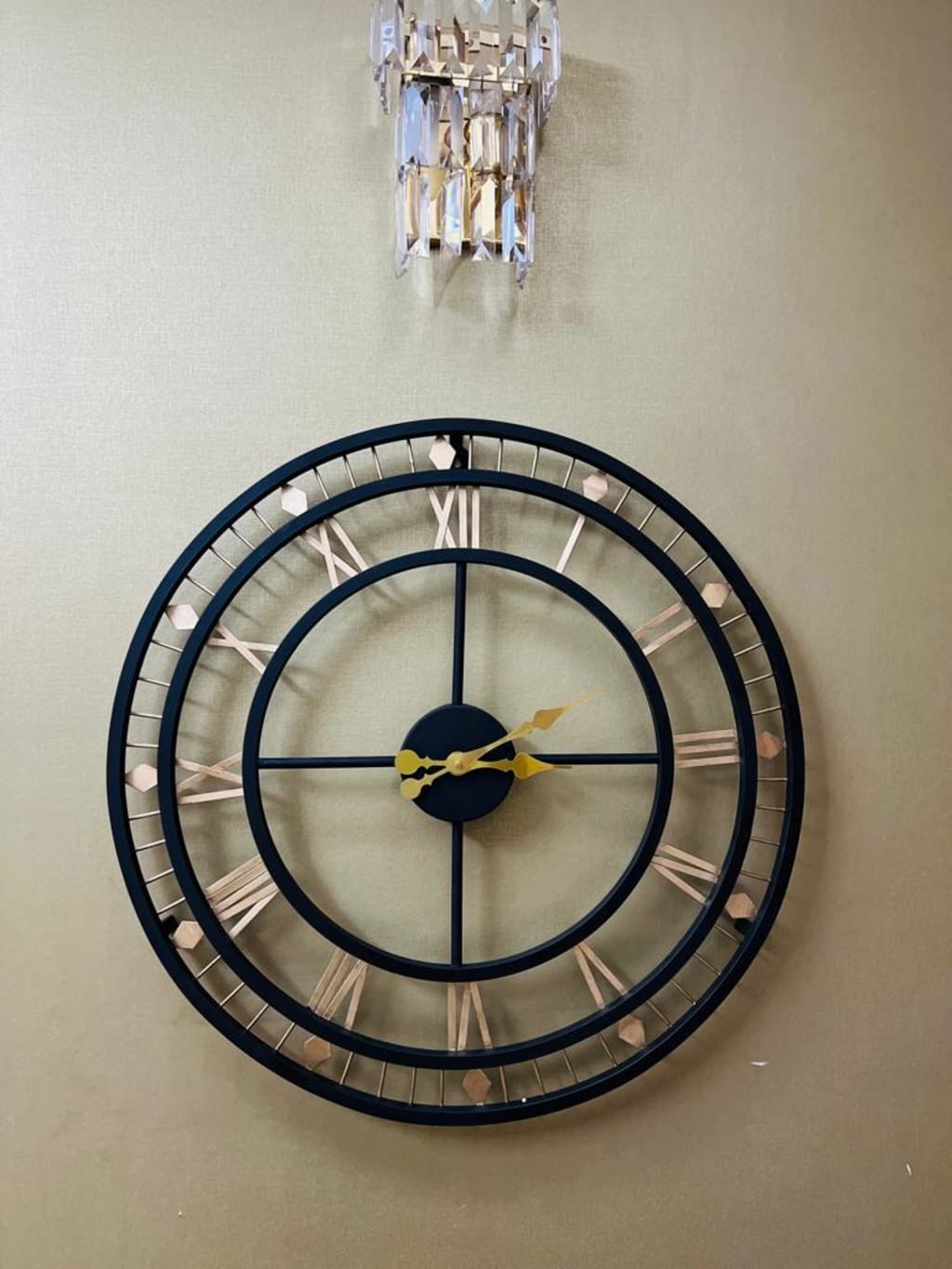
Wall clocks have been an important part of human history for centuries. The history of wall clocks dates back to the early 14th century when the first mechanical clock was invented in Europe. Since then, wall clocks have undergone many changes and improvements, and they have become an essential part of our daily lives. In this article, we will discuss the history of wall clocks and how wall clocks are used for home decor.
History of Wall Clocks
The first mechanical clock was invented by a man named Giovanni de Dondi in the early 14th century. This clock was called the Astrarium, and it was a highly complicated device that displayed the positions of the sun, moon, and other planets. However, it was not until the 17th century that wall clocks became common in households. The Dutch were the first to use wall clocks, and they were highly prized for their accuracy and craftsmanship.
As the years passed, wall clocks became more sophisticated, and they were made in a wide variety of styles and designs. In the 19th century, wall clocks became highly ornate, and they were used to show off the wealth and status of the owner. Some of the most beautiful and expensive wall clocks were made in France during this period, and they are still highly prized by collectors today.
Today, wall clocks are still highly popular, and they are used in homes and offices around the world. Modern wall clocks come in a variety of styles and designs, and they can be purchased in both traditional and contemporary styles. Some of the most popular styles of wall clocks include cuckoo clocks, grandfather clocks, and antique wall clocks.
Wall Clocks for Home Decor
Wall clocks are not only useful for telling time, but they can also be used as decorative pieces in the home. In fact, many people choose wall clocks for their homes based on their design and aesthetic appeal rather than their functionality. Wall clocks can be used to add a unique touch to a room, and they can be incorporated into a wide variety of design styles.
For example, if you have a modern or minimalist home, a simple and sleek wall clock can be the perfect addition to your decor. On the other hand, if you have a more traditional or vintage-style home, an antique wall clock can be a beautiful and timeless addition to your space. Wall clocks can also be used to add a pop of color to a room, or to tie in with other decorative elements.
When choosing a wall clock for your home, it is important to consider the size and scale of the clock in relation to the room. A large, ornate clock may overwhelm a small room, while a small, simple clock may look out of place in a large, open space. It is also important to consider the color and style of the clock in relation to the other elements in the room, such as furniture, artwork, and textiles.
Conclusion
In conclusion, the history of wall clocks dates back to the early 14th century, and they have been an important part of human history ever since. Today, wall clocks are still highly popular, and they can be used as both functional timepieces and decorative pieces in the home. When choosing a wall clock for your home, it is important to consider the size, scale, and style of the clock in relation to the other elements in the room. With so many styles and designs to choose from, there is a wall clock out there for every home and every taste.
P.S. I run my own home decor store wherein I sell premium wall clocks. Do check it out here, I'm sure you'll love it.
About the Creator
Keep reading
More stories from writers in 01 and other communities.
Who’s Leading Fintech in 2026? Top App Development Companies
When it comes to building secure, scalable, and innovative financial solutions — from digital banking platforms and payment systems to AI-driven risk tools — picking the right partner can make or break your success. In 2026, fintech is evolving faster than ever, powered by AI, cloud-native architectures, blockchain, and embedded finance. Below are the foremost companies shaping the future of fintech technology.
By Aarti Jangidabout 17 hours ago in 01
Musk wants up to $134B in OpenAI lawsuit, despite $700B fortune
Elon Musk wants a jaw-dropping $79 billion to $134 billion in damages from OpenAI and Microsoft, claiming the AI company defrauded him by jettisoning its nonprofit mission, Bloomberg first reported. The figure comes from expert witness C. Paul Wazzan, a financial economist whose bio says he has been deposed nearly 100 times and testified at trial more than a dozen times in complex commercial litigation cases.
By Dena Falken Esq2 days ago in 01
Rachel Reviews: The Spiral Archive by Pieter Hendrik
It's difficult for me to know where to start with a review of this book as it was, for me, an entirely unique experience and one that I'll probably never have again. I don't want that to be interpreted as unenjoyable but it has left me scratching my head a little and ruminating on its content, its themes and its characters.
By Rachel Deeminga day ago in BookClub


Comments
There are no comments for this story
Be the first to respond and start the conversation.