
History of Indian Politics
A Journey through India's Political Landscape
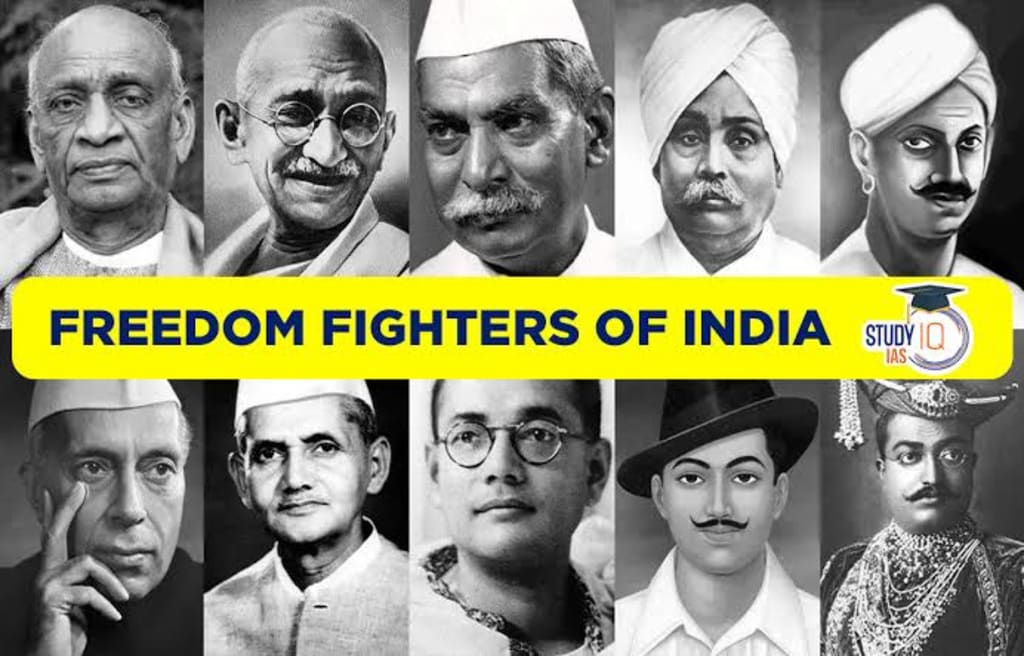
The history of Indian politics is a complex and diverse one, shaped by a range of factors including colonialism, cultural diversity, and regionalism. Here is a more detailed overview of the major events, movements, and figures that have shaped Indian politics:
Pre-Independence Era:
India was under British colonial rule for nearly two centuries before it gained independence in 1947. During this time, the Indian National Congress (INC) was founded in 1885, which became the dominant political party in India's struggle for independence. The Indian National Movement, which included nonviolent resistance movements led by Mahatma Gandhi, played a key role in the country's eventual independence.
Post-Independence Era:
After India gained independence, the INC became the ruling party of the newly independent country. Jawaharlal Nehru, a prominent leader of the INC, became the first Prime Minister of India and played a significant role in shaping India's political and economic policies. The Indian Constitution was adopted in 1950, which established India as a democratic republic with a parliamentary system of government.
During the 1960s and 1970s, India witnessed the rise of regional political parties that challenged the dominance of the INC. In 1969, the INC split into two factions, one led by Indira Gandhi and the other by Morarji Desai. Indira Gandhi went on to become the Prime Minister and served for a total of four terms, with her regime marked by authoritarianism, social reforms, and economic policies. The Emergency declared by Indira Gandhi in 1975 suspended civil liberties and was widely criticized.
In the 1980s, the Bharatiya Janata Party (BJP) emerged as a major political force in India, advocating for Hindu nationalism and cultural revivalism. The BJP rose to prominence in the 1990s with the demolition of the Babri Masjid mosque in Ayodhya, which led to widespread communal violence.
In the early 1990s, India underwent significant economic liberalization and globalization, which had a profound impact on Indian politics. The INC-led government implemented a number of significant economic and social reforms, including the Right to Information Act, the National Rural Employment Guarantee Act, and the Food Security Act. However, the government was also criticized for corruption scandals and a lack of effective governance.
In the early 2000s, India witnessed the rise of a number of regional parties and coalitions, which led to a more fragmented political landscape. The INC-led United Progressive Alliance (UPA) government came to power in 2004, and implemented a number of significant social welfare schemes, including the Mahatma Gandhi National Rural Employment Guarantee Act, the National Rural Health Mission, and the Right to Education Act.
In 2014, the BJP won a sweeping victory in the national elections and formed a majority government under the leadership of Narendra Modi. Modi's government has focused on economic development, infrastructure development, and foreign policy, but has also faced criticism for its handling of social and religious issues, such as the treatment of minorities and the suppression of dissent.
Today, India's political landscape remains complex and diverse, with a variety of political parties and ideologies competing for power and influence. The country faces a number of challenges, including economic inequality, social unrest, and political corruption, as it continues to navigate its role on the global stage.
About the Creator
Keep reading
More stories from Xavier Louis and writers in 01 and other communities.
How Crypto Arbitrage Bots Find Opportunities Humans Often Miss
The cryptocurrency market operates 24 hours a day, seven days a week, across hundreds of trading platforms around the world. Unlike traditional financial markets that follow fixed trading hours, crypto markets are constantly active, creating continuous fluctuations in asset prices. Because different exchanges operate independently, the same cryptocurrency can sometimes be priced slightly differently across platforms. These price differences create opportunities for a trading strategy known as arbitrage.
By smithtaylor3 days ago in 01




Comments (1)
Very good, Please add some more details in your future stories