
Here’s Why I Write About Virtual Reality and Why It Matters for Gamers and Others.
Here are different areas of virtual reality and why it matters to me.

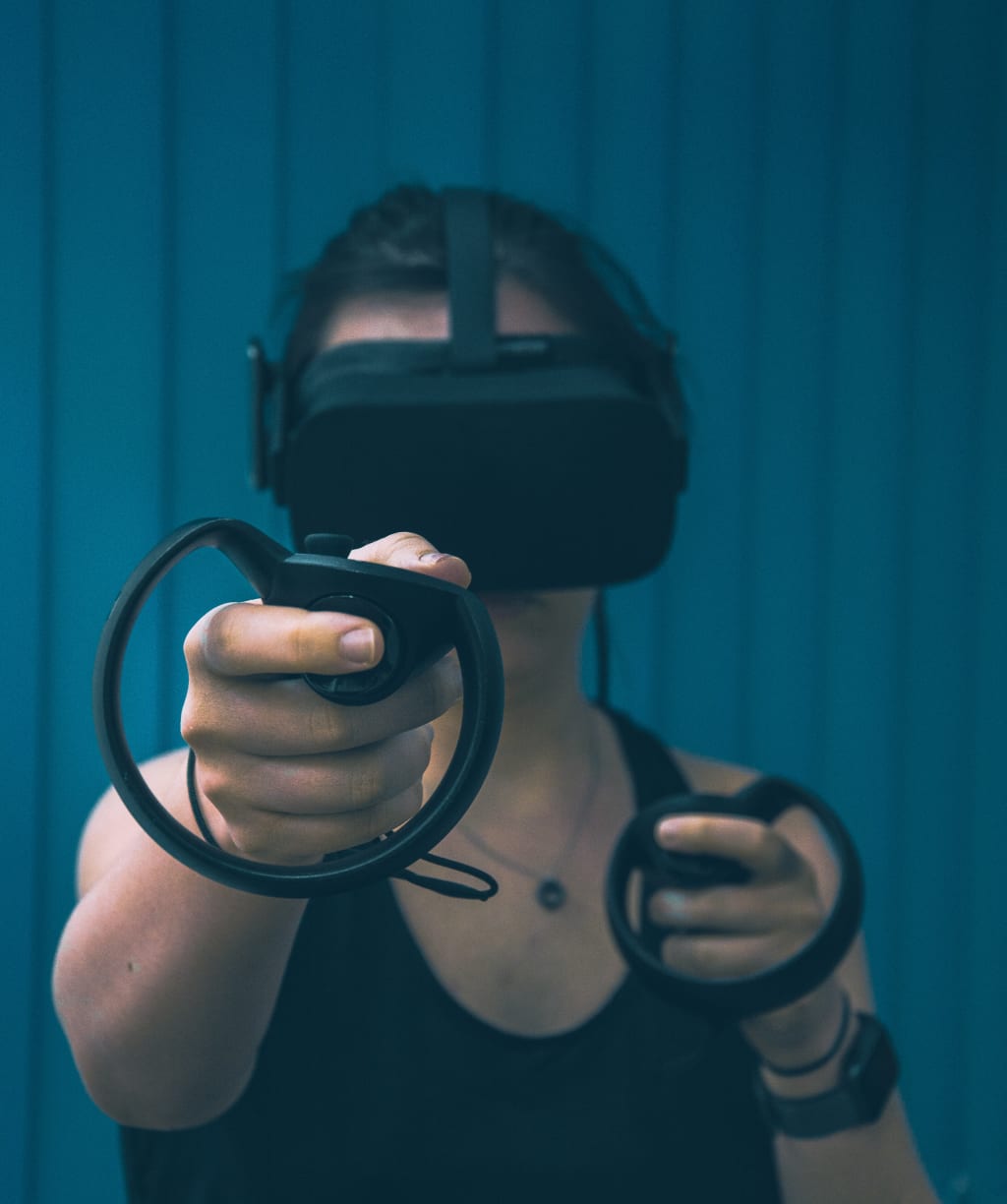
Virtual reality is my passion as I use it personally and professionally. Previously, I have written about virtual reality a lot and became a top writer on this topic.
In one of my latest stories titled This Is How Virtual Reality Might Be the Future of Gaming, I spoke about my views on how VR is likely to take over the gaming industry.
In this post, first, I mention why I write a lot about virtual reality. Then, beyond gaming, I will talk about different aspects and benefits of virtual reality to give you an idea if you are new to this exciting technology.
Why I write about Virtual Reality
Ever since I started writing about gaming, virtual reality has been a reoccurring topic throughout many of my posts.
I first tried virtual reality when I was a kid. The headset I used was the HTC Vive in a public demo in the city. Before this, I had only ever seen devices such as the HTC Vive and the Oculus Rift in YouTube videos.
For someone who had never touched a virtual reality headset before, it was a very interesting experience.
After that experience, I went online and asked my parents if they could buy me a cheap VR mount for my phone. I used this device to play very few VR games on the app store at the time, as well as consume media in a VR format.
It wasn’t until PlayStation announced their PlayStation VR, which was when I got my hands on my first VR headset back in 2016.
This device was a game changer for me since I regularly played racing simulator games on my PlayStation with a racing wheel. With the addition of the PlayStation VR, my overall experience with such games was understandably heightened.
This opened the floodgates in my interest in virtual reality, since ever since then, I have always attempted to get my hands on various virtual reality headsets.
Additionally, after the release of a very popular movie called “Ready Player One” in 2018, I was even more interested in virtual reality since the depiction of virtual reality in that movie is what I hope to be a reality in the future.
I guess I mainly write about virtual reality because it is one of my favorite ways to consume media and play games. Although our current technology isn’t on par with the depiction of virtual reality in “Ready Player One”, I look forward to the day when that type of online world is a norm.
Here’s an overview of and history of virtual reality if you are unfamiliar with the concept.
What is virtual reality?
Virtual Reality (VR) refers to using technology to create a simulated environment that immerses the user in a digital world. In VR, the user typically wears a headset displaying a 3D environment in front of their eyes and may include other sensory inputs like sound and touch.
The user can interact with the virtual world using various input devices such as hand controllers, gloves, or body suits, which allow them to move and manipulate objects within the environment.
VR is widely used in entertainment and gaming but has applications in other fields such as education, healthcare, and engineering. For example, VR can be used for training simulations, medical therapy, or architectural design.
This technology can potentially revolutionize how people learn, work, and play by providing immersive experiences that simulate real-world situations in a safe and controlled environment.
History of Virtual Reality
Virtual reality started before I was born. The concept of virtual reality dates back to the 1960s when Ivan Sutherland developed the first head-mounted display (HMD), known as “The Sword of Damocles.”
This device was used to display simple wireframe graphics, and although it was very basic by today’s standards, it paved the way for further research and development.
Throughout the 1970s and 1980s, researchers continued to work on VR technology, but it was not until the 1990s that it became more widely available. In 1991, the first commercial VR system, the Virtuality 1000CS, was released, followed by the Virtuality 2000 and the Sega VR headset in 1993.
Despite the initial interest, VR did not catch on as a mainstream technology due to high costs and limited availability. However, in recent years, technological advances have made VR more accessible and affordable.
In 2012, Oculus VR was founded, and its first VR headset, the Oculus Rift, was released in 2016. Other major tech companies like HTC, Sony, and Google have also released VR products.
VR is used in various fields, including gaming, education, healthcare, and engineering. The technology continues to evolve, with new developments such as augmented reality and mixed reality offering even more possibilities for immersive experiences.
In the next section, I introduce five practical use of virtual reality.
1 — Immersive Experiences via Virtual Reality
I start with this point as it is the core of the concept. Virtual reality can create a highly immersive experience that simulates a real-world environment.
As a user, you are transported to a virtual space where you can interact with objects and elements in the environment. These experiences can be sensory and engaging.
In VR, the user wears a headset displaying a 3D environment in front of their eyes and may include other sensory inputs like sound and touch.
The user can interact with the virtual world using various input devices such as hand controllers, gloves, or body suits, which allow them to move and manipulate objects within the environment.
The immersive experience of VR can be engaging and trigger emotions and reactions similar to those experienced in the real world.
For example, in a VR game, you may feel excitement or fear as you navigate through a virtual world. In a medical training simulation, healthcare professionals may feel empathy and compassion for patients in need.
2— Learning, Training, and Education
Virtual reality (VR) can be a highly effective tool for learning, training, and education, as it offers a safe and controlled environment for users to learn and practice skills.
Here are some practical ways VR can be used for learning, training, and education:
Simulation training
VR can simulate real-world scenarios and situations, allowing users to practice and improve their skills in a safe and controlled environment. For example, pilots can use VR simulators to practice flying in different weather conditions and emergencies.
Medical training
VR can be used for medical training, allowing students to practice procedures and surgeries without the risk of harming a patient. Medical students can also use VR to explore the human body and learn about anatomy and physiology.
Language learning
VR can be used for language learning, immersing users in a virtual environment to practice speaking and listening to a new language. This can be especially useful for practicing real-world scenarios like ordering food in a restaurant or asking for directions.
Cultural education
VR can provide immersive cultural experiences, allowing users to explore different parts of the world and learn about different cultures and traditions.
Soft skills training
VR can be used to train employees in soft skills like communication, conflict resolution, and teamwork. Users can practice these skills in simulated scenarios, receiving feedback and guidance to improve their performance.
VR offers an effective and engaging way to train and educate individuals in various fields and industries.
3 — Entertainment
Virtual reality (VR) can provide a new level of entertainment by offering immersive experiences beyond what is possible with traditional entertainment mediums like movies, TV, and video games. Here are some ways VR can provide a new level of entertainment:
Immersive storytelling
VR can offer a more immersive and interactive way to tell stories, allowing users to feel like they are part of the action. For example, VR experiences can put users in the middle of a movie or game, allowing them to interact with the characters and environment.
Exploration and adventure
VR can offer a new level of exploration and adventure, allowing users to travel to new places and experience new things. For example, users can explore distant planets, dive into the ocean's depths, or travel back in time to historical events.
Multiplayer experiences
VR can offer multiplayer experiences beyond what is possible with traditional gaming. Users can interact with each other in a virtual environment, making it feel like they are in the same room, even if they are in different parts of the world.
Physical activity
VR can offer a new level of physical activity, allowing users to engage in activities like sports and fitness in a virtual environment. For example, users can play virtual tennis, rock climbing, or participate in a dance party.
VR can provide a new level of entertainment by offering immersive experiences that engage multiple senses and offer new ways to explore and interact with the world. As technology continues to improve, the possibilities for VR entertainment are endless.
By the way, I like writing about movies.
4 — Therapy and Healthcare
Virtual reality (VR) has shown great potential as a tool for therapy and healthcare due to its ability to create immersive and controlled environments. Here are some ways VR can be used in therapy and healthcare:
Exposure therapy
VR can be used for exposure therapy, allowing patients to confront and overcome their fears in a safe and controlled environment. For example, patients with phobias can use VR to gradually expose themselves to their fear without actually being in the real-world environment.
Pain management
VR can be used as a distraction technique to manage pain. By immersing patients in a virtual environment, they can focus on something other than their pain, which can help to reduce their perception of pain.
Rehabilitation
VR can be used for rehabilitation, allowing patients to practice and improve their physical or cognitive skills in a virtual environment. For example, patients with motor impairments can use VR to practice movements and improve their coordination.
Stress and anxiety reduction
VR can reduce stress and anxiety by providing relaxing and calming virtual environments. For example, patients can use VR to explore peaceful natural settings like beaches or forests.
Medical training
VR can be used for medical training, allowing students to practice procedures and surgeries in a safe and controlled environment. Medical students can also use VR to explore the human body and learn about anatomy and physiology.
VR can be a highly effective tool for therapy and healthcare, offering patients a safe and controlled environment to learn, practice, and overcome their challenges. As technology continues to improve, the potential for VR in therapy and healthcare is vast.
5 — Social Connections
Virtual reality (VR) can provide social connections by allowing users to interact with others in a virtual environment, even if they are physically distant. Here are some ways VR can provide social connections:
Virtual gatherings
VR can be used for virtual gatherings, allowing users to meet and socialize with others in a virtual environment. For example, users can attend virtual concerts, conferences, or social events.
Multiplayer games
VR can offer multiplayer games that allow users to interact and compete with each other in a virtual environment. These games can provide a fun and engaging way to connect with others, even if they are in different parts of the world.
Shared experiences
VR can offer shared experiences that bring people together. For example, users can explore virtual environments, watch movies or sports events, or attend virtual classes or workshops together.
Social simulations
VR can offer social simulations that allow users to practice and improve their social skills. For example, users can practice public speaking or networking in a virtual environment.
Remote work
VR can be used for remote work, allowing users to collaborate and interact with colleagues in a virtual environment. This can provide a sense of connection and teamwork, even if colleagues are physically distant.
VR can provide social connections by offering a virtual environment where users can interact and engage with others in various ways. As technology continues to improve, the potential for VR to provide social connections is vast.
Final Words
To recap, virtual reality is a technology that can create a simulated environment using a headset that displays a 3D environment and might include other sensory inputs.
You can interact with the virtual world using input devices such as hand controllers, gloves, or body suits.
VR is commonly used in entertainment and gaming but has applications in other fields such as education, healthcare, and engineering. VR can be used for training simulations, medical therapy, or architectural design.
VR has the potential to revolutionize the way we learn, work, and play by providing immersive experiences that simulate real-world situations in a safe and controlled environment.
One of the main concepts related to virtual reality is called augmented reality. I will introduce it in detail in another article. But I’d like to give a quick summary.
Augmented reality (AR) is a technology that overlays digital information in the real world, creating a mixed-reality experience. AR technology uses a camera or other sensors to detect the user’s surroundings and then superimposes digital objects, images, or information onto the real world in real-time.
AR can be experienced through various devices, such as smartphones, tablets, AR headsets, and smart glasses. By using these devices, users can see the real world around them with digital elements superimposed on top of it.
AR can be used for various applications, including gaming, advertising, education, and industrial design. For example, AR can create interactive gaming experiences, allowing users to play games integrated into their real-world surroundings.
AR can also be used in advertising to create immersive and engaging experiences incorporating digital elements into real-world environments.
If you enjoy my posts and would like to stay updated on the latest gaming-related news, technology advancements, design trends, and social media insights, I invite you to follow my profile.
I will continue to share my thoughts and insights on a wide range of topics in the world of entertainment and technology.
With that being said, thank you for reading my post, and have a good one.
If you enjoyed this story, please check my informative stories for beginners.
The original version of this story was published on another platform.
About the Author
I write articles in my field covering gaming, filmmaking, media, technology, and design. You can subscribe to my account to get notifications when I post on Medium and Vocal Media. I support Illumination Integrated Publications as an editor and moderate the Slack Workspace, where you can share your Vocal Stories with thousands of members free of charge. I own and manage two publications, one for gaming and one for YouTube. You may join via my referral link if you are new to Medium. You can also join Vocal Media to share your inspiring stories. I look forward to reading your posts on both platforms.
About the Creator
Inspiring YouTuber and Gamer
I specialise in Media, Design, and Filmmaking. I support Illumination Integrated Publications on Medium as an editor and YouTube coordinator. https://www.youtube.com/watch?v=F9DhuGQYbpI& I also own two publications for Gaming and Podcasts.
Keep reading
More stories from Inspiring YouTuber and Gamer and writers in 01 and other communities.
Check Out These Leaks Regarding the iPhone 15
Numerous reports have been circulating about the iPhone 15 Pro being much thinner than its predecessor, the iPhone 14 range. Although the official launch of Apple’s newest phone is still months away, leaks have already begun to emerge.
By Inspiring YouTuber and Gamer3 years ago in 01




Comments
There are no comments for this story
Be the first to respond and start the conversation.