
Gen Z's Rising Role in Politics
Generation Z are driving new forms of political movements, protests, and leadership change

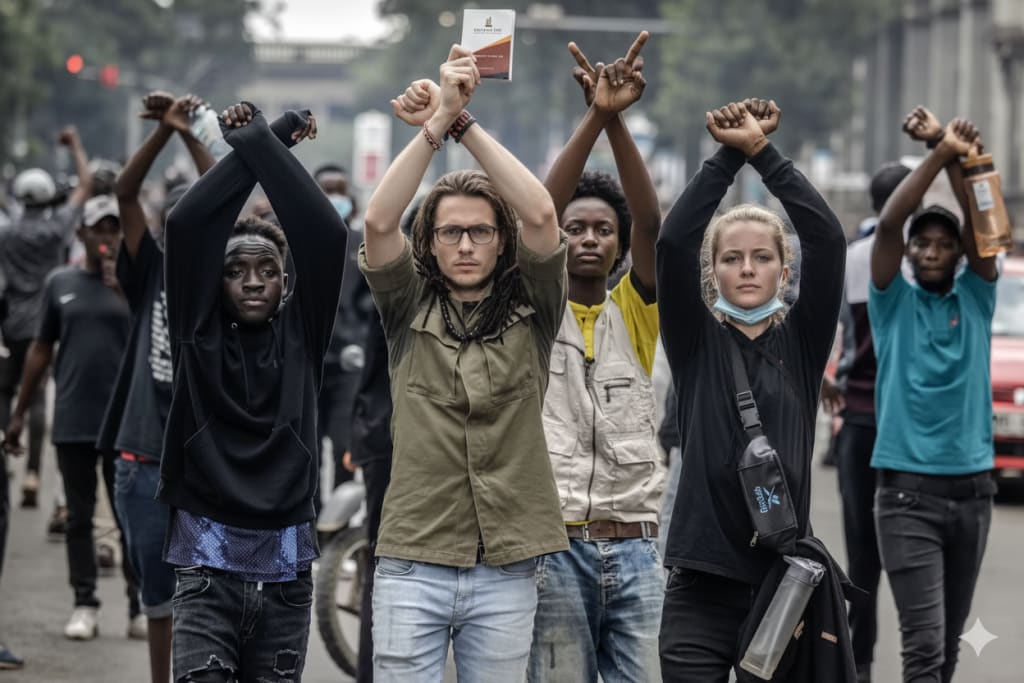
Generation Z—that rough cohort born from the mid‐1990s through the early 2010s—is increasingly visible in politics, not as passive observers but as active agents demanding change. Across Asia, Africa, Latin America—and even in more developed democracies—young people are mobilizing around issues like inequality, corruption, institutional decay, climate crisis, social justice, and democratic accountability. They are less deferential to traditional elites, less loyal to long‐standing partisan identities, and more willing to use disruptive tools than many of their elders.
Several recent cases show this vividly:
- In Nepal (2025), youth‐led protest movements arose in response to a government ban on social media and broader frustrations with corruption and lack of accountability.
- In Morocco, protests led by young people under the banner “Gen Z 212” have demanded better public services (especially healthcare and education), condemned large expenditures on sports infrastructure in the face of basic needs, and challenged corruption.
- In Kenya, youthful activism forced the government to retract unpopular finance legislation and sparked broader debate about governance, transparency, and economic justice. The #RutoMustGo movement, for example, leveraged social media to organize protests and push the government to respond.
These examples illustrate that young people are not just protesting—they are influencing concrete political outcomes: resignations, policy reversals, and in some cases new forms of leadership.
Why are Gen Z movements often more forceful, more visible, and in some ways more effective? Some of the characteristics:
- Digital fluency & networked mobilization: Social media, messaging apps, platforms like Discord, TikTok, Instagram, etc., allow rapid dissemination of grievances, organizing of events, and shaping of narratives. When governments try to shut down or censor platforms, that backlash itself becomes a spark.
- Decentralization & anonymity: Many of these movements are not led by traditional political parties or formal organizations. Leadership tends to be more fluid or collective, reducing vulnerabilities such as co‐optation, repression, or scenarios where suppressing a single leader quashes the movement.
- Intersectionality and issue linkages: Young activists often connect multiple issues: corruption, democratic rights, gender, climate, economic justice. This broadens the base and creates alliances across groups.
- Impatience and less trust in established institutions: Many Gen Zers have grown up witnessing economic crises, political instability, environmental degradation, perceived corruption. They have less patience for incrementalism or long, slow reform. When they feel institutions fail them—elections, courts, public services—they are more willing to demand radical change.
How Leadership Changes Have Been Driven
One of the interesting outcomes of these movements is that protests are translating into real leadership shifts.
- Nepal is perhaps the clearest recent example: youth activism helped bring down a sitting prime minister, and young civic groups are playing a role in nominating or approving replacement leadership.
- In Bangladesh, student protests (involving Gen Z) over government job quotas and other grievances contributed to the political pressure that eventually led to the ousting of longtime leadership.
What seems to matter is when the movement crosses a threshold: widespread participation, moral legitimacy (often backed by victims / egregious events), inability of elites to suppress dissent without severe cost, and coherence in demands (even if leadership is diffuse). When those align, leadership change becomes possible.
Risks, Limitations, and Challenges
- Repression & crackdown: Many governments respond harshly—censorship, internet shutdowns, arrests, sometimes lethal force. The scale of risk is often high.
- Sustainability and institutionalization: Movements often fade once immediate demands are met—or when the cost of continuing becomes too high. Turning protest energy into lasting political structures or policies is difficult.
- Co-optation and fragmentation: Without formal leadership, or with many informal coalitions, there’s risk of internal divisions, opportunism, or external actors pulling in parts of the movement for their own ends.
- Expectation vs. reality gap: Young protestors often expect fast change; when reforms are slow, partial, or symbolic, disillusionment can follow. Also, public service delivery and systemic change are complicated; replacing leaders is one thing; creating lasting good governance is another.
- Digital disruptions and vulnerabilities: While the internet is a powerful organizing tool, it is also a space for misinformation, surveillance, algorithmic suppression, and endless distractions. Governments often try to shut down or control social media; social media platforms can mute voices.
What This Means for the Future
- More unpredictable politics: Political stability in many countries may become less about party machinery and more about how well institutions respond to citizen demands—and especially youth demands.
- New forms of political participation: Beyond voting, more engagement via social media, protests, issue‐based organizing, digital petitions. The boundary between “online” and “offline” activism blurs.
- Pressure on democratic institutions: Courts, media, electoral bodies, and parliaments will come under pressure to become more accountable, transparent, and responsive—or risk losing legitimacy.
- Potential for new leadership models: Rather than the traditional politician or party‐boss, we may see younger leaders, more civic entrepreneurs, or hybrid models of leadership (both online and off). Growth of movements that transform into political parties or pressure groups could alter political landscapes.
- Intergenerational conflict and adaptation: Older elites may resist these changes; some will adapt, co-opt, or try repression. Young people pushing for change will need strategies to avoid burnout, manage internal complexity, and keep momentum without purely antagonistic framing.
The rise of youth and Gen Z‐driven political movements suggests several shifts in how political change is likely to happen in coming years:
Generation Z is not just the “next generation” waiting in line—it is already reshaping political life in many parts of the world. With digital tools, symbolic power, and often no patience for slow fixes, young people are confronting corruption, inequality, and institutional decay in ways that force attention, action, and sometimes real leadership changes. But the journey from protest to deep structural change is uncertain. The success of these movements will depend not only on their passion and visibility, but on their ability to sustain themselves, articulate coherent demands, navigate repression, and build or reform institutions that endure.
About the Creator
Keep reading
More stories from Shiran Pallewatta and writers in 01 and other communities.
The Case for Banning Certain AI Tools Worldwide
In recent years, the rapid advancement of artificial intelligence (AI) has ushered in transformative changes across various sectors, from healthcare and education to finance and entertainment. While these innovations offer unprecedented opportunities, they also present significant challenges that have prompted governments, institutions, and experts to reconsider the unrestricted deployment of certain AI tools. This growing concern has led to discussions about the necessity of imposing global bans on specific AI technologies to safeguard privacy, security, and societal well-being.
By Shiran Pallewatta5 months ago in 01
Low-Priced Tokens vs. Strong Fundamentals: Where Should Investors Focus?
In every crypto cycle, investors face the same dilemma: chase low-priced tokens with explosive upside potential or focus on established projects with strong fundamentals. The appeal of buying something “cheap” is powerful. A token priced under $1 feels more accessible and seems to offer greater room for growth.
By Muhammad Irfan Afzal5 days ago in 01
When the Shelter Closes
Across the street from my house, a man slept under a tree, his dog by his side. My first, naive thought: he must be traveling through. But he kept coming back, often sleeping there during the day. Then it hit me—that person might not have a home.
By Bride of Sound2 days ago in Humans




Comments
There are no comments for this story
Be the first to respond and start the conversation.