
From Requests to Risk: How Modern API Threat Detection Finds What Scanners Miss
Explore how modern API threat detection goes beyond traditional scanners to uncover hidden vulnerabilities, business logic flaws, and real-time risks across dynamic API environments.

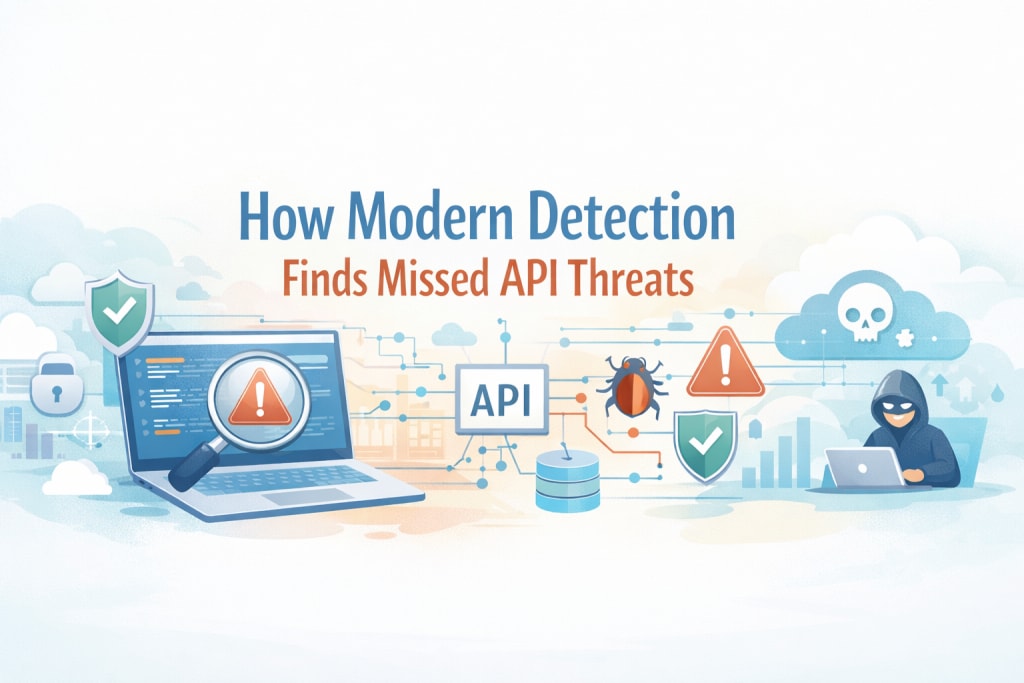
APIs are the backbone of modern applications, powering cloud services, mobile apps, and partner integrations. They enable seamless data exchange, automated workflows, and real-time communication across systems. However, this connectivity also expands the attack surface, making APIs a prime target for malicious actors. Traditional security scanners, which rely heavily on signatures and static checks, often fail to detect sophisticated or subtle API threats.
Organizations that rely solely on scanners may assume their APIs are secure, while attackers exploit gaps in workflow logic, state-dependent operations, or hidden endpoints. To close these gaps, security teams are increasingly adopting an API threat detection tool to continuously monitor traffic, detect anomalies, and identify risks that scanners alone cannot find.
The Nature of Traditional API Security Scanning
While scanners remain important for identifying known vulnerabilities, they have inherent limitations in modern API environments.
How Legacy Scanners Work
Most scanners perform automated requests and analyze responses to detect known issues, misconfigurations, or outdated libraries. They operate effectively for basic technical vulnerabilities but struggle with multi-step processes, chained requests, and stateful workflows that occur in real-world applications.
Static vs Stateful Analysis
Static analysis examines API definitions and code, while stateful analysis considers sequences of requests over time. Traditional scanners focus on static checks and cannot track complex interactions or business logic sequences, leaving attackers opportunities to exploit gaps.
What Scanners Commonly Miss
Modern attacks often bypass static scanning due to reliance on logic, context, and patterns that scanners do not evaluate.
Business Logic Flaws
Attackers exploit workflow vulnerabilities that do not trigger technical errors. Examples include manipulating order processes, bypassing approval flows, or chaining operations to achieve unintended outcomes.
Hidden and Shadow APIs
Undocumented, deprecated, or experimental endpoints often remain invisible to standard scans. Shadow APIs provide blind spots that attackers can exploit undetected.
Complex Authorization Scenarios
Multi-step access controls, nested permissions, and role-based workflows can be abused without violating any single endpoint’s security checks. Static scanners are rarely able to simulate these sequences effectively.
Excessive Data Exposure
APIs occasionally return more data than necessary. Without behavioral context, scanners are unlikely to detect subtle overexposure, which attackers can exploit to gather sensitive information.
Why Modern API Threat Detection Matters
Static scanning alone cannot provide full visibility into API security. Modern threat detection focuses on real-time behavior, contextual insights, and pattern recognition, revealing hidden risks that scanners miss.
Real-Time Contextual Awareness
By monitoring API traffic live, threat detection systems differentiate between legitimate and malicious behavior. This approach ensures attacks are detected as they occur, rather than relying on post-analysis or signature matches.
Behavior and Pattern Analysis
Detection platforms identify unusual patterns across endpoints, such as repeated access attempts, abnormal sequences, or automated activity. Deviations from normal usage can indicate credential misuse, data scraping, or abuse of workflows.
Coverage Across Dynamic Environments
Modern APIs are highly dynamic, often changing through continuous integration, microservices deployments, and versioning. Real-time detection adapts to these changes, ensuring consistent coverage beyond the capabilities of scanners.
Core Components of Modern API Threat Detection
To effectively detect threats that scanners miss, organizations should deploy detection systems with the following capabilities:
Runtime Visibility and Monitoring
Tracking API requests as they happen provides insights into sequences, payloads, and access patterns. Runtime monitoring captures behavior that static analysis cannot, such as chained attacks and session anomalies.
Anomaly Detection Models
Machine learning and statistical baselines enable the detection of unusual activity. Sudden spikes in requests, abnormal data access, or repetitive failed authorization attempts are flagged for investigation.
Traffic Correlation and Analytics
Aggregating and correlating requests across endpoints helps identify multi-step attack chains. This ensures that distributed or gradual attacks are not overlooked.
Behavioral Indicators That Reveal Hidden Risks
Behavior-focused metrics are key to identifying threats beyond technical vulnerabilities:
- Request Patterns: Abnormal sequences, unexpected parameters, or rapid repeated calls may indicate automated attacks.
- Identity and Session Anomalies: Unusual token reuse, extended session durations, or geographic deviations can signal compromised credentials.
- Data Access Deviations: Accessing sensitive fields outside normal workflows may reveal business logic abuse or privilege escalation.
Integrating Detection Into DevSecOps
Embedding detection insights into development and operations improves API security from design to production.
- Shift-Left Security: Use runtime insights to improve testing and catch logic flaws early.
- CI/CD Feedback Loops: Integrate detection alerts into automated testing pipelines to strengthen security controls.
- Design Improvements: Runtime observations inform better access control, validation, and workflow enforcement.
Examples of Threat Detection That Scanners Miss
- Authorization Bypass Through Workflow Abuse: Attackers manipulate multi-step flows that scanners treat as independent endpoints.
- Data Exfiltration Patterns: Slow or distributed access can evade signature-based scanning.
- Shadow API Discovery: Hidden endpoints are revealed through runtime behavior analysis.
Building a Balanced API Security Strategy
A complete API security program combines detection and scanning:
- Combine Scanners With Detection: Scanners catch known vulnerabilities; detection identifies runtime threats.
- Manual Testing: Expert review is necessary for complex logic vulnerabilities.
- Measure Effectiveness: Track detection rate, false positives, and mean time to detect (MTTD) to evaluate performance.
Challenges and Best Practices
- False Positives vs True Alerts: Fine-tune detection models to reduce noise while maintaining coverage.
- Scalability: Ensure detection tools can handle thousands of endpoints efficiently.
- Cross-Team Collaboration: Security, development, and operations teams must coordinate for effective threat response.
Conclusion
Static scanners provide a baseline for known vulnerabilities but cannot detect every API threat. Modern API threat detection systems deliver behavioral insights, runtime visibility, and contextual intelligence, exposing risks that scanners miss.
By combining scanning, detection, and expert review, organizations can move from requests to risk, identifying hidden threats before they impact business operations.
About the Creator
Sam Bishop
Hi there! My name is Sam Bishop and I'm a passionate technologist who loves to express my thoughts through writing. As an individual and tech enthusiast, I'm always eager to share my perspectives on various topics.
Keep reading
More stories from Sam Bishop and writers in 01 and other communities.
Why Insurance APIs Are a Soft Target for Fraudsters
Introduction – Why Insurance APIs Attract Fraud at Scale Insurance platforms have undergone a rapid digital transformation. Policy purchases, endorsements, claims submissions, renewals, and payouts are now handled almost entirely through APIs rather than traditional user interfaces. This shift has improved speed and scalability, but it has also quietly introduced a new class of risk.
By Sam Bishopabout 23 hours ago in 01
How Should You Plan an ICO Token Sale Marketing Campaign in 2026?
Initial Coin Offerings (ICOs) have evolved significantly since their inception. By 2026, the market demands far more than speculative hype and superficial awareness. Investors are highly discerning, regulatory scrutiny has increased, and projects must demonstrate real utility, transparency, and sustainability. A token sale marketing campaign, therefore, must be meticulously planned to achieve long-term growth and trust in the ecosystem.
By Jack santo5 days ago in 01
Cher
Few artists have reshaped popular music as consistently—or as fearlessly—as Cher. For more than six decades, she has stood at the intersection of reinvention and authenticity, becoming not just a singer, but a cultural force. When conversations turn to award history, influence, and longevity, Cher Grammys moments remain a reference point for how artistic impact can transcend generations.
By Saboor Brohi a day ago in 01




Comments
There are no comments for this story
Be the first to respond and start the conversation.