
From Chatbots to Predictive Analytics: AI’s Impact on Customer Service
AI is revolutionizing customer service and we’re just scratching the surface. From intelligent chatbots offering 24/7 support to predictive analytics anticipating customer needs before they even reach out, the shift is both powerful and personal.

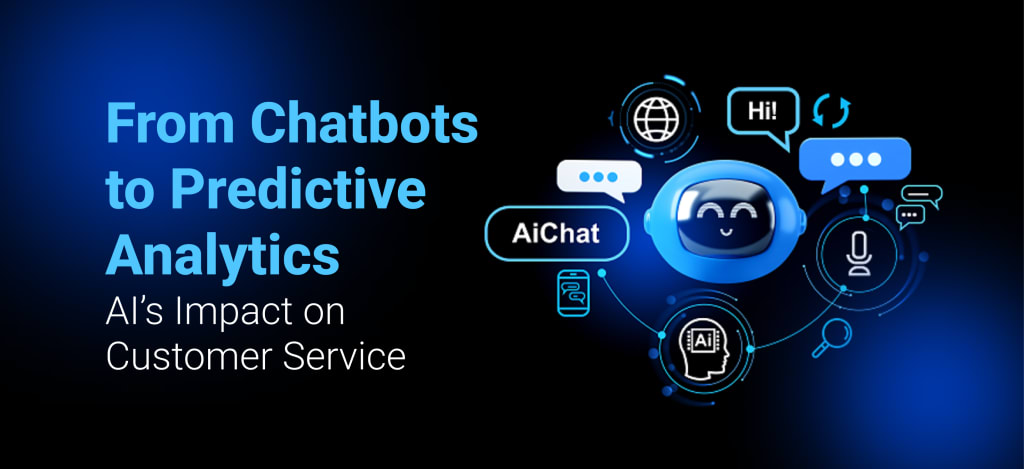
Customer service is the backbone of any business, and with the rapid advancements in artificial intelligence (AI), companies are transforming how they interact with customers. AI-powered solutions are streamlining customer support, reducing response times, and improving user satisfaction. From chatbots to predictive analytics, AI is making customer interactions more efficient and personalized.
According to a report by Gartner, by 2025, AI will power 95% of customer interactions, including live phone and online conversations. Another study by Juniper Research predicts that chatbots will help businesses save over $8 billion annually by 2024. Additionally, a survey by Salesforce found that 69% of consumers prefer AI-driven support for its quick responses and availability. These statistics highlight the growing reliance on AI in customer service and its potential to enhance the overall customer experience.
The Role of AI in Customer Service
AI is revolutionizing customer service in multiple ways, making interactions more seamless and effective:
1. Chatbots and Virtual Assistants
AI-driven chatbots provide instant responses to customer queries, reducing wait times and freeing up human agents for complex issues. These bots are available 24/7, ensuring uninterrupted support.
* Use Case: Businesses use AI chatbots to handle FAQs, assist in product recommendations, and manage simple troubleshooting queries. These bots improve efficiency by handling repetitive tasks.
* Real-Life Example: H&M’s chatbot helps customers find products based on their preferences, guiding them through shopping choices and offering personalized recommendations.
2. Natural Language Processing (NLP)
NLP enables AI to understand and respond to human language more naturally. This enhances chatbot interactions, making them feel more human-like and reducing customer frustration.
* Use Case: Companies implement NLP-powered AI to improve customer interactions by enabling voice assistants and chatbots to understand intent and provide relevant responses.
* Real-Life Example: Google’s AI-powered system, Duplex, showcases NLP by handling customer service calls, booking appointments, and making reservations through natural conversations.
3. Personalized Customer Interactions
AI analyzes customer behavior, purchase history, and previous interactions to provide tailored recommendations and solutions, making customer service more effective.
* Use Case: Businesses leverage AI to enhance customer experience by offering personalized product recommendations, targeted promotions, and customized support based on past interactions.
* Real-Life Example: Amazon’s recommendation engine uses AI to analyze user preferences and browsing history to suggest products that customers are most likely to purchase.
4. Predictive Analytics for Proactive Support
AI can identify patterns in customer complaints and predict potential issues before they arise. Businesses can then proactively resolve concerns, reducing customer dissatisfaction.
* Use Case: AI-powered analytics help businesses anticipate product failures, shipping delays, or high-demand periods, enabling proactive customer communication and issue resolution.
* Real-Life Example: Airlines like Delta use predictive analytics to anticipate flight delays and notify customers in advance, helping to manage expectations and improve satisfaction.
5. Automated Ticketing Systems
AI-powered ticketing systems classify and prioritize customer inquiries, ensuring that urgent issues are addressed promptly.
* Use Case: AI streamlines support workflows by auto-tagging tickets, prioritizing urgent cases, and routing them to the appropriate department, reducing response times.
* Real-Life Example: Zendesk’s AI-driven support platform helps businesses categorize, escalate, and resolve customer service tickets efficiently, improving overall support operations.
6. Voice Assistants and AI-Powered IVR Systems
Voice-based AI solutions enhance call center interactions by understanding voice commands, directing calls efficiently, and resolving basic queries without human intervention.
* Use Case: AI-powered IVR (Interactive Voice Response) systems improve customer service by providing automated responses, routing calls, and managing inquiries without the need for human agents.
* Real-Life Example: Bank of America’s AI-driven voice assistant, Erica, assists customers with banking tasks, such as transaction history, bill payments, and financial insights, through voice interactions.
Benefits of AI in Customer Service
The integration of AI in customer support comes with multiple advantages:
* Faster Response Times – AI eliminates long wait times by providing instant solutions.
* Cost Efficiency – Automating support reduces the need for a large human workforce, cutting operational costs.
* 24/7 Availability – Unlike human agents, AI-powered bots work around the clock.
* Consistency in Responses – AI ensures uniform responses, minimizing errors and miscommunication.
* Scalability – Businesses can handle large volumes of customer inquiries without hiring additional staff.
Challenges and Considerations
While AI enhances customer service, there are some challenges to consider:
* Lack of Human Touch – AI interactions can feel impersonal, leading to frustration in complex cases.
* Initial Implementation Costs – Setting up AI-driven systems can require significant investment.
* Data Privacy Concerns – AI relies on customer data, making security and compliance crucial.
* Integration Complexity – AI solutions must seamlessly integrate with existing customer service platforms, which can be challenging for businesses with legacy systems.
* Bias in AI Algorithms – AI models can inherit biases from training data, leading to unfair or incorrect responses, which can negatively impact customer experience.
* Handling Unexpected Queries – AI chatbots and virtual assistants may struggle with non-standard or ambiguous queries, requiring human intervention for resolution.
The Future of AI in Customer Service
As AI technology continues to advance, customer service will evolve toward even greater automation and personalization. AI-driven emotional intelligence is expected to play a key role in improving interactions by detecting customer sentiment and adjusting responses accordingly. Voice AI will become more refined, enabling natural and fluid conversations that closely resemble human interactions. Additionally, deeper integration with top CRM platforms will create seamless customer journeys, ensuring businesses can provide context-aware support tailored to individual needs. The rise of AI-powered self-service options will empower customers to resolve issues independently while reducing dependency on human agents. As AI continues to bridge the gap between efficiency and personalization, businesses will be able to deliver superior customer experiences while maintaining cost-effectiveness and scalability.
Conclusion
AI is transforming customer service by enhancing efficiency, reducing costs, and improving customer satisfaction. While challenges exist, the benefits far outweigh the drawbacks. Businesses that leverage AI-driven support systems will gain a competitive edge in delivering exceptional customer experiences. As AI continues to evolve, we can expect even more sophisticated and intuitive systems that bridge the gap between technology and human interaction. Companies that adapt to these advancements will not only enhance their customer service operations but also build long-lasting relationships with their customers. AI is not just a tool for automation; it is becoming a strategic asset in shaping customer interactions, improving engagement, and driving business success in an increasingly digital world.
About the Creator
Keval Padia
Keval Padia, CEO of Nimblechapps, leverages 14+ years of IT expertise to drive success. A passionate leader and avid reader of biographies, he excels at uniting teams and clients, fueling innovation, and keeping the company thriving.
Keep reading
More stories from Keval Padia and writers in 01 and other communities.
The Rise of Low-Code Development: Accelerating App Delivery
To stay ahead in the competition businesses need to build and deploy applications quickly. Traditional development methods require extensive coding, long development cycles, and high technical expertise. However, the rise of low-code development platforms is revolutionizing the way applications are created, enabling faster delivery, reducing time-to-market, and empowering non-developers to contribute to the development process.
By Keval Padia10 months ago in 01
The Night Situation in Iran: Under Blackout and Unrest
Over the past weeks, Iran has plunged into widespread unrest that continues deep into the night, with nightly demonstrations, heavy government crackdowns, and a near-total information blackout that obscures what is happening on the ground. What began in late December 2025 as discontent over economic hardship has evolved into one of the most intense waves of dissent in recent Iranian history, with dramatic nightly developments shaping both domestic life and international concern.
By Muhammad Islam khan swati7 days ago in 01



Comments
There are no comments for this story
Be the first to respond and start the conversation.