
From Boring to Billion-Dollar: How SaaS Is Quietly Powering the World
Are you a young founder in a small Indian town with a dream to build something global?

When you think of breakthrough tech, what comes to mind? Artificial Intelligence? Maybe blockchain or the metaverse? That’s expected.
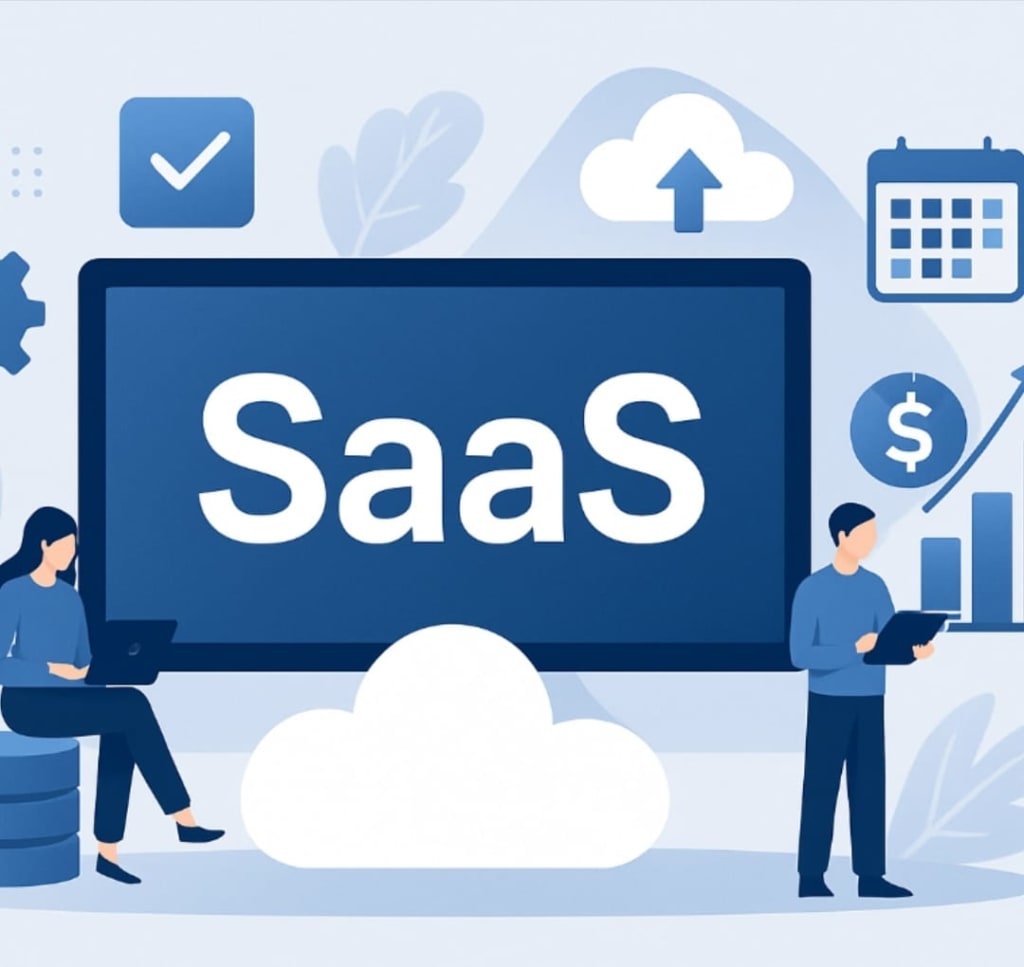
These buzzwords dominate headlines and draw investor dollars like moths to a flame. But while the world is busy chasing what’s flashy, a quiet revolution is unfolding in the background — reshaping businesses, redefining productivity, and building billion-dollar companies brick by brick. It’s called SaaS — Software as a Service.
And no, it’s not flashy. But it’s everywhere.
SaaS: The Silent Workhorse of the Digital Age
Let’s break it down. SaaS means accessing software online, without downloading heavy programs or maintaining local servers.
If you’ve used Gmail, Zoom, Canva, Slack, or even Netflix, you’ve already lived in the SaaS world. These tools are designed to be seamless — so smooth that you barely notice them. But behind the curtain, they’re the silent engines powering businesses, creators, freelancers, and entire remote teams.
While some tech is designed to impress, SaaS is designed to work. Efficiently. Quietly. At scale.
The Real Power of SaaS? Stability and Simplicity
Unlike many hyped-up trends, SaaS offers a simple value proposition: solve a real problem, charge a subscription, and keep improving.
This business model isn’t just smart — it’s dependable. Revenue is predictable, updates happen regularly, and customer loyalty builds over time. Take Zoho, for example. A modest Indian company that chose not to chase the limelight — yet today, it’s generating over $1 billion annually, serving millions of businesses across 180 countries.
No buzzwords. Just solving real problems for real people. That’s the magic of SaaS.
A Launchpad for Small Startups and Big Dreams
Once upon a time, launching a tech company meant hiring engineers, buying expensive servers, setting up local infrastructure, and raising tons of capital.
Today? All you need is a laptop and an idea. Thanks to SaaS platforms like Notion, Trello, HubSpot, Stripe, or Figma, solopreneurs can manage teams, process payments, handle CRM, and build designs — without writing a single line of backend code or investing in infrastructure. It’s like renting software power by the hour, but with global reach.
This is why SaaS has democratized entrepreneurship, especially in countries like India, where talent is high, but capital can be scarce.
India's SaaS Awakening
India has quietly become a SaaS superpower. And the world is finally noticing.
Startups like Freshworks, Postman, Chargebee, and Zoho are proving that world-class products can be built from Chennai or Bengaluru — and still lead markets in the U.S., Europe, and beyond. Here’s what’s special: Indian SaaS startups are lean, frugal, and globally ambitious. They focus on solving problems, not raising headlines. They believe in long-term value over short-term valuation.
And what’s even more inspiring? Many of these companies are bootstrapped — built without external funding, just vision and hard work. That’s a lesson in grit the world can learn from.
The Future Is Subscription-First
The subscription economy isn’t just growing — it’s exploding.
We already pay monthly for streaming, fitness, news, education. SaaS is simply the business version of this model — and it makes sense. Why pay thousands upfront for software that becomes outdated? SaaS flips that model. You pay a small monthly fee, always get the latest version, and can cancel anytime. For businesses, this means: Lower upfront costs. Greater flexibility Automatic updates and security. Scalable pricing based on usage.
In other words: it’s modern, efficient, and built for change.
Not Just Tech — A Mindset Shift
More than a business model, SaaS reflects a shift in mindset.
We’ve moved from ownership to access. From rigid structures to flexible workflows. From monolithic software to modular, cloud-powered ecosystems. And in this new world, SaaS tools are like Lego blocks — stackable, customizable, and adaptable. Need design? Use Canva. Need team management? Use Asana. Need invoices? Use Zoho Books. Every function, every role — there's likely a SaaS tool for it. This mindset shift also influences how people work.
With SaaS, remote teams thrive, freelancers scale, and entrepreneurs experiment — all without breaking the bank.
Why You Should Pay Attention
You don’t have to be a developer to care about SaaS.
If you: Run a small business, manage a content brand, Freelance or consult, or even want to launch a side hustle, then SaaS isn’t optional. It’s essential. These tools save time, reduce overhead, and automate the boring stuff — freeing you to focus on your real mission.
And if you're a young founder in a small Indian town with a dream to build something global? SaaS might be your rocketship.
◼ The world’s most powerful tech often isn’t the loudest.
While headlines obsess over AI or crypto winters, SaaS is quietly embedding itself into the foundation of modern work — tool by tool, line by line, subscription by subscription.
It’s not hype. It’s just happening.
Written by: Soumen Sasmal
About the Creator
Soumen Sasmal
Soumen Sasmal is a versatile writer & storyteller, crafting deep, emotional, and insightful narratives to inspire personal growth and transformation.
Keep reading
More stories from Soumen Sasmal and writers in 01 and other communities.




Comments
There are no comments for this story
Be the first to respond and start the conversation.