
From Bitcoin to Dogecoin: A Comprehensive Guide to Different Cryptocurrencies
Understanding the World of Digital Currencies
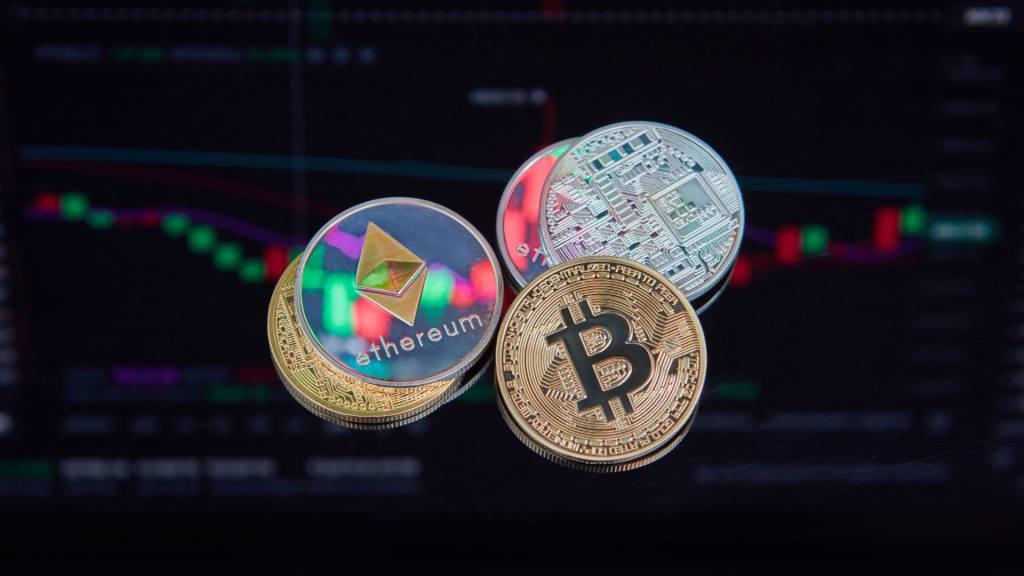
Cryptocurrencies have been making headlines in recent years, with Bitcoin being the most well-known. However, there are many other cryptocurrencies in the market, each with its unique features and potential for growth. In this blog, we will explore some of the most popular cryptocurrencies, from Bitcoin to Dogecoin.
Bitcoin (BTC)
Bitcoin is the first and largest cryptocurrency by market capitalization. It was created in 2009 by an anonymous person or group known as Satoshi Nakamoto. Bitcoin is decentralized, meaning that it is not controlled by any central authority, and its transactions are recorded on a public ledger called the blockchain.
Bitcoin has gained significant attention in recent years, with its value reaching an all-time high of over $64,000 in 2021. Its limited supply, high liquidity, and decentralized nature make it an attractive investment for those seeking a hedge against inflation.
Ethereum (ETH)
Ethereum is the second-largest cryptocurrency by market capitalization after Bitcoin. It was launched in 2015 by Vitalik Buterin, and it uses a blockchain to power a decentralized platform for building decentralized applications (dapps) and smart contracts.
Ethereum's native cryptocurrency is called Ether, and it is used for transactions and to pay for computation on the Ethereum network. The Ethereum network has gained significant attention in recent years, with the rise of decentralized finance (DeFi) and non-fungible tokens (NFTs).
Ripple (XRP)
Ripple is a cryptocurrency designed for cross-border payments and remittances. It was launched in 2012 and is used by banks and financial institutions for settling international transactions. Ripple's network uses a technology called RippleNet, which allows for real-time settlement of transactions.
Unlike Bitcoin and Ethereum, Ripple's supply is controlled by the company behind it, Ripple Labs. This has led to some controversy around its decentralization and regulatory concerns. Nonetheless, Ripple remains a popular cryptocurrency in the market.
Litecoin (LTC)
Litecoin is a cryptocurrency that was created in 2011 by Charlie Lee, a former Google engineer. Litecoin is often referred to as the "silver to Bitcoin's gold" and is designed to be faster and more efficient than Bitcoin.
Litecoin's blockchain uses a different consensus algorithm than Bitcoin called scrypt, which makes it more suitable for small transactions. Litecoin has gained popularity among traders and investors due to its relatively low transaction fees and fast confirmation times.
Dogecoin (DOGE)
Dogecoin is a cryptocurrency that was created in 2013 by Billy Markus and Jackson Palmer. Dogecoin was initially created as a joke but gained significant attention due to its community-driven nature and celebrity endorsements.
Dogecoin's supply is unlimited, meaning that new coins are constantly being produced. Despite its lack of a defined purpose or use case, Dogecoin has gained a loyal following and has been used for various charitable causes.
It is worth noting that the cryptocurrency market is still largely unregulated in many countries, and this has led to concerns around fraud, scams, and market manipulation. Therefore, it is crucial to exercise caution and due diligence before investing in any cryptocurrency. This includes researching the project's background, team, technology, use case, and market potential. It is also important to be aware of the latest news and developments in the market and to seek professional advice before making any investment decisions. By being informed and cautious, investors can navigate the cryptocurrency market and potentially reap significant rewards.
Conclusion
In summary, the cryptocurrency market is constantly evolving, and new digital currencies are being introduced regularly. From Bitcoin to Dogecoin, each cryptocurrency has its unique features and potential for growth. While the market is highly volatile and unpredictable, cryptocurrencies offer a potential hedge against inflation and an alternative investment opportunity for those seeking diversification.
It is important to conduct thorough research and analysis before investing in any cryptocurrency and to be aware of the risks involved. Cryptocurrencies are not backed by any central authority or government, and their value can fluctuate widely within a short period. Nonetheless, with the right strategy and timing, investing in cryptocurrencies can offer significant returns.
Learn More
About the Creator
Blockchain Tracing: A Key Tool in Crypto Asset Recovery
The cryptocurrency ecosystem has expanded rapidly, with billions of dollars in digital assets now in circulation across thousands of blockchains. However, this growth has been accompanied by significant risks, including hacks, scams, phishing attacks, and user errors such as lost private keys or forgotten seed phrases. In 2025, reported losses from crypto-related incidents exceeded several billion dollars, highlighting the persistent vulnerability of digital assets. Unlike traditional banking systems with reversible transactions and centralized oversight, blockchain's decentralized and immutable nature makes recovery difficult once funds are transferred. As a result, blockchain tracing has emerged as an essential method for identifying fund flows, attributing activity, and supporting recovery efforts in actionable cases.
By Garry Oneal3 days ago in 01
Top Enterprise Software Development Companies in 2026
The use of enterprise software has become imperative in the efforts by businesses to optimize, become more efficient, and grow in a safe digital competitive space. The adoption of cloud technology, artificial intelligence, automation, and data technologies, especially within the current digital era, means that businesses are seeking the help of skilled software partners.
By Olivia Carter2 days ago in 01


Comments
There are no comments for this story
Be the first to respond and start the conversation.