
Foundation Models: Leading the AI Learning Revolution
Unleashing the Power of AI: A Comprehensive Guide to Foundation Models


The landscape of artificial intelligence (AI) is constantly evolving, with new concepts and models emerging that push the boundaries of what machines can learn and achieve. One such groundbreaking concept is the Foundation Model, a paradigm shift in machine learning that is the focus of the book "AI and Foundation Models The Future of Machine Learning".
This comprehensive guide delves into the transformative power of Foundation Models, providing readers with an in-depth understanding of their development, applications, advantages, and challenges. The book is designed to cater to a broad audience, from students over the age of 16 to adults interested in the field of AI, making it a valuable resource for both academic study and practical application.
The book begins by introducing the basic concepts of AI, setting the stage for the emergence of Foundation Models. It then takes readers on a journey through the history of AI, from the origins of neural networks to the rise of deep learning. This historical context is crucial for understanding the significance of Foundation Models and their potential to revolutionize AI learning.
At the heart of the book is a detailed exploration of Foundation Models. Readers will learn about the key technological breakthroughs that have led to their development, such as the advent of big data and the rise of computational power. The book also provides a clear explanation of the concepts of self-supervised learning and semi-supervised learning, which are integral to the functioning of Foundation Models.
The book delves into the applications of Foundation Models, providing real-world examples of their use. It discusses how models like GPT-3 are used in text generation and how DALL-E is used in image generation. These examples illustrate the versatility and power of Foundation Models, demonstrating their potential to transform various fields, from natural language processing to computer vision.
In this book, we will delve into some typical applications of Foundation Models, including but not limited to the following examples:
Application of GPT-3 in Text Generation: GPT-3, developed by OpenAI, is a state-of-the-art language model that uses machine learning to generate human-like text. It's been used in a variety of applications, from drafting emails and writing articles to creating poetry and even coding.
Use of DALL-E in Image Generation: DALL-E is another model developed by OpenAI that generates images from textual descriptions. It's a variant of GPT-3 and has demonstrated the ability to create images of objects that don't exist in the real world, such as "an armchair in the shape of an avocado".
Other Applications: The book will also explore other applications of Foundation Models in various fields such as natural language processing, computer vision, and more. These examples will provide a comprehensive understanding of how Foundation Models are transforming the landscape of AI.
Each of these examples will be discussed in detail, providing insights into how these models work, their strengths and limitations, and their potential impact on various industries and society as a whole.
The book doesn't shy away from discussing the challenges faced by Foundation Models. It addresses issues of data bias, fairness, representativeness, diversity, and the problems of interpretability and transparency of models. These discussions are crucial for understanding the complexities of implementing Foundation Models and navigating the ethical considerations that arise.
The book also highlights the advantages of Foundation Models, such as their flexibility, reusability, and ability to save time and resources. It discusses how Foundation Models can reduce the cost of data annotation and improve the efficiency of model training, making them a cost-effective solution for many AI applications.
Looking towards the future, the book discusses potential directions and trends in the development of Foundation Models. It explores the possibilities of multimodal learning, research on interpretability and fairness, and the potential applications and impacts on society. The book also provides a critical evaluation of the societal implications of Foundation Models, considering both their potential benefits and the ethical challenges they pose.
In conclusion, "AI and Foundation Models The Future of Machine Learning" offers a comprehensive and insightful exploration of Foundation Models. It is an essential read for anyone interested in understanding the future of AI and the transformative power of Foundation Models. This book serves as a beacon, guiding readers through the complex landscape of AI, and illuminating the path towards a future where machines can learn and adapt in ways we could only imagine before.
About the Creator
SHENLANBAI
Originally from Western China,live in Saskatoon as a freelance writer. vibrant energy of this city fuels creativity, lending a unique flair to work. a fusion of Eastern roots and Western experiences, captures the magic find in everyday life
Keep reading
More stories from SHENLANBAI and writers in 01 and other communities.
Revolutionizing Mathematics with AI: How AlphaFold Solves Decades-Old Problems
Artificial Intelligence (AI) has been making waves in various fields, and mathematics is no exception. A new computer program called AlphaFold, developed by DeepMind, has been making headlines for its ability to solve complex mathematical problems that have stumped human experts for decades. This development raises intriguing questions about the future of mathematics and human creativity.
By SHENLANBAI3 years ago in 01
How to Access Cash Without Selling Your Digital Assest
You’ve built a strong crypto portfolio that’s happily compounding. The next thing you know, a real estate closing, an unexpected business expense, or a personal emergency demands fast cash. What sounds like a doomsday is, in reality, a scenario many holders face far more often than they’d like. That’s when you face a choice: how to gain access to instant liquidity without dumping your digital assets?
By Kiran Butt5 days ago in 01
Data Aggregation Techniques for Effective Analytics
Data alone separates opinion from insight. Many organizations proclaim to be data-driven, yet remain tangled in fragmented spreadsheets, contradictory dashboards, and reports that inspire little confidence. The challenge isn’t quantity—it’s organization. Effective data aggregation turns scattered numbers into decisions you can truly trust.
By Swiftproxy3 days ago in 01
A Planetary Alignment will coincide with Mercury Retrograde
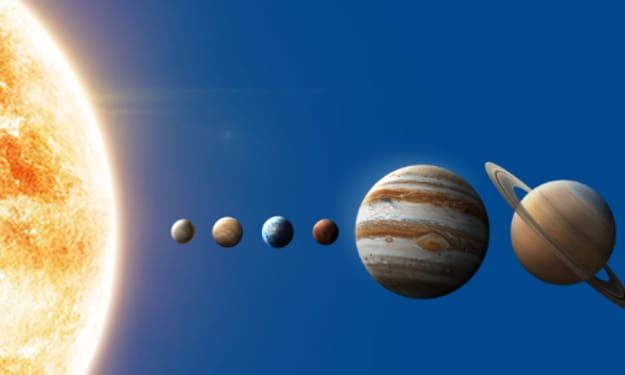
Double phenomena in the heavens Some people say in jest that the planets have aligned in their favor when life works the way they desire. Were you aware that there are seasons when things do line up in the heavens? There will be a planetary alignment AKA a planet parade, on February 28, 2026.
By Cheryl E Preston5 days ago in FYI



Comments
There are no comments for this story
Be the first to respond and start the conversation.