
Fact or Fiction: The Secrets of the Pyramids
By Jay Phoenix
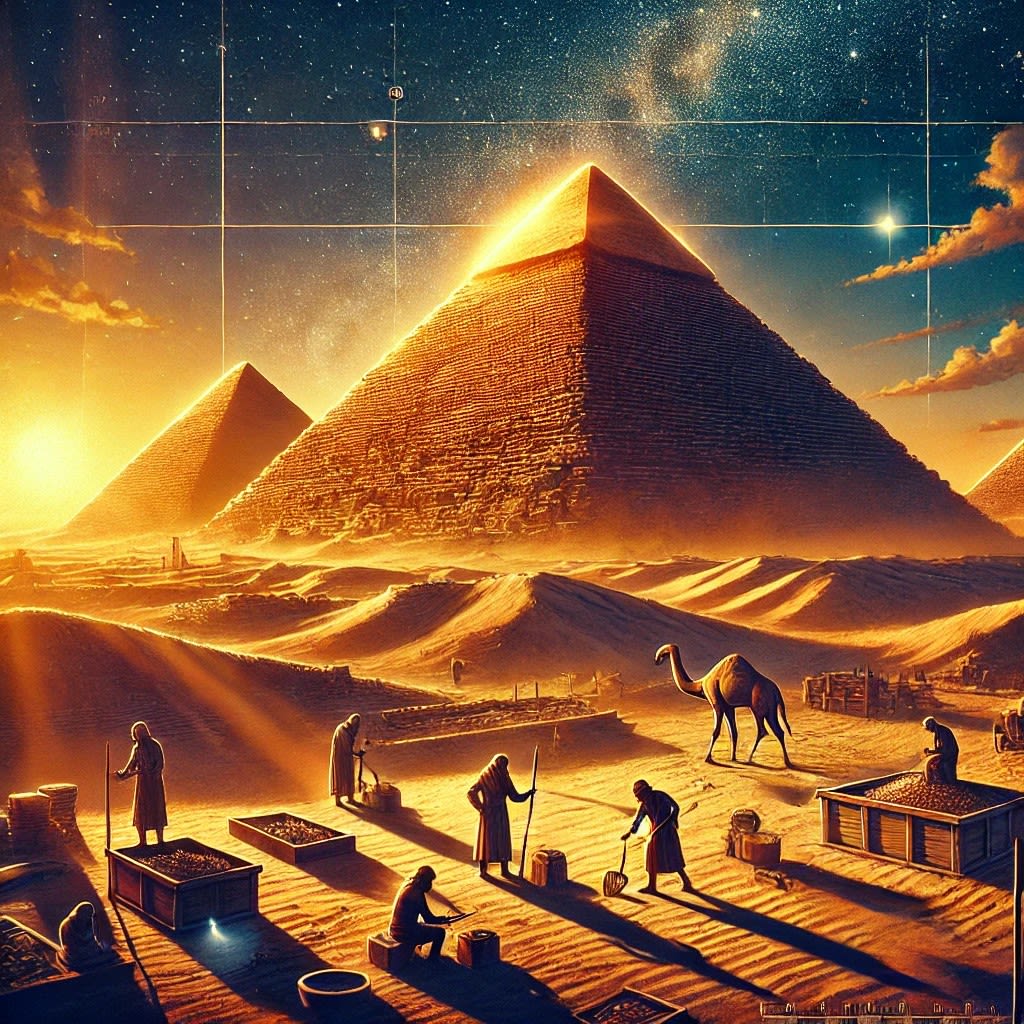
The pyramids of Egypt have stood as icons of human ingenuity for thousands of years, inspiring wonder, speculation, and countless theories. How were these colossal structures built with ancient tools? What secrets do they hold? And could there be more to their story than we’ve uncovered?
Let’s delve into the fascinating world of the pyramids, separating fact from fiction to uncover the truth behind these architectural marvels.
The Great Pyramids: An Overview
The Great Pyramid of Giza, the largest of the three pyramids on the Giza Plateau, was built around 4,500 years ago for Pharaoh Khufu. Standing over 450 feet tall, it remained the tallest man-made structure in the world for nearly 4,000 years. Alongside Khufu’s pyramid are those of his successors, Khafre and Menkaure.
These pyramids are more than just monumental tombs; they’re a testament to the skill and determination of ancient Egyptian society. But how did they achieve such feats with the technology of their time?
Theories on Pyramid Construction
1. Traditional Methods
Mainstream archaeology suggests that the pyramids were built using ramps, sledges, and manpower. Limestone blocks, some weighing up to 80 tons, were quarried, transported, and placed with astonishing precision. Workers used copper tools to cut stone and employed simple machines like levers to maneuver the massive blocks.
2. The Ramp Debate
One enduring mystery is how the ramps were designed. Theories include:
- Straight Ramps: Extending from the base to the summit, though these would require immense space.
- Zigzagging Ramps: Wrapping around the pyramid, providing a more compact solution.
- Internal Ramps: Hidden within the pyramid itself, a theory supported by some archaeological findings.
3. Advanced Technology?
Some alternative theories suggest the ancient Egyptians possessed advanced technologies that are now lost to history. These ideas range from the use of sound waves to levitate stones to harnessing extraterrestrial assistance. While compelling for some, these theories lack substantial evidence.
Hidden Chambers and Secrets
1. The Void in Khufu’s Pyramid
In 2017, scientists using muon tomography discovered a large, empty void above the Grand Gallery in Khufu’s pyramid. Its purpose remains a mystery, sparking speculation about hidden chambers, treasures, or even the use of this space in pyramid construction.
2. The “Cursed” Tombs
While not directly linked to the pyramids, the idea of curses surrounding Egyptian tombs adds an air of mystery. Though no evidence supports the existence of real curses, the sudden deaths of certain archaeologists have fueled these legends.
3. Alignment with the Stars
The pyramids’ alignment with celestial bodies has led many to believe they were constructed with astronomical precision. For example:
- The pyramids align closely with the Orion’s Belt constellation.
- Their placement may have had religious or symbolic significance, connecting the pharaohs to the divine.
Theories Beyond Archaeology
1. Alien Assistance
One of the most popular alternative theories suggests extraterrestrial beings aided in the construction of the pyramids. Proponents argue that the precision and scale of the pyramids surpass the capabilities of ancient technology. However, this theory is widely dismissed by scholars.
2. Energy Generators
Some believe the pyramids were not tombs but ancient power plants, designed to harness and distribute energy. This idea, though intriguing, remains unsupported by archaeological evidence.
3. Ancient Civilizations
Another theory posits that the pyramids were built by an advanced, pre-Egyptian civilization. Advocates point to the precision of the stonework and the lack of definitive records explaining their construction.
Cultural and Religious Significance
The pyramids were not merely architectural achievements; they were deeply intertwined with ancient Egyptian religion and culture. They were built as tombs to ensure the pharaoh’s safe journey to the afterlife, reflecting the Egyptians’ profound belief in immortality and the divine.
Debunking Myths
1. Slave Labor
Contrary to popular belief, the pyramids were not built by slaves but by a workforce of skilled laborers. Archaeological evidence, including workers’ villages and graffiti, suggests that laborers were well-fed and organized.
2. Perfect Geometry
While the precision of the pyramids is remarkable, slight imperfections exist. These do not diminish their grandeur but highlight the human effort behind their construction.
Fact or Fiction?
So, what are the secrets of the pyramids? While some mysteries remain unsolved, the majority of theories point to the ingenuity and determination of the ancient Egyptians. Speculation about alien intervention or advanced technology may be captivating, but evidence overwhelmingly supports human craftsmanship.
The Bottom Line
The pyramids continue to inspire awe and curiosity, standing as a testament to human ambition and creativity. Whether viewed as architectural wonders, spiritual symbols, or sources of endless mystery, they remind us of the enduring power of history and imagination. The secrets of the pyramids may never be fully uncovered, but their legacy is undeniable.
About the Creator
Keep reading
More stories from Jay Phoenix and writers in 01 and other communities.
Fact or Fiction: Were the Nazca Lines Created by Aliens?
The Nazca Lines, etched into the Peruvian desert thousands of years ago, are among the most mysterious creations of ancient civilizations. These massive geoglyphs depict animals, plants, and geometric shapes, visible only from above. But how and why were they created? Could they be the work of extraterrestrials, as some theorists suggest, or are they simply a testament to human ingenuity?
By Jay Phoenixabout a year ago in 01
The Future of Podcast App Development: What to Expect in 2026
Podcasting has evolved from a niche content format into a mainstream digital medium consumed by millions worldwide. As audiences grow and listening habits mature, podcast apps are no longer simple audio players. In 2026, podcast app development is expected to focus heavily on personalization, scalability, creator empowerment, and immersive user experiences. These changes will redefine how users discover, consume, and interact with audio content.
By shane cornerus5 days ago in 01
One Hard Thing
Stop me if you’ve heard this one before: You have the number, you know your schedule- you’ve even picked out the perfect day and time to make this appointment. Shoot, you’ve even picked out alternative days and times just in case their schedules can’t accommodate you!
By Taylor Rigsbya day ago in Motivation


Comments
There are no comments for this story
Be the first to respond and start the conversation.