
Everything you need to know about the WhatsApp Business API for better customer conversations and connections.
WhatsApp Business API
WhatsApp is the world’s most popular messaging app, with over 2 billion monthly active users. This messaging platform is presently being used by a variety of sectors all around the world. What is the significance of WhatsApp Business API (WABA API)? Simply put, it allows conversational messaging to take centre stage, allowing businesses like yours to:
Improve brand loyalty by increasing client trust.
· Communicate with consumers in real-time while delivering tailored service.
· Create a safe platform for dialogue between businesses and customers.
· Let’s have a look at how industries use the WABA API.
· Using a WhatsApp chatbot, you may generate leads for your e-commerce business.
As a retailer, you are likely to meet several repeated inquiries from prospective and even current customers throughout the day, whether you run an e-commerce business, a traditional brick-and-mortar store, or give alternatives for both in-person and online transactions. Answering the same questions repeatedly can become tedious and time-consuming for your support employees. It would be much easier for you to automate the process of answering such inquiries using WhatsApp business messaging, which will not only relieve the burden on your support team but will also improve the client experience. WhatsApp’s business API can make things much easier for any retail company’s customer service center.
E-commerce firms utilize WhatsApp chatbots for customer support activities, and they frequently play a role in turning leads into paying consumers.
You can directly engage with your customers by utilizing the WhatsApp Business API, either through template messages initiated by your brand after getting the opt-in or with session messages initiated by your customers. Retail firms can also use the WhatsApp API to share additional information and insights with customers, increase engagement rates, and reduce the workload of their support center.
The following are the most popular WhatsApp template message usage cases for a retail brand:
· Offers and promotions that are relevant.
· Reminders about product restocking.
· New product introductions that are relevant.
· Recommendations for products based on recent purchases.
· Product cart abandonment reminders.
· Assist with your retail marketing functions.
· Message templates are pre-approved communications that enable both incoming and outbound customer communication.
Support your retail marketing functions with the WhatsApp Business API.
On-site chat: Integrating a WhatsApp chatbot can improve your marketing and customer service strategies. Rather than having an on-site assistance bot in the corner of your website, you may ask website users to communicate with you by creating a WhatsApp chat bubble or button. You may also build a chatbot within your WhatsApp channel to assist customers during their purchasing process.
Notification opt-ins: To send notifications via WhatsApp, you must have a valid opt-in. After receiving the opt-in, you can send a variety of notifications, ranging from cart abandonment to back-in-stock messages.
Click-to-WhatsApp Ads: Using a click-to-WhatsApp strategy in your paid campaigns can be an excellent method to increase visitors to your channel. If a prospect clicks on one of your social media advertisings, they will be directed to a WhatsApp discussion rather than your landing page.
Developing stronger client ties through tailored WhatsApp conversations can help your retail company make a lot of money.
Use of the WhatsApp Business API in the education sector
Every day, marketing activities for educational institutions around the world get more competitive. While new institutions emerge, schools, colleges, and universities face the challenge of reaching out to a completely new set of students and parents each year.
Most students and parents nowadays conduct online research on educational institutions before enrolling in one. As a result, most of them already have a strong online presence. So, how can your institution distinguish itself? WhatsApp has the answer. This popular messaging program is now widely utilized in India, and the WhatsApp Business API can provide your educational institution with a communication channel unlike any other.
Here are a few popular WhatsApp API use cases in the education sector:
Create new leads: The web is overloaded with educational institution marketing information, and students and parents frequently wish for a more personalized connection that will help them make informed decisions. You can direct website visitors to WhatsApp and allow them to have two-way conversations. This will aid in the transmission of information immediately related to a lead, such as course or program details.
Conduct engagement campaigns. Even if potential applicants have not yet converted, you should not abandon them before the application deadline. WhatsApp messages can be utilized effectively to spark clients’ attention by sending regular news, announcements, notifications, and updates. This will help you to efficiently re-engage the prospects.
Provide instant responses: WhatsApp chatbot integration allows for instant responses to any questions children or their parents may have, regardless of time. Chatbots can be useful for colleges that recruit international students, who are more inclined to interact outside of normal business hours.
For More Info: https://www.karix.com/products/whatsapp-business-api/
About the Creator
Keep reading
More stories from tanla karix and writers in 01 and other communities.
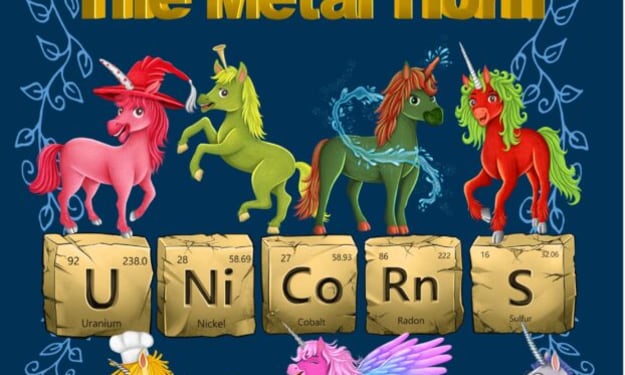
The Metal Horn Unicorns Make Science Magical: A Creative Gateway to the Periodic Table
Learning the periodic table can feel intimidating to many students when it is presented as a dense grid of symbols, atomic numbers, and unfamiliar terminology. Yet chemistry itself is full of wonder: elements form the building blocks of everything in the universe, from the oxygen we breathe to the gold in jewelry and the silicon in our electronics. When science education taps into imagination, storytelling, and creativity, students often discover that the periodic table is not merely a chart to memorize but a fascinating map of the natural world. This is exactly where The Metal Horn Unicorns Make Science Magical—a unique STEM resource—steps in.
By Bushra Rajpoot6 days ago in 01
My First Time Skiing and I Got Lost, Alone, in the French Alps
Looking back, I can trace some of my life’s biggest adventures to a simple action from my sister. She’d introduced me to Tommy (a very long time ago), a colleague of hers, who had overshared his penchant for Italian-looking women, and I ticked that box.
By Chantal Christie Weissa day ago in Humans

Comments
There are no comments for this story
Be the first to respond and start the conversation.