
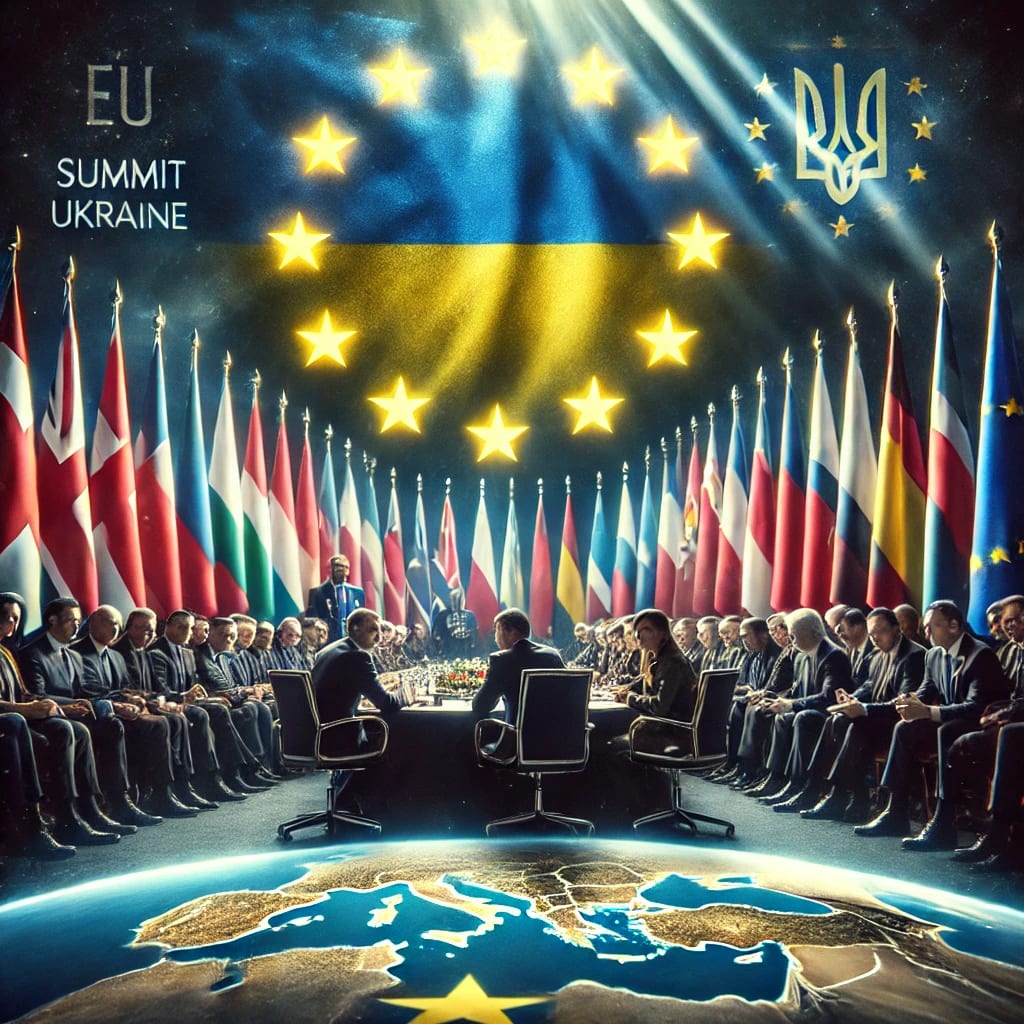
European Union Holds Emergency Summit on Ukraine and Defense
In response to the escalating geopolitical tensions stemming from the ongoing conflict in Ukraine, European Union (EU) leaders have called for an extraordinary summit to address both the need for enhanced support for Ukraine and the broader European security concerns. This unprecedented summit, scheduled for the coming days, will be pivotal in shaping the EU's approach to the war and determining the level of assistance provided to Ukraine in its fight against Russian aggression. With the EU's global role and internal cohesion on the line, the discussions at this summit are set to have far-reaching implications for both the region and the international community.

European Union Holds Emergency Summit on Ukraine and Defense
In response to the escalating geopolitical tensions stemming from the ongoing conflict in Ukraine, European Union (EU) leaders have called for an extraordinary summit to address both the need for enhanced support for Ukraine and the broader European security concerns. This unprecedented summit, scheduled for the coming days, will be pivotal in shaping the EU's approach to the war and determining the level of assistance provided to Ukraine in its fight against Russian aggression. With the EU's global role and internal cohesion on the line, the discussions at this summit are set to have far-reaching implications for both the region and the international community.
A Critical Moment for European Security
The summit takes place at a time of heightened global instability, with the conflict in Ukraine showing no signs of abating. Since Russia's full-scale invasion of Ukraine in February 2022, Europe has witnessed an unprecedented displacement of people, mounting humanitarian crises, and an ongoing battle that has not only devastated Ukraine but also tested the strength and unity of Europe’s political institutions. The EU, whose primary goal is to promote peace, stability, and economic cooperation across the continent, finds itself at a crossroads in determining how to best protect its member states and uphold its core values of democracy, freedom, and human rights.
With Russia’s actions continuing to undermine Ukraine’s sovereignty and territorial integrity, European leaders have expressed grave concerns about the stability of the region. Many member states, particularly those in Eastern Europe, have been particularly vocal in their calls for stronger EU action in the face of this ongoing aggression. These nations, having faced Soviet occupation in the past, are acutely aware of the risks posed by a destabilized Europe and the potential for further expansionist moves by Russia.
Focus on Enhancing Support for Ukraine
At the heart of the summit is the discussion on how the European Union can increase its support for Ukraine, which continues to defend itself from Russia’s relentless military onslaught. Ukrainian President Volodymyr Zelensky has been urging the EU to provide more substantial and immediate assistance, including advanced weapons systems, financial aid, and humanitarian assistance. The request for more sophisticated military equipment, such as fighter jets, heavy artillery, and air defense systems, has become central to Ukraine’s defense strategy.
The summit will likely focus on whether the EU can allocate more resources to meet these demands, while also taking into account the capacity of member states to provide military assistance. Some EU countries, such as Poland and the Baltic states, have been particularly proactive in sending arms to Ukraine. However, others, such as Germany and France, have faced significant domestic opposition to sending heavier weaponry, which has led to debates about the balance between political will and military necessity.
In addition to military aid, the summit will address the pressing issue of financial support. Ukraine’s economy has been severely impacted by the war, with infrastructure destroyed and the national currency losing value. The EU has already provided substantial financial backing to Kyiv, including loans, grants, and guarantees, but experts argue that a longer-term commitment is necessary to help Ukraine rebuild and maintain its resilience in the face of Russian aggression. This would likely involve further sanctions on Russia to hinder its war efforts, alongside continued support for Ukraine's economy through investment, trade agreements, and financial stability measures.
Strengthening European Defense Infrastructure
Alongside bolstering support for Ukraine, the summit will also focus on strengthening Europe’s own defense capabilities. The ongoing war in Ukraine has underscored the importance of a robust European defense infrastructure, especially as Russia seeks to challenge the NATO alliance and undermine European security. While the EU is not a military bloc in the same sense as NATO, it has been gradually increasing its defense initiatives through institutions such as the European Defence Agency (EDA) and the European Peace Facility (EPF).
However, European leaders recognize that there is still much work to be done to ensure that the EU is adequately equipped to respond to both external threats and internal crises. At the summit, leaders are expected to discuss proposals for a more unified European defense policy that could integrate the defense capabilities of individual member states, encourage joint military exercises, and create stronger defense industry cooperation. Some have called for an increased investment in defense spending and the creation of a European Rapid Reaction Force that could respond quickly to emerging threats on the continent.
The summit could also pave the way for greater collaboration between the EU and NATO, recognizing that both organizations have a vested interest in ensuring the security of Europe and its immediate neighbors. Although NATO remains the principal military alliance for Europe’s defense, EU leaders are increasingly seeing the need to bolster Europe’s own defense infrastructure, independent of external partners.
Addressing Humanitarian and Refugee Challenges
The humanitarian toll of the war on Ukraine has been catastrophic, with millions of people displaced from their homes, both within Ukraine and across Europe. The EU has been at the forefront of providing humanitarian aid to Ukraine and its refugees, but the scale of the crisis continues to strain the capacity of both the EU and its member states. The summit is expected to discuss the ongoing efforts to provide humanitarian aid to Ukrainian civilians, support for refugees, and the long-term resettlement of displaced individuals across Europe.
Several EU countries, including Poland, Hungary, and Slovakia, have taken in large numbers of refugees, which has placed additional pressure on their social services and housing infrastructure. The EU must work together to ensure that these countries do not bear the disproportionate burden of the refugee crisis, while also ensuring that displaced Ukrainians receive adequate support to rebuild their lives.
Potential for Unity or Division?
While the summit presents an opportunity for EU leaders to demonstrate unity in the face of a common external threat, it also comes with the risk of division. The EU is a diverse organization, and member states have varying perspectives on how to approach the war in Ukraine and the issue of European defense. Some member states, particularly those in Western Europe, may be more cautious about escalating military involvement, while others in Eastern Europe are pushing for stronger action and support for Ukraine.
The outcome of the summit will depend on the ability of European leaders to find common ground on these critical issues and forge a consensus that reflects the EU’s shared values of democracy, sovereignty, and peace. However, the divisions that have emerged during the war highlight the complexities of decision-making within the EU, where national interests can sometimes conflict with the broader objectives of the union.
About the Creator
SHAKIB HUSSEN
Shakib Hussen | Writer & Storyteller
Passionate about crafting engaging stories, I write on life, fiction, travel, self-improvement]. Exploring ideas, sharing insights, and bringing words to life—one story at a time.
Keep reading
More stories from SHAKIB HUSSEN and writers in 01 and other communities.
Best City to Visit in Italy for Tourists
Italy is a dream destination for travelers worldwide, offering a mix of history, culture, breathtaking landscapes, and exquisite cuisine. From its sun-kissed coastlines to its majestic mountains, every region of Italy tells a unique story. While many cities in Italy are worth visiting, Rome stands out as the best city for tourists. The Eternal City, as it is often called, is a perfect blend of history, art, and modern charm, making it an ideal place to explore for any traveler. In this guide, we’ll dive deep into why Rome is the best tourist city in Italy and highlight some other must-visit destinations.
By SHAKIB HUSSENabout a year ago in History
How One EdTech App Doubled Retention With AI in 90 Days
In the competitive landscape of 2026, the primary challenge for educational platforms is no longer the delivery of content. It is the persistence of the learner. For many developers, AI in EdTech has shifted from a speculative feature to the core engine of user stickiness. This transition is critical because, despite the massive influx of digital learning tools over the last decade, the industry has long struggled with a "completion crisis." The average course completion rate often hovered below 15% for non-mandatory content.
By Del Rosarioabout 14 hours ago in 01
The Role of AI in Transforming Modern eLearning App Development
In the digital era, education is no longer confined to traditional classrooms. The demand for personalized, accessible, and interactive learning experiences has driven the growth of eLearning app development. Among the most transformative technologies shaping this space is Artificial Intelligence (AI). By integrating AI into educational platforms, businesses and institutions are revolutionizing how content is delivered, assessed, and adapted to learners’ needs.
By keith lauranceabout 13 hours ago in 01




Comments
There are no comments for this story
Be the first to respond and start the conversation.