
Enterprise Website Development
Discover all there is to know about business web development, including its advantages, difficulties, procedures, tech stacks, etc.


Although it seems glamorous, enterprise web development is actually more pain than joy. By attempting to create something that will be scalable for expansion, flexible enough to change course when the market changes, and polished enough to wow people on launch day, you're weakening the endeavor. And, of course, completing everything without going over your budget or schedule? Essentially, it was a mission impossible.
I'll focus on these methods in this post, along with advice on how to pick a development provider, deal with obstacles, and predict future trends. So take a coffee (or whatever makes you feel better) and let's get started on making the process of developing corporate websites less unpleasant and more efficient.
What is Enterprise Web Development?
It revolves around creating web-based platforms or applications that cater specifically to the demands of large enterprises aiming for growth. These could be internal systems supporting thousands of employees, public-facing services managing millions of transactions, or advanced dashboards pulling together data from various origins. These aren't simple websites—they're essential tools for business operations that must be dependable, safe, and capable of expanding significantly.
What makes this area especially compelling are its distinctive characteristics:
- Massive Scale: These applications must support huge volumes of users, data, and activity without performance issues. If an app fails under high traffic, keeping users satisfied becomes nearly impossible.
- System Integration: In enterprise environments, no system operates in isolation. New developments often need to work alongside outdated systems, third-party APIs, customer relationship tools, and enterprise resource planning software. Making all these components function seamlessly together is a major challenge.
- Strong Security: Handling confidential company or client information means security can't be optional. A single vulnerability can lead to loss of trust, financial damage, or legal consequences.
- Tailored Customization: Unlike generic software, enterprise apps are usually built to match specific business processes. This requires a flexible architecture that allows the system to evolve with the organization’s needs.
- Ongoing Maintenance and Lifespan: These projects aren’t short-term efforts. They’re designed to serve for years, requiring consistent updates, technical support, and long-term strategic thinking.
How It Stands Apart from Regular Web Development
Consider the difference between building a personal blog and developing an online store for a global corporation. The blog might take only a few weeks, use existing templates, and mainly focus on visual appeal. On the other hand, the corporate e-commerce platform would require months of collaborative effort involving architects, developers, testers, and infrastructure specialists.
Traditional web development tends to prioritize speed and appearance, but enterprise-level work demands precision and careful planning. While minor errors on a basic website may frustrate visitors, they won’t bring operations to a halt. But in enterprise settings, even small oversights can result in significant financial loss or reputational damage.
At its core, enterprise web development is about solving complex, large-scale problems with a focus on scalability, integration, and security from the start. It's about crafting the digital infrastructure that drives today’s businesses—and will continue to shape the future.

Main Advantages of Enterprise Web Development
It may seem like a major undertaking, but the rewards are well worth the effort. When executed properly, enterprise web development can revolutionize your business, making every long night and tough decision feel justified.
Scalability
Growth often hits faster than expected. One day you're managing a few hundred users, and the next, you're dealing with thousands—or even millions. Without a scalable system, sudden expansion can bring everything to a halt. Enterprise web development ensures your platform is built to grow effortlessly from day one. It's like designing a building with the ability to add extra floors as needed—no need for a complete rebuild when demand increases.
Efficient Operations
Wouldn’t it be great if your team could focus on moving the business forward instead of constantly fixing issues? Enterprise applications are designed to streamline workflows, automate repetitive tasks, and reduce inefficiencies. Whether it’s integrating CRM systems with sales tools or creating unified dashboards for marketing teams, these platforms empower employees to work smarter, not harder.
Enhanced Security
Data breaches aren't just disruptive—they can damage your reputation and cost a fortune. But with proactive planning, they’re also preventable. Enterprise web development embeds security into every layer of the application from the very beginning. Developers use advanced encryption, secure access protocols, and risk mitigation strategies to protect sensitive data right from launch.
Tailored Solutions
Generic software works fine for basic needs, but when you're aiming to solve complex challenges or gain a competitive edge, off-the-shelf options fall short. Enterprise development gives you full control over your application’s design and functionality. Want a unique feature that no one else offers? You can build it. Need to connect with specialized internal tools or develop a custom API infrastructure? That’s entirely achievable. Complex integrations with CRM or ERP systems? Absolutely doable.
Long-Term Cost Efficiency
While initial investment might be higher compared to simpler web projects, it leads to significant savings over time. By reducing system downtime, minimizing technical debt, and avoiding expensive rework later on, enterprise-grade solutions offer better value in the long run. Would you rather invest upfront in a strong foundation or spend more later patching up weak systems? Many startups end up spending huge amounts trying to fix avoidable problems—when getting it right the first time would have been far more economical.
Better Customer Engagement
Ultimately, customer satisfaction determines success. Enterprise web applications enable seamless, intuitive user experiences that keep people coming back. With quicker load times, personalized features, and consistent performance, these platforms help strengthen your brand image and build lasting user loyalty.

The Enterprise Web Development Journey
At first glance, enterprise-level web development can seem daunting due to its complexity. But despite each project being unique, there’s a general roadmap that most follow. Think of it like following a cooking guide—while ingredients may vary slightly depending on taste or dietary needs, the steps remain largely consistent.
Step 1: Clarify Objectives and Requirements
Before diving into design or coding, it's essential to understand the purpose behind your application. What challenge are you aiming to solve? Who will be using this system? And how will you measure success?
This phase is all about gathering requirements. Bring together key players—project managers, end users, IT experts—and ask the tough questions:
- What features are absolutely necessary?
- How will this new system interact with existing tools or older systems?
- Are there any legal or regulatory standards that must be met?
Step 2: Evaluate Feasibility
Once the goals are clear, assess whether they’re realistically achievable given your current resources, budget, and timeline. This is where feasibility studies come in.
Ask yourself:
- Do you have the right team and infrastructure in place?
- Are there potential obstacles—like third-party integrations or outdated systems—that could slow progress?
- Which technologies would best support your project's long-term success?
Step 3: Plan the System Architecture
Now comes the strategic, often technical phase—designing the architecture of your application. Collaborate with enterprise developers to map out how the various components will connect: front-end interfaces, back-end logic, databases, APIs, servers, and more. It’s like assembling a complex Lego model—each piece must fit precisely without compromising stability.
Important considerations include:
- Scalability: Will the system handle sudden spikes in traffic or data volume? Imagine going from hundreds to millions of users overnight—your app should still perform smoothly.
- Modularity: Can parts of the system be updated or replaced without affecting the whole? This is crucial for long-term maintenance and updates.
- Security: How will sensitive business and user data be protected from threats and breaches?
- Technology Choices: Should the system run on microservices or a monolithic structure? Hosted in the cloud or on-premises? The answers depend entirely on your organization’s specific needs.
Step 4: Build Wireframes and Prototypes
Before writing full code, create visual blueprints of your platform. Use wireframing and prototyping tools to sketch out how users will navigate and interact with the system. In enterprise applications, usability plays a major role in adoption rates, so this step is critical.
Tools like Figma, Sketch, or FigJam help visualize layouts. Involve stakeholders early in reviewing these mockups—it’s far easier to adjust a prototype than to rework live code later.
Step 5: Develop the Minimum Viable Product (MVP)
This is where the idea starts becoming real. Focus on building an MVP—a simplified version of your application featuring only the most essential functions. The goal is to test core assumptions and validate the concept before investing in advanced features.
For example, if you're creating an online store, your MVP might include product listings, a shopping cart, and checkout functionality—without extra features like smart recommendations or detailed filters.
Step 6: Comprehensive Testing
Enterprise development is intricate, and issues like bugs or vulnerabilities are inevitable. The key is to catch them before they impact users.
Key testing types include:
- Unit Testing: Ensuring individual components function as expected.
- Integration Testing: Checking how different modules work together.
- Performance Testing: Confirming the system can handle heavy loads.
- Security Testing: Identifying and addressing potential risks.
Step 7: Deployment and Ongoing Monitoring
Once testing is complete and the system is stable, it's time to deploy. Consider a phased rollout—even within internal teams—to reduce risk. Beta testing with a small group can also uncover hidden issues.
Deployment isn’t the finish line—it’s just the beginning of continuous improvement. After launch, closely monitor performance using tools like New Relic or Datadog, or even custom logging solutions. Track usage patterns, identify bottlenecks, and resolve problems quickly.
Ongoing maintenance is not optional. Regular updates, security patches, and performance tuning keep the system running efficiently over time. From there, you can gradually scale up by adding new features, expanding capacity, or integrating additional tools.

Challenges in Enterprise Development
Developing enterprise-level web applications is no easy task. While the results—like powerful, scalable systems, improved efficiency, and satisfied users—are well worth it, the development journey often feels like walking through a minefield.
But none of these obstacles are unbeatable. With the right mindset, processes, and tools, you can tackle each challenge head-on—and come out stronger on the other side.
Handling Complexity
Let’s be honest: enterprise projects are complex. You're dealing with numerous integrations, multiple layers of functionality, and high user expectations. If not managed properly, this complexity can quickly spiral into confusion, delays, and technical debt. When everything is tightly connected, even small changes can create ripple effects that disrupt the whole system. It's easy to feel overwhelmed when new issues keep popping up faster than they can be fixed.
How to tackle it:
- Break it into modules: Adopt a modular architecture—such as microservices—to split your system into manageable components. This simplifies development, testing, and future scaling.
- Focus on MVP: Start with a minimum viable product. Don’t try to build everything at once. Begin with core features and expand gradually through iterations.
- Keep documentation updated: Writing documentation may not be exciting, but it's crucial for clarity. Good documentation helps onboard new developers, troubleshoot problems, and maintain consistency across teams.
Maintaining Strong Security
Security flaws can have catastrophic consequences—especially for large organizations. A single breach could lead to data leaks, legal penalties, or irreversible damage to your brand reputation. The tricky part? You need to secure sensitive information without making the system overly complicated for users.
How to strengthen security:
- Follow best practices: Implement encryption, multi-factor authentication (MFA), and role-based access controls (RBAC) to protect critical data.
- Run regular audits: Conduct penetration tests and code reviews to identify vulnerabilities early.
- Adhere to compliance standards: Ensure your application meets industry requirements such as GDPR, HIPAA, or PCI DSS to stay legally compliant and secure.
Designing for Scalability
Scalability isn’t optional—it's essential. What works for a few hundred users won't hold up under thousands or millions. Underestimating traffic surges or data growth can result in crashes, sluggish performance, and lost revenue. Poorly designed architectures struggle to scale either vertically or horizontally without causing breakdowns.
What you can do:
- Leverage cloud services: Use platforms like AWS, Azure, or Google Cloud, which offer auto-scaling capabilities to handle sudden traffic spikes automatically.
- Test load capacity: Before launch, simulate heavy usage using tools like Apache JMeter or LoadRunner to find and fix performance bottlenecks.
- Optimize databases: Employ techniques like indexing, sharding, and caching to ensure your database remains fast and efficient as data expands.
Integrating Legacy Systems
Most companies don’t start from zero—they rely on older systems that may be outdated, difficult to work with, or lack modern APIs. Yet these legacy systems often remain vital to business operations. Connecting them with new applications can be extremely challenging. Rewriting them entirely is usually too costly and time-consuming.
Possible solutions:
- Use middleware platforms: Tools like MuleSoft or Dell Boomi can act as bridges between modern apps and older systems.
- Create API wrappers: Build lightweight APIs around legacy systems so they can communicate with newer technologies.
- Migrate gradually: Instead of overhauling everything at once, transition components step by step. This reduces risk, minimizes downtime, and spreads out costs more affordably.
Aligning Stakeholders
Enterprise projects typically involve many stakeholders—executives, developers, end-users, and IT departments—all with different priorities. Getting everyone aligned can feel like trying to control a group of cats. But misalignment leads to unclear goals, scope creep, and project delays. Poor communication only makes things worse.
How to align everyone effectively:
- Set clear governance rules: Define roles, responsibilities, and decision-making paths upfront to avoid confusion later.
- Schedule regular updates: Hold short, focused meetings to track progress and resolve issues before they escalate.
- Show progress visually: Use prototypes and demos to give stakeholders a tangible view of the project. Seeing is believing—and it encourages better feedback and buy-in.

Final Thoughts
Enterprise web development is a powerful tool for companies looking to scale, streamline operations, and deliver a superior experience to their users. The advantages are clear: the ability to grow alongside your business, tailor solutions to your specific needs, safeguard sensitive information, and boost efficiency—ultimately saving both time and money. When executed effectively, it can completely reshape how you operate, turning cumbersome processes into seamless workflows and disconnected systems into unified platforms.
That said, it's not without its hurdles. Challenges like managing complexity, integrating legacy systems, ensuring scalability, maintaining security, and handling ongoing upkeep are all part of the journey. But none of these obstacles are insurmountable. With a skilled team, proven industry practices, and a well-defined strategy, you can navigate these difficulties and come out ahead.
About the Creator
Shakuro
We are a web and mobile design and development agency. Making websites and apps, creating brand identities, and launching startups.
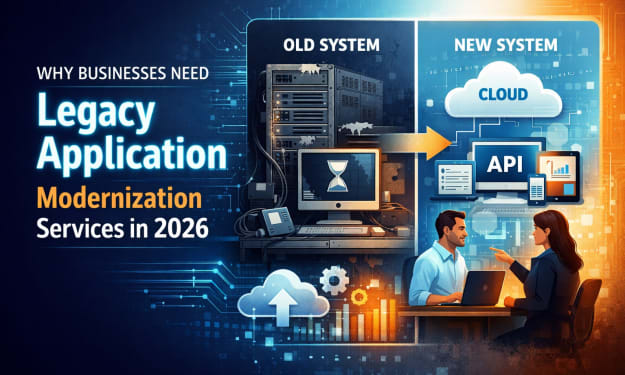
Why Businesses Need Legacy Application Modernization Services in 2026
Digital transformation is no longer optional for modern organizations. As businesses adopt cloud computing, AI automation, cybersecurity frameworks, and scalable digital platforms, many companies still rely on outdated legacy software systems built years or even decades ago. While these systems once supported business growth, they now limit innovation, increase operational risks, and create security vulnerabilities.
By keith laurance3 days ago in 01


Comments
There are no comments for this story
Be the first to respond and start the conversation.