
EMBEDDED PRODUCT DEVELOPMENT LIFE CYCLE
Embedded Product Development Life Cycle: From Concept to Deployment
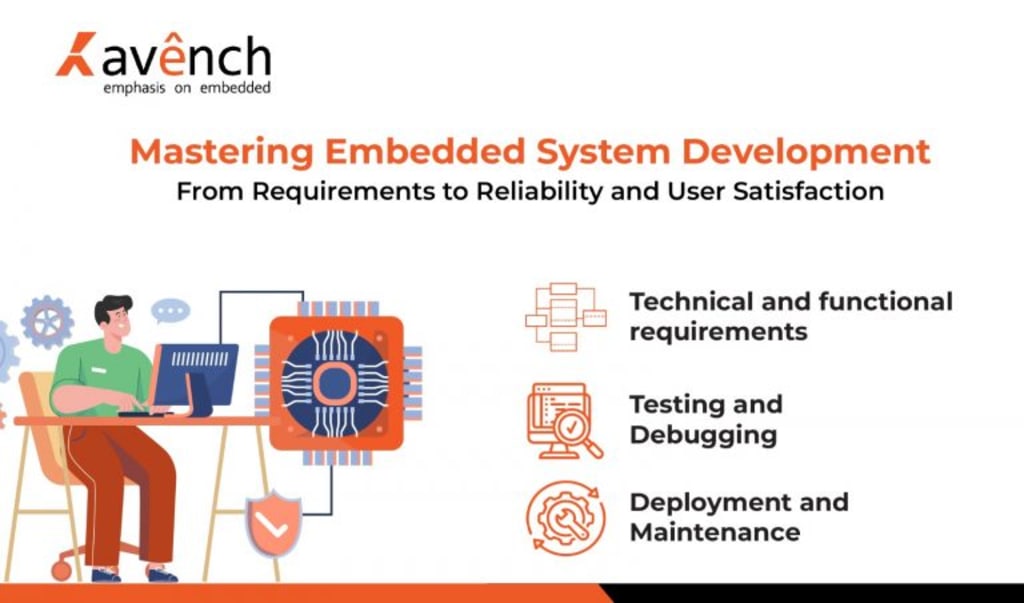
Embedded Product Development Life Cycle: A Comprehensive Guide Embedded product development is a complex and meticulous process that requires a deep understanding of both hardware and software components. Avench Systems, a leader in embedded solutions, excels in navigating this intricate landscape to deliver high-quality, reliable products. This article delves into the embedded product development life cycle, highlighting the key phases and best practices that ensure successful project completion.
EMBEDDED PRODUCT DEVELOPMENT LIFE CYCLE
Phase 1: Requirement Analysis
The first phase in the embedded product development life cycle is requirement analysis. This phase involves gathering and analyzing the product's functional and non-functional requirements. Stakeholders, including clients, end-users, and engineers, collaborate to define clear and concise specifications. This step is crucial as it sets the foundation for the entire project. Misunderstandings or ambiguities at this stage can lead to costly revisions later.
Phase 2: Feasibility Study
Once the requirements are well-defined, a feasibility study is conducted. This phase assesses the technical, financial, and operational viability of the project. Engineers evaluate whether the proposed solution can be realistically achieved with the available technology and resources. The feasibility study helps in identifying potential risks and challenges, allowing the team to develop mitigation strategies.
Phase 3: System Design
The system design phase is divided into two parts: high-level design (HLD) and detailed design (DD).
High-Level Design (HLD): In HLD, the architecture of the system is defined. This includes the selection of hardware components, system partitioning, and interface design. The focus is on creating a blueprint that outlines the overall structure and behavior of the system.
Detailed Design (DD): DD involves specifying the finer details of the system components. Engineers create detailed schematics, select specific parts, and develop algorithms. The goal is to translate the high-level design into actionable plans that can be implemented during the development phase.
Phase 4: Development and Implementation
In this phase, the actual development of the hardware and software begins. For hardware, this includes PCB (Printed Circuit Board) design, component assembly, and initial testing. For software, coding and integration of various modules are performed. Agile methodologies are often employed to facilitate iterative development and continuous feedback. This approach allows for timely adjustments and improvements.
Phase 5: Testing and Validation
Testing is a critical phase in the embedded product development life cycle. It ensures that the product meets all specified requirements and functions correctly under various conditions. Testing is divided into several levels:
Unit Testing: Individual components or modules are tested for correctness.
Integration Testing: Multiple modules are integrated and tested as a group to ensure they work together seamlessly.
System Testing: The entire system is tested as a whole to validate its performance and reliability.
Acceptance Testing: The final product is tested in real-world scenarios to ensure it meets the client's expectations and requirements.
Thorough testing helps identify and rectify issues early, reducing the likelihood of defects in the final product.
Phase 6: Deployment and Maintenance
Once the product passes all testing phases, it is ready for deployment. This involves installing the product in the target environment and ensuring it operates as intended. Post-deployment, regular maintenance is required to address any issues that arise and to keep the product updated with the latest features and security patches.
Conclusion
The embedded product development life cycle is a structured approach that ensures the creation of high-quality, reliable products. From requirement analysis to deployment and maintenance, each phase plays a crucial role in the successful delivery of an embedded solution. Avench Systems leverages its expertise and best practices to navigate this complex process, ensuring that the end products meet the highest standards of performance and reliability. By following a rigorous development life cycle, Avench Systems not only meets but often exceeds client expectations, solidifying its reputation as a leader in the embedded systems industry.
About the Creator
Keep reading
More stories from avenchsystem and writers in 01 and other communities.
TURNKEY SOFTWARE DEVELOPMENT
TURNKEY SOFTWARE DEVELOPMENT Turnkey Software Development: A Comprehensive Solution by Avench Systems Pvt Ltd. In the fast changing world of technology, organizations are continually looking for more efficient and effective ways to create and deploy software solutions. Avench Systems Pvt Ltd is at the forefront of this need, with unique expertise in turnkey software development. This comprehensive service is intended to give clients with a seamless and integrated software solution from inception to deployment, ensuring that all components of the project are managed under one roof.
By avenchsystem2 years ago in 01
A Detailed Guide for Startups Mobile App Developers in Miami
It usually happens quietly. A founder in Miami opens a laptop early, coffee untouched, scrolling through two proposals that look nothing alike. One promises speed, low cost, and a launch in eight weeks. The other is slower, heavier, and nearly double the price. Both claim experience. Both say they understand startups.
By Samantha Blake3 days ago in 01
Smart phones, Humans and Aliens.
WARNING. I will be tapping into one of your favorite creative tensions: The absurdity of humans worshipping their glowing rectangles as if they were tiny oracles. There’s something deliciously poetic about that contradiction, and it lends itself beautifully to an instructive proviso.
By Novel Allen5 days ago in Poets



Comments
There are no comments for this story
Be the first to respond and start the conversation.