
Drone Warfare Technology: Revolutionizing Modern Warfare
Understanding the Capabilities, Limitations, and Implications of Unmanned Aerial Vehicles (UAVs) in Contemporary Conflicts

Introduction:
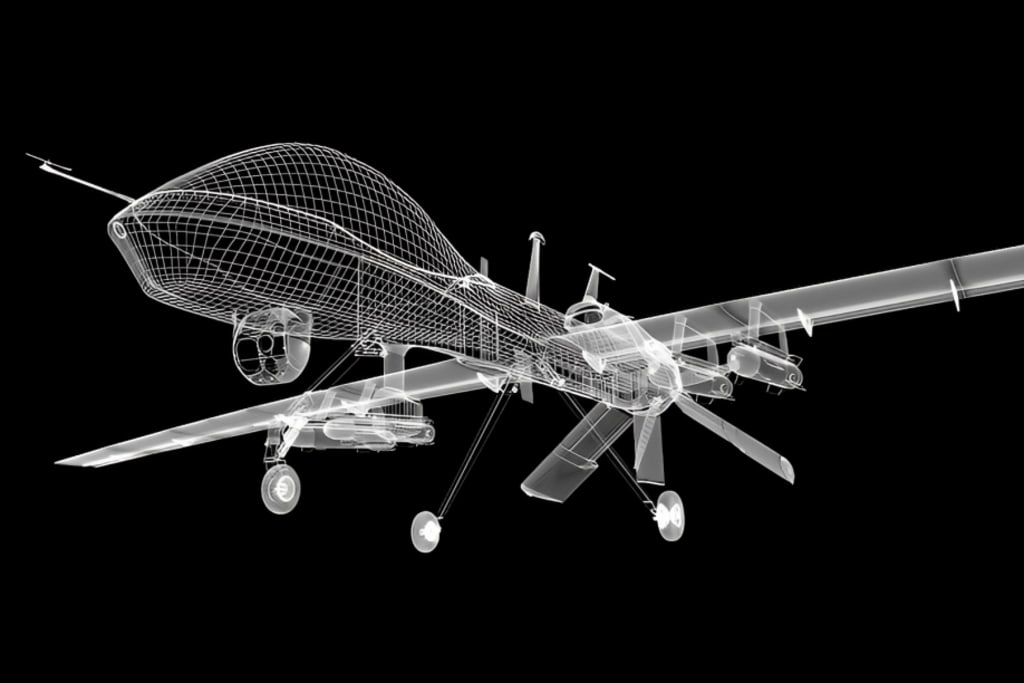
The use of drones, also known as unmanned aerial vehicles (UAVs), has revolutionized modern warfare. Drones are unmanned aircraft that can be controlled remotely or operate autonomously using pre-programmed software. Drones can provide significant advantages over traditional manned aircraft, including greater range, endurance, and precision. The ability to operate in areas where manned aircraft cannot, such as in urban environments or over hostile territory, has made drones an invaluable asset for military operations. In this essay, we will explore the capabilities and limitations of drone warfare technology, as well as the implications of their use in contemporary conflicts.
Capabilities of Drones:
Drones have several capabilities that make them an effective tool for modern warfare. One of the most significant advantages of drones is their ability to provide real-time intelligence, surveillance, and reconnaissance (ISR) capabilities. Drones can operate at high altitudes and provide a bird's eye view of the battlefield, allowing military commanders to monitor enemy movements and plan their operations accordingly. Drones can also carry a variety of sensors, such as cameras, infrared sensors, and radar, which can provide valuable information about enemy locations, terrain, and weather conditions.
Another advantage of drones is their ability to strike targets with great precision. Drones can carry a variety of weapons, including missiles, bombs, and other munitions. These weapons can be guided by onboard sensors or controlled remotely by a human operator. This precision-guided capability reduces the risk of collateral damage and civilian casualties, making drone strikes more effective and politically acceptable.
Drones also have greater endurance and range than manned aircraft. They can remain in the air for extended periods, allowing for longer missions and more comprehensive coverage of the battlefield. This endurance also reduces the need for manned aircraft, which can be costly to operate and maintain. Drones can operate at lower altitudes and slower speeds, making them more difficult to detect and intercept by enemy air defenses.
Limitations of Drones:
Despite their many advantages, drones also have several limitations that must be considered. One of the most significant limitations of drones is their vulnerability to electronic warfare (EW) attacks. Drones rely on a variety of electronic systems, including navigation, communication, and sensor systems, which can be disrupted or jammed by enemy EW systems. This vulnerability can render drones useless and put them at risk of being shot down.
Drones also have limited payload capacity and endurance, which can limit their effectiveness in certain missions. Drones can only carry a limited amount of fuel and weapons, which can restrict their range and mission duration. This limitation can make it difficult to conduct long-range missions or to strike multiple targets in a single mission.
Another limitation of drones is their inability to operate in adverse weather conditions. Drones are susceptible to high winds, heavy rain, and other adverse weather conditions, which can limit their ability to operate effectively. This limitation can also make it difficult to operate drones in certain regions, such as the Arctic or desert environments, where weather conditions can be extreme.
Implications of Drone Warfare Technology:
The use of drones in contemporary conflicts has significant implications for international law, ethics, and military strategy. The use of drones has been controversial, with critics arguing that they represent a new form of warfare that undermines traditional concepts of sovereignty, due process, and civilian protection. Drone strikes have been accused of causing civilian casualties and violating human rights, leading to concerns about the legality and morality of their use.
Drones have also raised concerns about the potential for escalation and proliferation of conflict. The ease with which drones can be operated and the precision of their strikes have made them an attractive option for military forces, but they have also made it easier for non-state actors, such as terrorist groups, to acquire and use them. This proliferation of drones can lead to a destabilization of international security and an increased risk of conflict.
The use of drones also has implications for military strategy. Drones can provide a significant advantage on the battlefield, but their use must be carefully considered to avoid unintended consequences. The use of drones can also have an impact on traditional military tactics, such as the use of ground troops and the use of air power. The use of drones may reduce the need for ground troops, but it may also increase the need for specialized forces to operate and maintain the drones.
Conclusion:
In conclusion, the use of drones has revolutionized modern warfare and has significant implications for international security, ethics, and military strategy. Drones have many capabilities that make them an effective tool for military operations, including real-time intelligence, precision strikes, and endurance. However, they also have limitations, such as vulnerability to electronic warfare, limited payload capacity, and weather limitations. The use of drones has raised concerns about the legality and morality of their use, as well as the potential for proliferation and escalation of conflict. As drone technology continues to evolve, it will be essential to carefully consider the implications of their use and to develop appropriate regulations and guidelines for their use in contemporary conflicts.
About the Creator
junaid mughal
I am just a Technology geek, who loves to experience latest gadgets, technology and share it with the world here.
Keep reading
More stories from junaid mughal and writers in 01 and other communities.
Exploring Technologyia: A Comprehensive Guide to the Latest Tech Trends and Insights
Technologyia is a leading technology website that covers a wide range of topics related to emerging trends, news, and insights in the world of technology. The website provides up-to-date information on the latest developments in the tech industry, including software, hardware, artificial intelligence, blockchain, and more. In this article, we will provide an overview of Technologyia and its key features, as well as a deeper look into its content and offerings.
By junaid mughal3 years ago in 01
The Role of Custom AI Solutions in AI-First Software And Platforms Development in 2026
The software industry has undergone a fundamental shift over the last two years. In 2024, the trend was "AI-enabled." Developers took existing applications—accounting software, email clients, project management tools—and bolted on a chat interface. The core software remained the same; the AI was an accessory.
By ViitorCloud Technologies4 days ago in 01
I was in a Toxic Relationship, with my Workplace
“You got that?” My ex yelled. His hands were balled into fists at his side. At six foot three, he towered over me. A normal person would have been afraid, but I looked up a video of George Lopez repeatedly saying, “I got this,” and showed it to him. I had grown used to this treatment, so much so that I didn’t blink when he ripped the phone from my hand and threw it across the room.
By Jade M.4 days ago in Confessions




Comments
There are no comments for this story
Be the first to respond and start the conversation.