
Does ANC Help or Hurt in Gaming?
Active noise canceling sounds like a win for gaming, but does it really help — or just get in the way
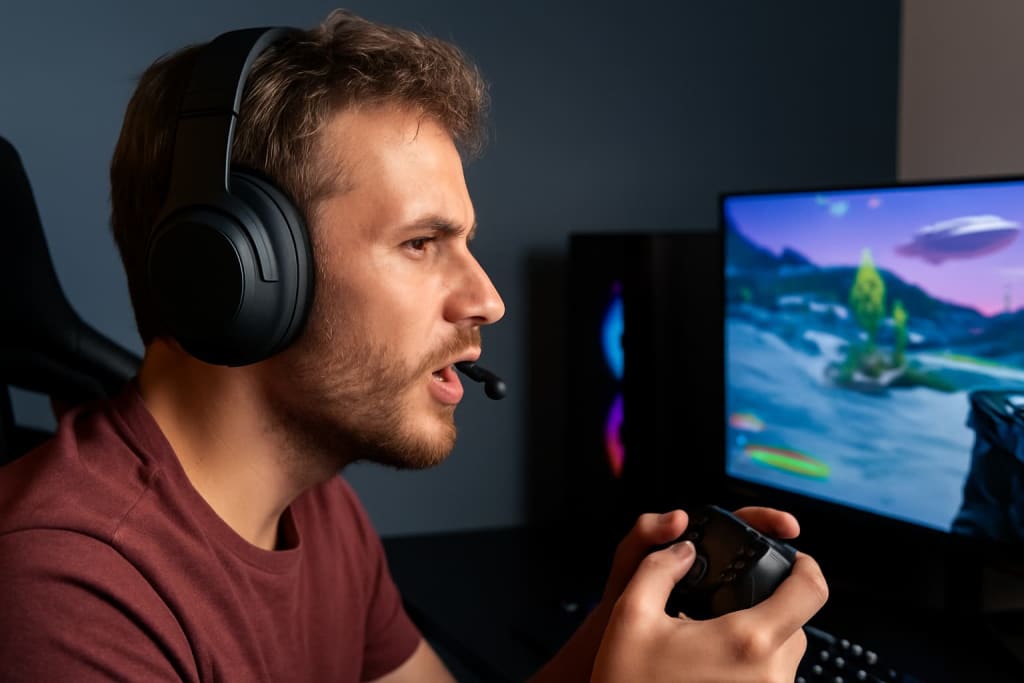
Over the last few months, I’ve been testing several ANC-enabled earbuds in different gaming environments, both casually and competitively. I’ve spent time with the SoundPEATS Air5 Pro, the Air4 Pro, and even the Capsule3 Pro+, all of which feature some level of active noise canceling. And here’s the thing — ANC isn’t automatically a good or bad feature for gaming. It really depends on how, where, and what you play.
If you’re looking at ANC purely as a checkbox feature, you’re missing the point. It’s not just about blocking sound. It’s about how that silence changes the way you hear in-game detail. And that changes everything.
What Is ANC in the Context of Gaming?
Active Noise Canceling, or ANC, uses microphones to capture outside sound and plays a reversed sound wave to cancel it out before it hits your ears. In daily use, it’s great for travel, noisy cafes, or any time you just want to tune out the outside world.
In gaming, though, ANC behaves differently — and your experience with it can swing from immersive to frustrating depending on the game.
I’ve gone deep into the mechanics of ANC in gaming audio on Mamija Gaming, where we regularly test gear in real FPS and story-based environments. So this isn’t just theory — it’s based on repeated tests with real headsets in actual gameplay.
When ANC Helps: Story-Driven Games and Solo Sessions
There are clear scenarios where ANC enhances the gaming experience.
If I’m diving into a single-player title like Cyberpunk 2077 or Ghost of Tsushima, the noise canceling effect lets me forget everything around me. No distractions, no background fans, no neighbors — just pure game audio. With ANC turned on, the ambient detail becomes more alive, and subtle sound design cues get more breathing room.
That was definitely the case with the Air5 Pro. I ran several long sessions with it, and once the world around me dropped away, I started noticing small audio details that got buried before — like birds in the distance or how different terrain made different movement sounds.
This isn’t just about comfort. It’s about depth. ANC, when done right, pulls you into the game world like a decent monitor pulls you into the visuals.
When ANC Hurts: FPS and Competitive Multiplayer
Now, let’s talk about competitive play — games like Valorant, Apex Legends, or CS2. In these cases, I found ANC more of a liability than an advantage.
When you’re relying on sound to give you positioning data, the last thing you want is audio processing that shifts or slightly masks directional cues. With ANC enabled, I noticed that footsteps sounded less defined, and I sometimes missed subtle reloads or movement across certain surfaces.
With the Air4 Pro, which also has strong ANC, I had to turn the feature off while playing ranked in Valorant. I gained more clarity with raw stereo audio than with any filtered version, even if the noise canceling itself was technically good.
If you’ve played long enough, you know — a second’s delay or a muffled step can cost you a round. ANC can create that buffer, even if it’s small.
Passive Isolation vs ANC: A Better Option for FPS?
In many situations, a headset with good passive isolation does the job better. If the earcups seal well and reduce outside noise naturally, there’s no signal processing involved, and the raw audio stays clean.
For FPS games, I’ll always lean toward passive designs over ANC. You get more natural soundstage and no risk of artificial compression or audio artifacts from the canceling system doing its job.
I mentioned this in our headset testing on Mamija Gaming too — if your goal is awareness, not cinematic immersion, keep it simple. ANC is a luxury in story games, but it’s unnecessary complexity in ranked matches.
When You Might Want Both
That said, some headsets handle ANC with enough finesse to make it worth toggling on and off. The Capsule3 Pro+ has a solid ANC system and gives you a transparency mode that can help when switching between focus and environmental awareness.
If you’re moving between different gaming styles — say, Apex in the afternoon and Diablo at night — having that flexibility can be worth it.
But again, it comes down to execution. Not every ANC system is created equal, and just because a spec list shows “43dB noise reduction” doesn’t mean it translates well in game.
Final Thoughts: Is ANC Right for Gaming?
So, does ANC help or hurt in gaming? The honest answer is: it depends on what you play and how you play.
If you're a solo player who values immersion and environmental detail, ANC is a fantastic feature — it lets you disappear into the game world, cutting off distractions that would otherwise kill the mood. For you, headsets like the Air5 Pro are worth the price.
But if you’re a competitive player who needs every audible detail as sharp and raw as possible, ANC could actually get in your way. You’ll likely be better served by a closed-back, passive-isolation headset that keeps things simple and direct
I’ve tested both, and I keep going back and forth depending on the type of game I’m playing that day. The key is understanding when to use ANC, not just whether a headset has it or not.
For a full breakdown of which ANC headsets made sense in gaming and which didn’t, check out our full reviews and guides over at Mamija Gaming — that’s where all the deeper tests live.
Let me know if you want a follow-up comparing transparency modes or if ANC affects mic clarity in Discord chats. I’ve logged enough hours to give you a real-world answer, not a recycled spec sheet.
About the Creator
Keep reading
More stories from Ahmed Fejzic and writers in 01 and other communities.
How to Choose the Best Mobile Application Development Company in 2026
Choosing the right mobile application development company is no longer just a technical decision—it’s a business-critical one. In 2026, mobile apps sit at the intersection of customer experience, brand credibility, and long-term growth. The wrong partner doesn’t just slow development; it can limit scalability, security, and discoverability across modern search and AI-driven platforms.
By alan michaelabout 17 hours ago in 01
The Art of Slow Travel: How Staying Longer in One Place Creates Deeper Cultural Connections
In a world driven by packed itineraries and bucket list checklists, slow travel offers a refreshing alternative. Instead of racing from landmark to landmark, slow travel invites you to linger. It is about choosing depth over speed and presence over pressure. By staying longer in one place, travelers create space for genuine cultural connections that short visits rarely allow.
By Devon Alexisabout 10 hours ago in 01


Comments
There are no comments for this story
Be the first to respond and start the conversation.