
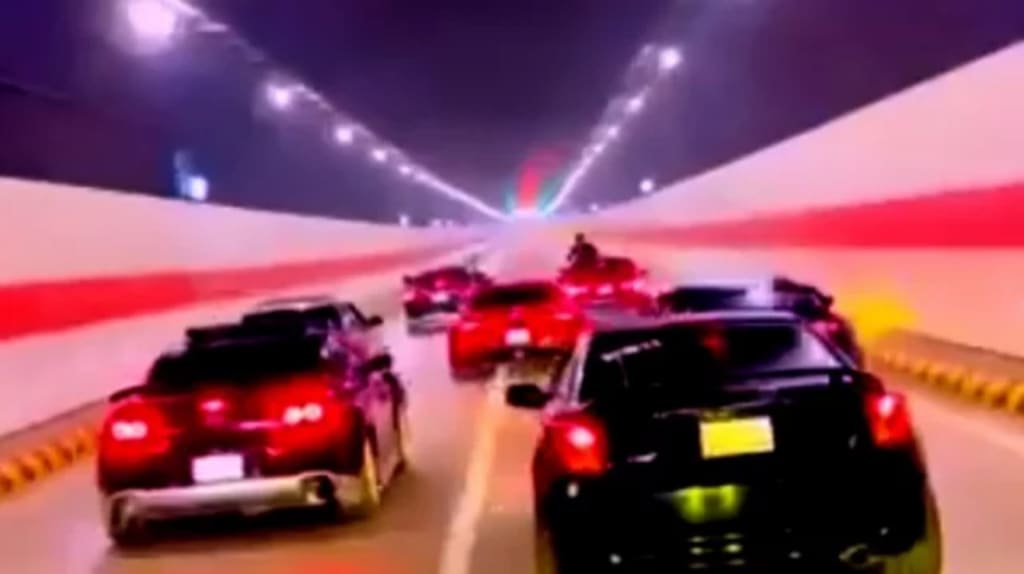
Dhaka Street Racer: The High-Speed Subculture Challenging Urban Safety
In the heart of Dhaka, a clandestine subculture thrives under the cover of night—street racing. This phenomenon, fueled by adrenaline and a desire for thrill, has transformed the city's roads into unauthorized racetracks, posing significant risks to public safety and challenging law enforcement efforts.
The Rise of Street Racing in Dhaka
Street racing in Dhaka has seen a surge, particularly among affluent youth. Areas like Gulshan, Banani, Hatirjheel, and the 300-feet road in Kuril have become hotspots for these illegal races. Participants often engage in high-speed competitions late at night, exploiting the reduced traffic to test their vehicles' limits. The allure of speed and the thrill of competition draw many into this dangerous pastime.
The Risks and Consequences
The dangers of street racing are manifold. High-speed chases have led to numerous accidents, some fatal. In one notable incident, a young woman lost her life when a racing SUV collided with a rickshaw in Gulshan. Such tragedies underscore the peril these races pose not only to participants but also to unsuspecting pedestrians and other motorists.
Beyond the immediate physical dangers, street racing disrupts the peace of residential neighborhoods. Residents frequently report the deafening roar of engines and screeching tires during the early hours, leading to a sense of insecurity and unrest.
Law Enforcement Challenges
Despite the evident risks, curbing street racing has proven challenging for law enforcement. Many racers come from influential backgrounds, making legal repercussions less likely. Police patrols are often limited during the hours when races occur, and the high speeds involved make apprehension difficult. In some cases, authorities have been hesitant to act decisively, fearing backlash or political ramifications.
Community and Government Responses
Recognizing the severity of the issue, community organizations and government bodies have initiated measures to combat street racing. The Gulshan Society, for instance, has advocated for increased police presence and the installation of speed bumps in known racing areas. The Inspector General of Police has also directed law enforcement to take stricter actions against such activities, emphasizing the need for designated racing tracks to divert this dangerous behavior.
The Need for Sustainable Solutions
Addressing the street racing problem in Dhaka requires a multifaceted approach. Public awareness campaigns highlighting the dangers of illegal racing can deter potential participants. Investing in legal racing venues provides enthusiasts with a safe environment to pursue their interests. Moreover, stricter enforcement of traffic laws and holding offenders accountable, regardless of their social standing, is crucial.
Street racing in Dhaka is more than just a rebellious youth activity; it's a pressing public safety concern. While the thrill of speed may entice many, the potential consequences—loss of life, legal repercussions, and community disruption—are too significant to ignore. Through collective efforts from law enforcement, community leaders, and the public, Dhaka can reclaim its streets and ensure safety for all its residents.
The Birth of Street Racing Culture
Street racing can trace its roots back to the post-World War II era when young car enthusiasts, particularly in the United States, began modifying vehicles for speed and performance. With the rapid rise of car ownership and the development of wide open highways, it was only natural that some would start using public roads to test the limits of their machines.
Over time, this culture spread worldwide. From Tokyo’s neon-lit expressways to Los Angeles’ desert highways, and even to the bustling streets of Dhaka or Mexico City, street racing has evolved into a global phenomenon.
Movies like The Fast and the Furious franchise popularized the lifestyle, painting it as a world full of fast cars, loyalty, and adrenaline. But for many racers, it’s not just about fantasy—it’s a real-life pursuit of speed and recognition.
About the Creator
Keep reading
More stories from writers in 01 and other communities.
A Detailed Guide for Startups Mobile App Developers in Miami
It usually happens quietly. A founder in Miami opens a laptop early, coffee untouched, scrolling through two proposals that look nothing alike. One promises speed, low cost, and a launch in eight weeks. The other is slower, heavier, and nearly double the price. Both claim experience. Both say they understand startups.
By Samantha Blake3 days ago in 01
Mexico Online Grocery Market Opportunity and Forecast 2025–2033
Introduction Mexico’s grocery retail landscape is undergoing one of the most significant transformations in its history. What was once dominated by neighborhood tiendas, supermarkets, and open markets is now being reshaped by smartphones, digital platforms, and fast-evolving logistics networks. Online grocery shopping—once considered a niche convenience—is quickly becoming an essential channel for millions of Mexican consumers.
By Aaina Oberoi5 days ago in 01


Comments
There are no comments for this story
Be the first to respond and start the conversation.