
Deepfake App: Unleashing the Power of Artificial Intelligence
Nowadays, deepfake technology draws more and more attention. In this post you will learn ultimate information about deepfake and deepfake apps. Let’s see.

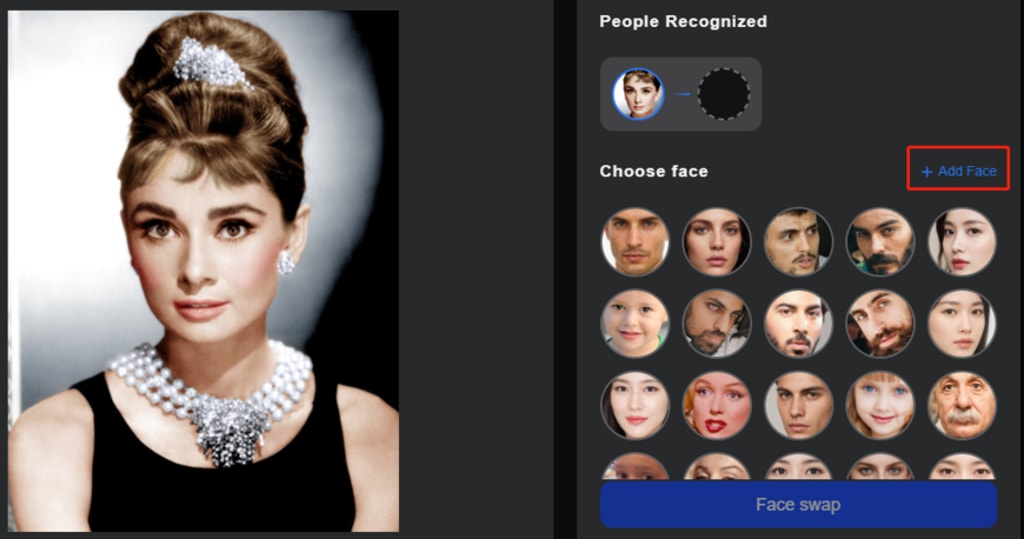
Deepfake technology has rapidly evolved over the past few years, allowing users to manipulate and generate synthetic media, such as images and videos. The rise of deepfake technology has led to the development of various deepfake software programs, each with unique features and capabilities.
As the tools for creating synthetic media have evolved, tremendous progress has been achieved to the point that people may now easily create convincing deepfakes using a face swap app.
Digital technology offers us the power to change the game, it was assumed that moving pictures with sound was a trustworthy form of proof. The proficiency of artificial intelligence has fuelled a dramatic surge in the width of deepfake - films in which the performer's face is supplanted with someone else's resemblance - during the last several years.
How Is Deepfake Done?
Deepfakes are created using machine learning algorithms, specifically artificial neural networks. The process of creating a deepfake typically involves the following steps:
- Data Collection - The first step in creating a deepfake is to collect data, including images and videos of the individuals whose faces you want to swap. The data should be high-quality and capture a wide range of facial expressions and poses.
- Face Detection - The next step is to detect the faces in the images and videos used to create the deepfake. This typically involves using computer vision techniques to identify and isolate the faces in the images and videos.
- Face Alignment - The next step is to align the faces, so they face the same direction and have similar poses. This is important for creating a realistic deepfake. It ensures that the faces are properly aligned and that the machine learning algorithms can effectively analyze the facial features and expressions.
- Face Encoding - Once the faces have been aligned, the next step is to encode the faces, meaning that the facial features and expressions are analyzed and encoded into a mathematical representation. This mathematical representation is then used to train the machine learning algorithms.
- Training the Algorithm - The machine learning algorithms are then trained using the encoded facial features and expressions. This typically involves using a large amount of data to train the algorithms and can take several hours or even days to complete.
- Generating the Deepfake - Once the machine learning algorithms have been trained, the final step is to generate the deepfake by using the algorithms to swap the faces in the video. The algorithms use the encoded facial features and expressions to manipulate the video and create a realistic deepfake.
Popular AI Deepfake Apps in Market
Let's have a look at the popular AI deepfake apps:
DeepSwap
DeepSwap strikes a balance by making high-definition "deepfake" video production accessible to the general public. The website runs on a freemium basis, meaning anybody may create up to 2 free face swaps every month, but paying customers to have fewer restrictions and can remove the site's watermark.
One of the benefits of DeepSwap is its ability to produce high-quality deepfake videos in real time. This makes it an attractive option for individuals who want to generate deepfake videos quickly and easily without the need for extensive training or computational resources.

Reface
Reface is a mobile app that uses AI technology to swap faces in photos and videos in real time. It is a popular tool for creating deepfakes and has received attention for its user-friendly interface and ability to create high-quality deepfakes easily. With Reface, users can select a photo or video, choose the target face, and see the swap occur in real time. The app is available for both iOS and Android devices.
VideoSwap
Similar to other deepfake tools, VideoSwap has both legitimate and malicious uses. It can be used for fun and entertainment, as well as for creative projects and research. However, it can also be used to create false and misleading information, so it's important to be aware of the potential risks and to use the tool responsibly.
Other Different Types of AI Apps
There are numerous types of AI applications present in the market, but the major categories of AI applications are as follows:
Virtual Personal Assistants
These AI-powered tools are designed to interact with users conversationally, typically through voice commands or text inputs. They use natural language processing (NLP) and machine learning algorithms to understand and respond to user requests, performing various tasks such as playing music, setting reminders, and answering questions. Some of the most popular virtual personal assistants include Siri (Apple), Alexa (Amazon), Google Assistant (Google), and Cortana (Microsoft).
Customer Service Chatbots
Chatbots are AI-powered tools that can interact with customers via text, messaging apps, or websites. They can answer common questions, provide product information, and even process orders.
Image and Video Recognition
AI algorithms can be trained to recognize images and videos, and this technology is used in many applications, including security and surveillance systems, social media platforms, and autonomous vehicles. Image and video recognition applications include:
- Facial recognition for security purposes.
- Object recognition for self-driving cars.
- Scene recognition for surveillance systems.
- Activity recognition for sports analysis.
In general, image and video recognition systems are trained on large datasets of labelled images and videos to learn patterns and features in the data that are indicative of specific objects, scenes, people, or activities.
Predictive Analytics
Predictive analytics is a subset of data analytics that analyses past data and predicts future occurrences using statistical models, algorithms for machine learning, and data mining techniques. Predictive analytics seeks to assess the probability of future events based on previous data and to give insights into what may occur.
Are There Any Examples of Deepfakes in Politics
There have been several examples of deepfakes being used in politics:
- Political Advertisements - Deepfakes have been used to create political advertisements that manipulate the speech or actions of political candidates. For example, a deepfake video could be created that makes it appear as if a candidate is saying or doing something they never actually said or did.
- False News - Deepfakes have also been used to spread false news and misinformation. For example, a deepfake video could be created that purports to show a political leader making a statement they never actually made.
- Manipulating Public Opinion - Deepfakes have the potential to manipulate public opinion by creating false or misleading videos. For example, a deepfake video could be created that makes it appear as if a political candidate has taken a position on a controversial issue they never actually took.
Is It Legal to Deepfake Someone?
The legality of deepfakes can vary depending on the specific circumstances and jurisdiction. However, in general, creating and distributing deepfakes without the consent of the individuals depicted can potentially raise several legal issues, such as:
- Copyright Infringement - If the deepfake is created using someone else's image or video, it could be considered an unauthorized use of copyrighted material.
- Defamation - Creating and sharing deepfakes that portray someone in a negative or false light could be considered defamatory.
- Invasion of Privacy - Distributing deepfakes that depict someone in a private or intimate setting without their consent could be considered an invasion of their privacy. For example, using AI image generator or deepfake programs to make appealing feminine images
- Harassment - If the deepfake is created or shared to harass or bully someone, it could be considered illegal.
Conclusion
In conclusion, deepfakes have the potential to revolutionize a variety of industries, from entertainment to politics to education. However, as with any powerful technology, there are also significant concerns about deepfakes' ethical implications. With a responsible and ethical approach, deepfakes can become a valuable tool for enhancing communication, creativity, and education.
About the Creator
DeepSwap.ai
The Best Online Face-Swap Photo/Video/Meme/GIFs Generator. Visual Content Creativity, Powered by AI.
Keep reading
More stories from writers in 01 and other communities.
The Path to Salvation
The late autumn evening air filled the monk's lungs, but it wasn't the season that chilled his bones. The heavy-handed presence of evil he had sensed upon entering the woods surrounding this mountain village had not bothered to conceal itself from him.
By Made in DNA6 days ago in Fiction



Comments
There are no comments for this story
Be the first to respond and start the conversation.