
Crypto elite, hippies of the digital age
Crypto elite, hippies of the digital age

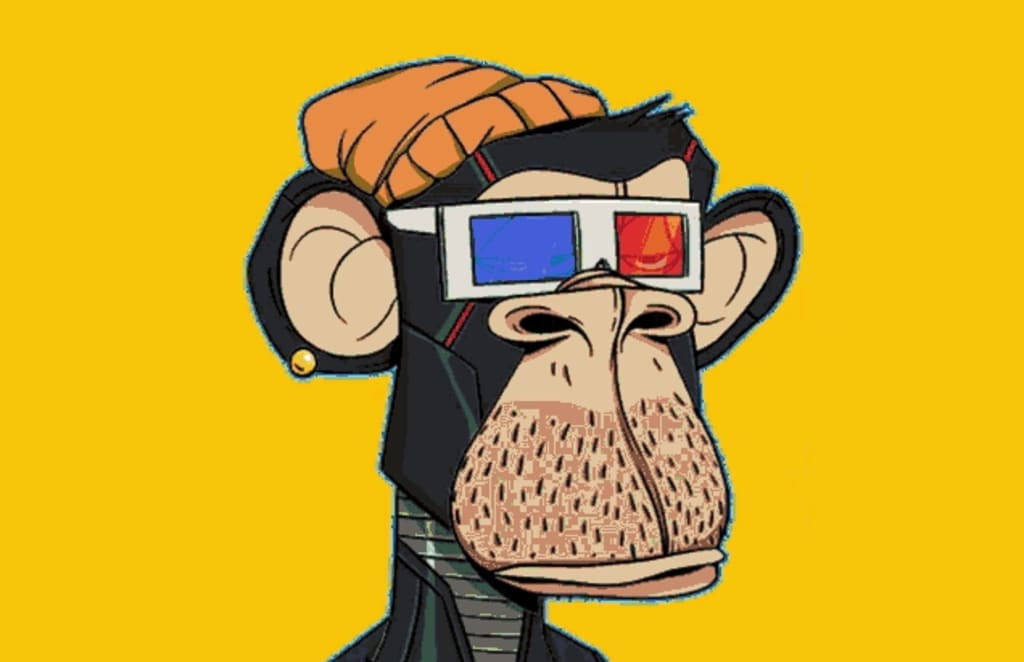
The most important element in the encryption circle in the 14 years since its inception has been dispute. Optimists like Musk see cryptocurrencies as a more advanced form of transaction, while pessimists like Charlie Munger have declared publicly that they "hope cryptocurrencies never exist."
Regardless of how the proponents and opponents fight, it is indisputable that cryptoculture is having a subtle impact on the mainstream world's development, and the digital shock is stronger now than it has ever been.
For a while, NFT's encryption technology was the new choice of brand marketers. The battleground in the Nike-Adidas clothing fight has switched from cotton to strings. LV and Gucci hurriedly released NFT in order for it to reach the metaverse. This is a hybrid system. It is the "crypto elite" distributed over the world, not the pompous Wall Street elite.
This is a new elite group with virtual assets to back them up.
Hair combed into a standard 37-point oil, a custom Tom Ford suit, and a Patek Philippe that actually interprets time as money... You can readily spot the rich elite in the throng.
In the personal profile, there are traces of a qualified crypto elite's lineage: a pixel wind NFT avatar, with the suffix ".eth" after the name, and a DAO organisation that only people in the circle comprehend. Don't forget to also add the trending Yat link (a string of emoji just for you)...
The majority of these broad generalisations with a strong Barnum effect are untrue, however if someone utilises well-known NFT series avatars like Cryptopunk and BAYC (Boring Ape Yacht Club), you may probably deduce that he is wealthy.
Crypto elites prefer to refer to these "unique digital valuables" as Avatars, their "avatars" in the virtual world, rather than NFT avatars.
Works in the NFT series that have a lot of potential frequently have a limited sales strategy. For example, BAYC only produced 10,000 ape-man heads, each with a different image, making each ape-man one-of-a-kind.

NFT Avatar is the projection of personal image on the Internet, as well as a proof of understanding of community culture, according to "The New Yorker" in the article "Why Bored Ape Avatars Are Taking Over Twitter." To some extent, it has taken on the role of a status symbol.
Is the NFT avatar the crypto elite's Swiss watch? On some aspects, the two are quite similar. They are equally as costly, scarce, and, most importantly, popular among the wealthy.
However, unlike Swiss timepieces with fine craftsmanship, the most well-known NFT avatars frequently have an avant-garde look that is at odds with the mainstream. The resulting uncertainty is due to the crypto elites' desire for "individuality" rather than "beauty" that adheres to the standards.
Unlike the buyout scheme, which allows ordinary NFTs to own domain names indefinitely, Eth domain names have a functional life. Buyers must choose the required "property" years before to creation. The higher the price will automatically grow as the time spent in possession increases.
Because of their rarity, some simple and catchy Eth domain names have a value space for speculation due to their uniqueness (no one wants to tie their wallets to others).
The more well-known and short Eth domain names are, the higher the price of speculation, similar to.com domains. Nike.eth, for example, has a value of over $3 million dollars.
Even on the blockchain, the wealthy can't get away from the "beautiful" game.
The DAO, the crypto elite's "secret club"
Decentralization is a topic that the blockchain can never ignore, and it has created a slew of new terms based on the notion, such Web3 and DAO. Decentralized Web3 is the future of the Internet, according to crypto elites, while DAO is the next generation of companies and communities.
PleasrDAO spent $4 million this summer on an unreleased Wu-Tang Clan album, which is shared by DAO members; FlamingoDAO, an NFT investment firm, has been involved in hundreds of CryptoPunk transactions, raising more than $40 million in an attempt to obtain one of only 13 copies of the United States Constitution in the world (and ultimately failed).
A DAO is typically compared to a chat group with a common cryptocurrency wallet that acts in concert based on the votes of "group buddies."
In an interview, Derek Edward Schloss, one of the FlamingoDAO founders, stated that the value generated by the Internet should be handled by an Internet organisation, and that DAOs are the means to do it.
In the digital era, the hippie
The crypto-elite counterculture movement may be traced back to the hippy age, and it is passionate about personalised styling and preoccupied with the idea of decentralisation.
In the 1960s, a group of anti-establishment young people assembled in Greenwich Village on the east coast of the United States, dressed in their shabby clothes and using the nomadic and communal lifestyle to express their contempt for the centralised political world. This method promotes the re-establishment of social bonds.
The media at the time coined the term "hippie" to describe this group of pastoral utopians.
As the short-lived hippie movement drew to an end, Stewart Brand developed The Whole Earth Catalog, sometimes known as the Hippie Life Guide, a survival manual that taught young people the tools and skills to use technology. Make a social revolution.
This spirit has had a huge impact, inspiring famous businesses such as Steve Jobs, prominent journalists such as Kevin Kelly, and numerous programmers and hackers.
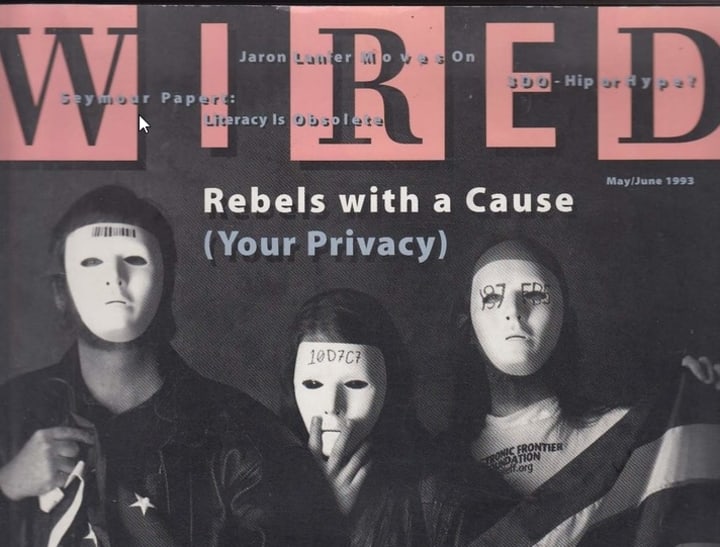
The "cypherpunk" organisation, which includes cryptographers, hackers, programmers, and other members, was founded in 1993. The cypherpunks wanted to break the monopoly of encryption technology and use digital encryption to protect citizens' privacy. Pastoral failures have become more common as information technology has advanced. In the digital world, utopianism has persisted, and the anti-mainstream mentality has spawned a new liberalism.
On the basis of the hash algorithm, public key encryption technology, electronic currency B-Money, and other innovations, Satoshi Nakamoto, a rising star of cypherpunk, wrote an article titled "Bitcoin: P2P Electronic Cash System" in 2008. Bitcoin is a cryptocurrency based on blockchain technology.
Blockchain applications such as DeFi, NFT, DAO, and others have sprung up with the birth of the second-generation blockchain technology smart contract. More people in this increasingly violent anti-mainstream movement are seeing the potential of blockchain decentralisation. Cypherpunks' vision of the Internet's future has only recently begun to take shape, some three decades later.
If you're still having trouble understanding the crypto elite, who spend hundreds of thousands of dollars on avatars and nicknames, consider it a new rebirth of the hippy spirit brought on by techno-utopianism.
Will the new Whole Earth Catalog be released at this very moment?
About the Creator
Keep reading
More stories from writers in 01 and other communities.
How to Hire a Mobile App Developer in St. Louis 2026
The regional tech landscape has shifted significantly. The decision to hire a mobile app developer in St. Louis 2026 is now a strategic choice. St. Louis has evolved from a traditional manufacturing hub. It is now a center for agtech and geospatial technology. Financial services also drive the local economy forward.
By Del Rosario5 days ago in 01
TUS NUA - ch 53
TUS NUA – ch 53 New Beginnings – Mia and Midnight (*)(*)(*) Finola knew Ali’s brother-in-law needed to put his mind at rest. She fed her arm through his and led him outside. “We’ll sit here. If you like, I can put a block around us so our conversation will be private.”
By Margaret Brennan6 days ago in Fiction




Comments
There are no comments for this story
Be the first to respond and start the conversation.