
Cosmic Impact: The Asteroid That Ended the Dinosaur Age
Cosmic Impact: The Asteroid That Ended the Dinosaur Age

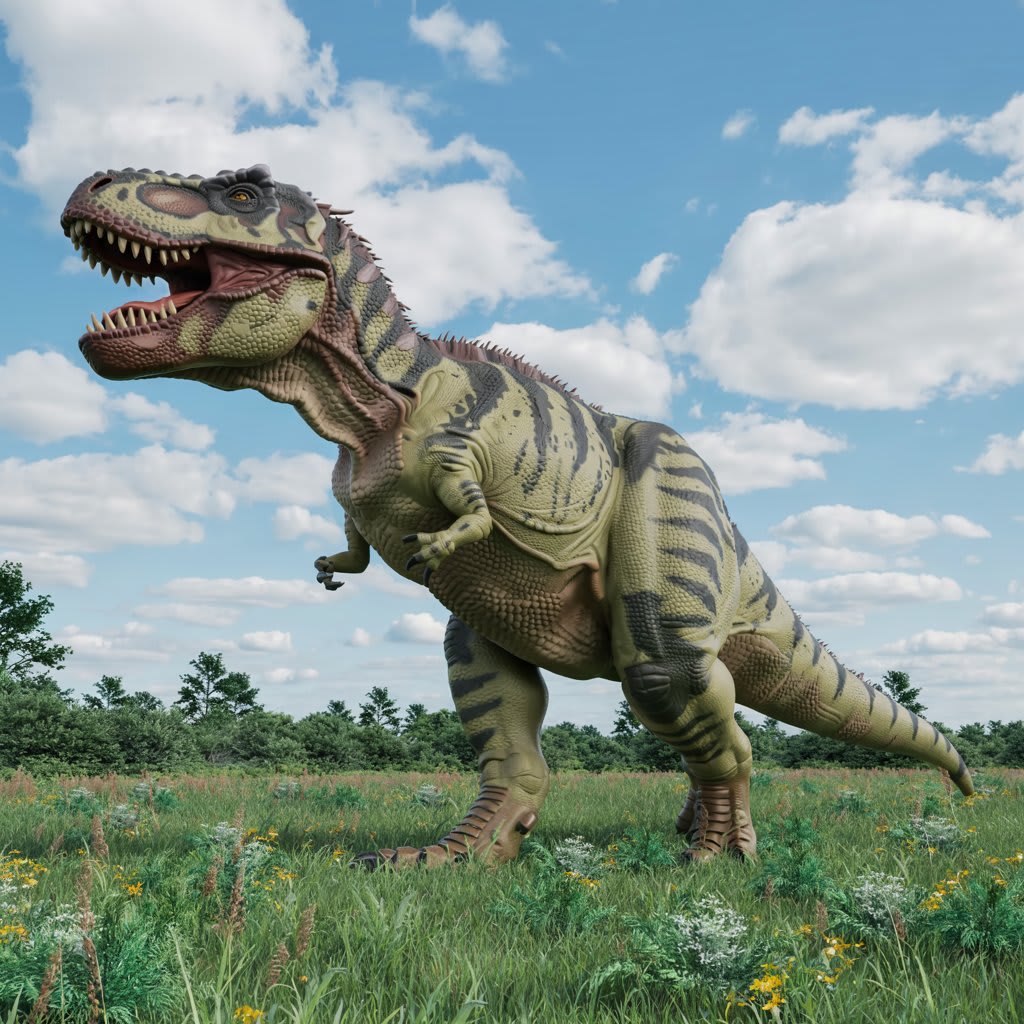
The Echo of Cataclysm: Unraveling the Dinosaur Extinction
The demise of the non-avian dinosaurs, a group that had dominated terrestrial ecosystems for over 180 million years, remains one of the most compelling and transformative events in Earth's history. It wasn't a gentle fading, but a violent punctuation mark, a cosmic reset that reshaped the trajectory of life. The story, woven from layers of geological evidence and scientific deduction, speaks of a planet shaken to its core, a world plunged into darkness, and a mass extinction that cleared the stage for the rise of mammals.
The Chicxulub Fingerprint: A Smoking Gun in the Yucatan:
The narrative's central protagonist, the Chicxulub impactor, emerged from the shadows of geological mystery to become the prime suspect. The discovery of the Chicxulub crater, a vast, submerged scar off the Yucatan Peninsula, provided compelling evidence of a colossal cosmic collision. This crater, spanning approximately 150 kilometers in diameter, is a testament to the sheer power of the impacting object, estimated to be a 10-15 kilometer asteroid or comet.
The impact's signature is etched in the geological record, a thin layer of iridium-rich clay known as the K-Pg boundary. Iridium, a rare element on Earth but more abundant in asteroids, is found in significantly higher concentrations in this layer, a telltale sign of extraterrestrial origin. Shocked quartz, another mineral formed under intense pressure, further reinforces the impact hypothesis.
The Immediate Inferno: A World Engulfed in Chaos:
The impact's immediate effects were cataclysmic, a rapid-fire sequence of destruction that would have transformed the planet in mere hours.
* Shockwaves and Earthquakes: The force of the impact generated shockwaves that propagated through the Earth's crust, triggering massive earthquakes and volcanic eruptions on a global scale.
* Tsunamis of Unprecedented Scale: A colossal tsunami, hundreds of meters high, surged outwards from the impact site, inundating coastal regions and reshaping shorelines.
* A Fiery Rain of Debris: The impact ejected vast amounts of molten rock and debris into the atmosphere, creating a fireball that ignited widespread wildfires, consuming forests and releasing plumes of soot into the atmosphere.
* The Ejecta Blanket: Ballistic ejecta, fragments of rock and debris launched into space, rained down across the globe, creating a thick layer of sediment known as the ejecta blanket.
The Long Winter: A World Shrouded in Darkness:
The immediate destruction gave way to a prolonged period of environmental upheaval, a "nuclear winter" that plunged the planet into darkness and cold.
* The Dust Veil and Global Cooling: The impact threw up a massive cloud of dust, soot, and sulfate aerosols, blocking sunlight and causing a drastic drop in global temperatures. This "impact winter" would have lasted for months, if not years, disrupting photosynthesis and collapsing food chains.
* Acid Rain and Ocean Acidification: Sulfur released from the impactor and the Earth's crust combined with water vapor to form acid rain, acidifying terrestrial and aquatic environments. The impact also triggered ocean acidification, disrupting marine ecosystems and contributing to the extinction of marine species.
The Deccan Traps: A Volcanic Symphony of Destruction:
While the asteroid impact is the primary culprit, the Deccan Traps volcanic eruptions in India also played a significant role in the K-Pg extinction. These massive eruptions, which began before the impact and continued for hundreds of thousands of years, released vast amounts of greenhouse gases, including carbon dioxide and sulfur dioxide, into the atmosphere.
* Greenhouse Warming and Atmospheric Instability: The Deccan Traps eruptions contributed to global warming, exacerbating the environmental stress caused by the impact. The release of sulfur dioxide created atmospheric aerosols, which could have interacted with the impact's dust cloud, further complicating the climate picture.
* Environmental Stress and Ecosystem Disruption: The combined effects of the impact and the volcanic eruptions created a period of extreme environmental instability, with fluctuating temperatures, acid rain, and ocean acidification. These conditions would have stressed ecosystems, making them more vulnerable to extinction.
The Selective Extinction: A Turning Point in Life's History:
The K-Pg extinction was not a uniform event. Some groups of organisms were more vulnerable than others, leading to a selective extinction that reshaped the course of life on Earth. Non-avian dinosaurs, along with many marine reptiles, ammonites, and other species, perished. However, some groups survived, including small mammals, birds (descendants of theropod dinosaurs), reptiles, amphibians, and insects.
* The Rise of Mammals: The extinction of the non-avian dinosaurs cleared the way for the diversification and expansion of mammals, which had previously occupied niche roles in ecosystems.
* The Evolution of Modern Birds: Birds, descendants of theropod dinosaurs, survived the extinction, giving rise to the diverse array of avian species we see today.
A Cosmic Lesson: The Fragility of Life and the Power of Extinction:
The K-Pg extinction serves as a stark reminder of the fragility of life and the immense power of cosmic events. It highlights the interconnectedness of Earth's systems and the potential for rapid and catastrophic change. Understanding this event is crucial for comprehending the history of life on our planet and for preparing for future challenges, both terrestrial and extraterrestrial. The echo of the cataclysm continues to resonate, reminding us that even the most dominant forms of life can be wiped out in the blink of a cosmic eye.
About the Creator
Irfan A
The purpose of life is not to be happy. It is to be useful, to be honorable, to be compassionate, to have it make some difference that you have lived and lived well 😋
The Role of AI in Transforming Modern eLearning App Development
In the digital era, education is no longer confined to traditional classrooms. The demand for personalized, accessible, and interactive learning experiences has driven the growth of eLearning app development. Among the most transformative technologies shaping this space is Artificial Intelligence (AI). By integrating AI into educational platforms, businesses and institutions are revolutionizing how content is delivered, assessed, and adapted to learners’ needs.
By keith laurance3 days ago in 01




Comments
There are no comments for this story
Be the first to respond and start the conversation.