
ChatGPT's Inner Secrets, Revealed: Unlocking the AI's Core Mechanisms
A Deep Dive into How Language Models Think, Learn, and Respond


ChatGPT changed how we interact with technology. It writes stories, answers questions, and even codes, often feeling like magic. But beneath its clever responses are deep, complex principles. Could you please explain what truly contributes to the effectiveness of this advanced AI language model?
Knowing how AI, especially large language models like ChatGPT, functions is becoming key. This understanding helps us use these tools better. It also prepares us for the future. We will demystify its abilities by revealing its inner workings.
The Foundation: How ChatGPT Learns
Neural Networks Explained (Simply)
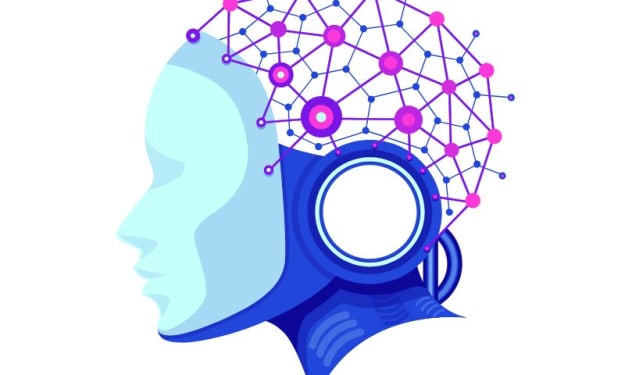
Think of a neural network like a digital brain. It has layers of "neurons" that connect and talk to each other. These artificial neural networks (ANNs) form the building blocks of deep learning. Each connection carries a "weight" that changes as the network learns. This setup helps the AI find patterns in data.
The Power of Transformer Architecture
The Transformer model is a big reason why ChatGPT is so effective. Before Transformers, models struggled with long texts. The Transformer handles long pieces of information easily. It uses something called "attention mechanisms." This lets the model focus on important words in a sentence, no matter how far apart they are. This design is much faster than older methods like RNNs and LSTMs.
Pre-training: The Massive Data Diet
ChatGPT learns by reading a lot of text. This first step is called pre-training. It eats up enormous datasets, including things like Common Crawl, books, and Wikipedia. This massive data diet helps the AI learn grammar rules, facts, and different writing styles. It picks up common sense reasoning and general knowledge this way. For example, early versions like GPT-3 had around 175 billion parameters. These numbers showed the huge scale of its learning.
Fine-tuning: Shaping ChatGPT's Behavior
Supervised Fine-Tuning (SFT)
After its initial learning, ChatGPT gets more specialized training. This is called supervised fine-tuning (SFT). Here, human experts create example conversations. They write out a prompt and the perfect response. The AI learns from these pairs. It helps ChatGPT understand and follow instructions. This process teaches the model to do specific tasks.
Reinforcement Learning from Human Feedback (RLHF)
This stage further refines ChatGPT's answers. RLHF makes the AI more helpful, honest, and harmless. First, people rate several AI-generated answers for a single prompt. This creates comparison data. Next, a special "reward model" learns from these human ratings. It predicts which answers are best. Finally, reinforcement learning uses this reward model to improve ChatGPT itself. This technique helps the AI avoid making biased or unsafe content.
Understanding ChatGPT's Capabilities and Limitations
Generating Human-Like Text
ChatGPT's main job is to create text that sounds like a human wrote it. It does this by predicting the next word in a sequence. The model looks at all the words before it. Then, it picks the most likely next word based on its training. Good context, careful prompt engineering, and the model's size all help make its answers flow well. They also make its writing creative.
Knowledge Acquisition vs. Understanding
The AI can retrieve and combine information it has seen during training. But this is not the same as human understanding. ChatGPT does not have consciousness. It lacks personal experiences. It cannot truly "know" something in the way a person does. The model is a very complex pattern matcher, not a thinker.
Hallucinations and Inaccuracies
Occasionally, ChatGPT makes up facts or provides wrong information. We call these "hallucinations." This happens when the AI is unsure or lacks enough data on a topic. It then generates plausible-sounding but false answers. Always fact-check crucial information from ChatGPT. It can save you from believing incorrect details.
Bias in AI
ChatGPT learns from internet data, which often holds human biases. This means the AI can sometimes show these same biases in its answers. For example, if training data has stereotypes, the model might repeat them. Experts at OpenAI and other places work diligently to reduce this bias. We should always read AI outputs with a critical eye. This procedure helps spot any hidden unfairness.
The Future of Large Language Models
Advancements in Training and Architecture
Research continues to push the limits of AI. Future models will likely handle more than just text. We might see multimodal AI that combines text, images, and sound. New training methods will make these systems more efficient. AI's reasoning abilities are also getting better. This means more complex tasks could be handled by future models.
Ethical Considerations and Societal Impact
As AI grows stronger, we face new questions. Some worry about jobs changing or misinformation spreading. Copyright issues with AI-generated content are also a concern. Building AI responsibly is crucial. We must think about its wider impact on society.
Conclusion
At its core, ChatGPT relies on a Transformer architecture, vast pre-training, and careful fine-tuning. These steps, including supervised fine-tuning and reinforcement learning from human feedback, shape its abilities. Knowing these mechanisms helps us understand its power. It also shows us its limits, like occasional inaccuracies and hidden biases.
Large language models are constantly improving. It's important to continue learning about them. We need to engage with this technology in smart ways. Approach ChatGPT as a powerful tool. Learn how it works to use it effectively and wisely.
...
Thank you for reading! 🌷
🙌 If you enjoyed this story, don’t forget to follow my Vocal profile for more fresh and honest content every day. Your support means the world!
About the Creator
vijay sam
🚀 Sharing proven affiliate marketing tips, smartlink strategies, and traffic hacks that convert. Follow for insights, tools, and real results to help you earn smarter—whether you're just starting or scaling up!
Reducing AI Integration Failures by 40% With the Right Generative AI Consulting Partner
In the rush to adopt cutting-edge technologies, many organizations have jumped into artificial intelligence projects without a solid strategy, experienced guidance, or realistic expectations. As a result, a growing number of businesses report stalled initiatives, failed integrations, or tools that never deliver meaningful ROI. But when organizations align with the right generative ai consulting services, the narrative changes — often dramatically. With expert support, companies can reduce AI integration failures by up to 40% and unlock the full potential of intelligent systems.
By Steve Waugh3 days ago in 01
Georges Chahwan: The Marketing Director Redefining Performance Strategy in Healthcare Staffing
In the competitive world of healthcare staffing, standing out requires more than a polished brand. It demands a marketing engine built on strategy, data, and relentless execution. Georges Chahwan, Marketing Director at ProMed Staffing Resources, has spent years engineering exactly that kind of engine. His approach combines technical SEO, digital advertising, and personalized email marketing into a cohesive system that doesn't just attract attention it converts.
By Jeffrey D. Gross MDa day ago in 01



Comments
There are no comments for this story
Be the first to respond and start the conversation.