
California Windstorm Sparks Pacific Palisades Wildfire and Two Others, Prompting Massive Evacuations
Palisades Fire: A Growing Crisis
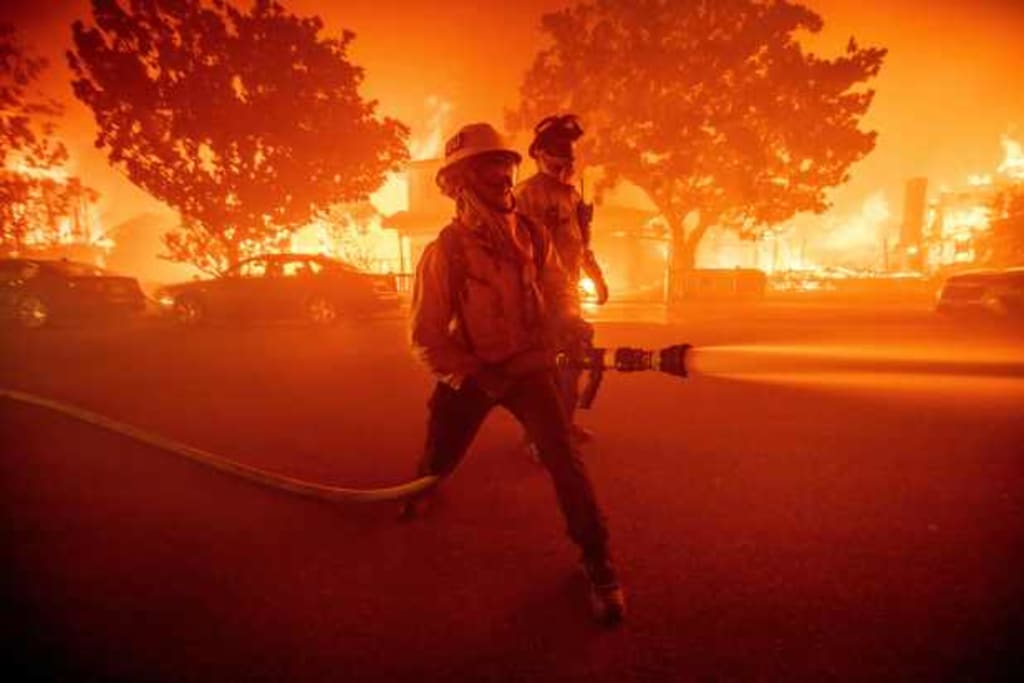
A powerful California windstorm has fueled a series of devastating wildfires, wreaking havoc across Los Angeles County. The fires, which erupted in Pacific Palisades, Altadena, and Sylmar, have forced tens of thousands to evacuate their homes, left communities in the dark, and threatened countless properties. Authorities are grappling with the scale of destruction as high winds and dry conditions continue to spread the flames.
The Pacific Palisades Fire: A Growing Crisis
The Palisades Fire erupted on Tuesday morning around 10:30 a.m. Pacific Time in the affluent neighborhood of Pacific Palisades, northwest of Los Angeles. Known for its luxury homes and picturesque views, the community was thrust into chaos as the fire rapidly consumed vegetation, spreading to at least 2,921 acres with no containment reported.
CalFire (California Department of Forestry and Fire Protection) reported that the blaze is threatening over 10,300 homes. Evacuation orders were issued for at least 30,000 residents as firefighters battled the inferno. The Los Angeles County Fire Department stated that the number of structures damaged or destroyed has yet to be determined.
The fire's rapid expansion overwhelmed evacuation routes, causing major gridlock on several key roadways. Some residents, desperate to escape, abandoned their vehicles and fled on foot. The intensity of the fire and accompanying Santa Ana winds have created hazardous conditions, complicating containment efforts.
Eaton Fire: Another Threat Emerges
While crews worked tirelessly to contain the Palisades Fire, a second wildfire—dubbed the Eaton Fire—broke out Tuesday night in the hills above Altadena, a community in northern Los Angeles County. This fire has already scorched at least 1,000 acres, according to CalFire, and has prompted evacuation orders for nearby residents.
Altadena’s rugged terrain and dry conditions have made firefighting efforts challenging. The fire's location in the hills poses an additional risk, as embers carried by the wind could ignite new hotspots.
Hurst Fire: Sylmar Residents on High Alert
Late Tuesday night, a third wildfire—the Hurst Fire—erupted in the Sylmar neighborhood of Los Angeles. Initially consuming 100 acres, it quickly expanded to 500 acres, forcing evacuations in parts of the area.
Sylmar, located in the northern part of Los Angeles, has faced wildfires in the past due to its proximity to dry brush and windy conditions. The combination of these factors made the Hurst Fire spread rapidly, further stretching the resources of local and state firefighting teams.
The Role of Santa Ana Winds
The powerful Santa Ana winds, a common weather phenomenon in Southern California, have played a significant role in fueling these fires. These winds, which can reach speeds of over 50 miles per hour, carry dry air from inland areas toward the coast, creating perfect conditions for wildfires to ignite and spread.
In addition to fanning the flames, the winds have made it nearly impossible for firefighters to establish containment lines. The high wind speeds have also led to falling trees and power outages, adding to the chaos.
Widespread Power Outages
As the fires raged and winds intensified, more than 200,000 homes and businesses in Los Angeles County were plunged into darkness on Tuesday night and early Wednesday. Utility companies, already under scrutiny for their role in past wildfires, have taken preventive measures by shutting off power to high-risk areas. However, these outages have left many residents without electricity during a time of crisis.
The outages have also disrupted communication systems, making it harder for residents to receive emergency alerts and evacuation orders. Local officials are urging residents to have backup plans in place, including battery-operated radios and flashlights.
Government Response
In response to the escalating crisis, California Governor Gavin Newsom declared a state of emergency. The declaration allows the state to allocate additional resources to firefighting efforts and provides financial assistance to affected communities.
President Joe Biden also addressed the situation, stating that he is closely monitoring developments. The president has offered federal assistance to help suppress the fires, emphasizing the government’s commitment to supporting California during this emergency.
Evacuations and Community Impact
The scale of the evacuations has been unprecedented, particularly in Pacific Palisades, where tens of thousands of residents were forced to flee. The community, known for its high-value properties, has been deeply affected by the fire, with many residents expressing concern about the potential loss of their homes and belongings.
Evacuation centers have been set up in various parts of Los Angeles County to provide temporary shelter for displaced residents. Local organizations and volunteers have stepped up to offer food, water, and other essentials to those in need.
For many, the emotional toll of the wildfires has been immense. Families are grappling with uncertainty as they wait for updates on the status of their homes. Some have already returned to find their properties reduced to ash, while others remain hopeful that the flames will spare their neighborhoods.
Traffic Chaos During Evacuations
The mass evacuations have also led to significant traffic disruptions. Major roadways, including Pacific Coast Highway and Sunset Boulevard, were jammed with vehicles as residents attempted to leave the area.
In some cases, gridlock forced residents to abandon their cars and evacuate on foot. Emergency responders have urged residents to plan their evacuation routes in advance and to leave as soon as evacuation orders are issued.
Firefighting Efforts and Challenges
Firefighters from across the state have been deployed to Los Angeles County to combat the three wildfires. Crews are using helicopters, bulldozers, and ground teams to contain the blazes, but the combination of high winds and dry conditions has made their work exceedingly difficult.
The fires have also raised concerns about the health and safety of firefighters, who are working long hours in hazardous conditions. Many are battling exhaustion and dehydration as they push to contain the flames.
The Path to Recovery
As the fires continue to burn, officials are urging residents to remain vigilant and to follow evacuation orders. The road to recovery will be long, particularly for those who have lost their homes and belongings.
In the aftermath of the fires, state and federal agencies will work together to assess the damage and provide financial assistance to affected communities. Local organizations are also stepping in to support recovery efforts, offering everything from temporary housing to mental health services.
A Call for Preparedness
The ongoing wildfire crisis serves as a stark reminder of the importance of preparedness. Residents in fire-prone areas are encouraged to create defensible space around their homes, have emergency kits ready, and stay informed about weather conditions and fire activity.
California’s fire season has grown increasingly intense in recent years, fueled by climate change and urban development in wildfire-prone areas. As the state grapples with this new reality, officials are emphasizing the need for long-term solutions, including improved forest management and investments in firefighting infrastructure.
About the Creator
After-Sales Services from Hot Mix Plant Suppliers
Hot mix plant suppliers are critical partners for construction firms, particularly when providing after-sales service contracts that include predictive maintenance and emergency spare parts delivery. These services are designed to ensure that asphalt mixing plants operate smoothly, thereby minimizing downtime and associated costs. Understanding how these services impact the long-term asphalt plant cost is vital for contractors, especially those working on cross-border projects.
By Macroad Asphalt Plant7 days ago in 01
Australia Thermal Camera Market Size & Forecast 2025–2033
Australia Thermal Camera Market: A Clear View into a Hot Technology The Australia Thermal Camera Market is entering a decisive growth phase as infrared imaging becomes a cornerstone of modern safety, automation, and surveillance. According to Renub Research, the market size is expected to reach US$ 137.6 million by 2033, up from US$ 80.69 million in 2024, registering a compound annual growth rate (CAGR) of 6.11% between 2025 and 2033. This steady expansion reflects a powerful combination of technological advancement, rising security needs, and the growing role of thermal imaging across industrial, healthcare, and public safety domains.
By Renub Research3 days ago in 01
Miss Persephone's Manual to a Seemingly Ordinary Life
Miss Persephone was found at the dining table, her blue eyes swollen, her tears arriving and retreating like the tides of the ocean. Earlier that day, her family had visited her in the retirement home where she had lived for eight years. It was her eightieth birthday.
By Imola Tóth4 days ago in Fiction



Comments
There are no comments for this story
Be the first to respond and start the conversation.