
Brooks Ghost Max 3 vs Ghost Max 2
Which One Actually Delivers? A Real Runner's Comparison
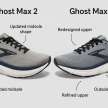

Look, I'll be honest – I wasn't planning on buying another Brooks shoe this year. The Ghost Max 2 left me feeling... let's just say underwhelmed. But when the Ghost Max 3 dropped in August, I kept hearing whispers that Brooks had actually listened to feedback and fixed some of the issues from version 2.
So here's the thing – I'm someone who needs a wider toe box and appreciates orthotic-friendly shoes (I use custom insoles for my flat feet). The Ghost Max 1? Loved it. The Ghost Max 2? Not so much. It felt narrower, less accommodating, and honestly kind of like a step backward.
But curiosity got the better of me, and I grabbed the Ghost Max 3 about two months ago. I've been rotating between it and my Ghost Max 2 (which I kept around because, well, I already paid for them) to really understand what changed. And honestly? There's more going on here than I expected.
What Actually Changed (And Why It Matters)
The Midsole Tweaks
Okay, so both shoes use DNA Loft V3 foam – that part stayed the same. But here's where it gets interesting: the Ghost Max 3 feels noticeably different underfoot, and it took me a while to figure out why.
The heel bevel is broader now. I know that sounds super technical, but what it means in practice is that when your heel hits the ground, there's more surface area making contact. The result? A smoother, more stable landing. With the Ghost Max 2, I sometimes felt like the initial contact was a bit abrupt – not jarring, just not as smooth. The Max 3 cleaned that up.
They redesigned the sidewalls. There's more sidewall support now, especially in the heel area and through the midfoot. This creates a more stable platform overall. I'm a midfoot striker most of the time, and I definitely notice this change. The shoe feels more planted, more secure when I land.
The forefoot rocker is slightly more aggressive on the Max 3, but still has minimal toe spring. For someone like me who uses orthotics, this is actually crucial. Too much toe spring can create weird pressure points on the ball of your foot, especially with an insole. Brooks kept it subtle, which I appreciate.
Both shoes have that 6mm drop (39mm heel, 33mm forefoot), which is way more comfortable for me than the old 12mm drop Brooks used to be obsessed with. Low drop means more even pressure distribution across your foot – less strain on your calves and Achilles.
The Cushioning Feel
Here's where opinions are probably going to vary based on what you're looking for.
Both shoes have what I'd call "balanced to firm" cushioning. They're not soft and mushy like a Hoka Bondi or super bouncy like a Nike Invincible. When you step into them, you sink in a little, but not much. For walking and standing, this feels really comfortable – enough give to feel cushioned, but not so much that you're unstable.
But here's the thing about that firmness – it's actually intentional for orthotic users. If you have a really soft, squishy shoe and you put an angled orthotic in there, when you apply pressure, everything just compresses and the orthotic loses effectiveness. The Ghost Max 3's firmer platform keeps my orthotics working the way they're supposed to.
Now, if you don't use orthotics, you're still getting a stable, neutral shoe without any invasive arch support trying to push up into your foot. It's neutral in the truest sense – it's not going to correct your gait, but it's also not going to let you roll around all over the place.
The Toe Box Drama (Finally Fixed)
Okay, let's talk about the elephant in the room – the Ghost Max 2's toe box was narrow. Not painfully so, but definitely more cramped than the original Ghost Max 1. I have relatively normal-width feet, and even I noticed it. My toes felt compressed, especially after longer runs when your feet swell a bit.
The Ghost Max 3 fixes this. Two ways:
First, they switched to a jacquard engineered mesh that's stretchier and more flexible. It moves with your toes instead of constraining them. The material itself has more give.
Second, the toe box is physically less tapered now. There's more vertical room and more width for your toes to spread naturally. After running in both shoes back-to-back, the difference is immediately noticeable. My toes have space to breathe in the Max 3, whereas in the Max 2, they always felt a bit squished by mile 5 or 6.
If you're someone with wider feet or you just like a roomy toe box, this change alone might be worth the upgrade.
Upper and Fit
Both shoes have that thick, padded tongue (non-gusseted), and I've had zero tongue slip issues with either one. They both lock down nicely when you tighten the laces.
The heel counter is still stiff on both (which I like – keeps your heel locked in), and both have a ton of padding around the heel collar. Honestly, maybe too much padding for summer running, but it does feel plush.
Weight-wise, they're basically identical – around 306-309g for a men's size 9. So if you were hoping the Max 3 would be lighter, sorry to disappoint. These are still chunky shoes.
How They Actually Feel on the Run
Alright, enough tech specs. What's it like to actually run in these shoes?
Ghost Max 2: My Experience
I've put probably 180-200 miles on my Ghost Max 2 over the past several months. It's been my go-to for easy recovery runs, but I've always had this nagging feeling that something was off.
The toe box issue I already mentioned – my toes just never felt totally comfortable, especially on longer runs. But beyond that, the shoe always felt a bit... stiff? Not in a bad way, just less forgiving than I wanted for a max cushion recovery shoe.
The transitions felt okay but not smooth. Sometimes when I'd heel strike (which I do occasionally when I'm tired), the landing felt a bit clunky. Not jarring, just not as fluid as I wanted.
And honestly, I just never fell in love with it. It was fine. It did the job. But it never made me excited to grab it for a run.
Ghost Max 3: The Improvement
I've got about 120 miles on the Max 3 now, and it's a noticeably better shoe. Not revolutionary, but meaningfully better.
That wider heel bevel and redesigned sidewall? You can feel it. The transitions from heel to midfoot to toe-off are smoother. The shoe feels more stable and planted without feeling heavy or sluggish.
The toe box space is a game-changer for longer runs. I did a 14-miler last weekend, and my toes still had room at the end. That never happened in the ghost Max 2 women.
The cushioning feels slightly different too, even though it's supposedly the same foam. I can't quite put my finger on it, but the ghost Max 3 feels a touch more forgiving, a bit less stiff. Maybe it's the geometry changes affecting how the foam compresses, but whatever it is, I prefer it.
Where They're Both the Same (For Better or Worse)
Neither of these shoes is light. At 10+ ounces, you're definitely going to notice the weight if you try to pick up the pace. I made the mistake of wearing the Max 3 for a tempo run once – bad idea. These are strictly easy day shoes.
Both shoes are also quite firm compared to other max cushion options out there. If you want something soft and pillowy, look at Hoka or the Nike Invincible. These Brooks shoes are more stable and controlled.
And both shoes get hot. All that padding and cushioning doesn't breathe great in summer heat. I'm in the Midwest, and I've definitely had some sweaty-foot runs in both of these shoes when temps hit 80+.
The Orthotic Situation
Since I use custom orthotics, this is a big deal for me.
The Ghost Max 1 was amazing with orthotics – tons of room, wide platform, neutral enough not to fight with the orthotic's correction.
The Ghost Max 2? Decent, but that narrower fit made getting my orthotics in and out a bit more annoying. And the toe box squeeze was worse with the orthotic taking up some of that precious space.
The Ghost Max 3 brings it back to Ghost Max 1 territory. Wide platform, plenty of space for the orthotic, and the firmer midsole keeps the orthotic effective. The insole removes easily, and there's ample room for my custom insoles without making the shoe feel cramped.
If you use orthotics or have wider feet, the Max 3 is significantly better than the Max 2.
Walking and Standing Performance
Okay, I work from home, so I'm not walking around all day, but I have worn both of these shoes for:
Long walking meetings around the neighborhood
Airport travel (standing in lines, walking terminals)
Casual everyday errands
Both shoes are honestly excellent for walking. That balanced cushioning is perfect – soft enough to feel comfortable after hours on your feet, but firm enough that you feel stable and not wobbly.
The Max 3's smoother heel transition makes it slightly better for walking in my opinion. The heel-to-toe roll feels more natural when you're walking at a slower pace.
If I had to pick one of these purely as a walking/lifestyle shoe, I'd go Max 3 without hesitation.
Who Should Buy What?
Stick with Ghost Max 2 if:
- You can find it on deep discount (I've seen it for $100-110 lately)
- You have narrow to normal width feet and didn't have toe box issues
- You already own it and it works fine for you
- You want to save $40-50 and don't care about the incremental improvements
Upgrade to Ghost Max 3 if:
- You need a wider toe box (this alone might be worth it)
- You use orthotics and want more accommodation
- You're a heel striker who wants smoother transitions
- You want the most stable, comfortable easy-day shoe Brooks currently makes
- You hated the Ghost Max 2 but loved the original Ghost Max
Skip both and try something else if:
- You want a light, fast shoe (these ain't it)
- You prefer soft, squishy max cushion (try Hoka Bondi or Clifton)
- You need something versatile for both easy runs and workouts (look at Saucony Tempus or ASICS Superblast)
- You run primarily in hot weather and need breathability
The Verdict: Was It Worth the Wait?
After two months of rotating between both shoes, here's my honest take: the Ghost Max 3 is what the Ghost Max 2 should have been.
It's not a huge leap forward – you're not getting a completely different shoe. But Brooks took the legitimate complaints about version 2 (narrow toe box, less accommodating fit, slightly clunky transitions) and addressed them. The Max 3 feels more refined, more thoughtful, more like Brooks actually listened to feedback.
Is it worth $150? If you need a durable, stable, orthotic-friendly easy day shoe with a roomy fit, yeah, I think so. It's going to last 400+ miles easily with all that rubber, and it does exactly what it's designed to do very well.
Is it worth upgrading from the Max 2 if you already own them? Depends. If the Max 2 works fine for you, probably not worth spending another $150. But if you've been frustrated with the toe box or the fit, the Max 3 is a meaningful improvement.
For me personally, the Max 3 has basically replaced my Max 2 in my rotation. I still keep the Max 2 around as a backup, but when I'm reaching for an easy day shoe, I'm grabbing the Max 3 now.
It's still not my favorite easy day shoe (I'm still eyeing that Glycerin Max), but it's solidly in my rotation, and that's way more than I could say about the Max 2.
Final Ratings:
Ghost Max 2: 6.5/10 (decent but flawed)
Ghost Max 3: 7.5/10 (good execution of what it's trying to be)
Brooks didn't reinvent the wheel here. But they did make it roll a lot smoother.
About the Creator
Brooks Ghost Max
I'm just a running shoe geek with a serious addiction to foam. My current obsession? The Brooks Ghost Max. I spend my days analyzing stack heights and heel drops to help you decide if that $150 price tag is actually worth it.
Keep reading
More stories from Brooks Ghost Max and writers in 01 and other communities.
Brooks Ghost Max 2 vs Original Ghost Max
Okay, so I need to tell you about something that's been bugging me for months now. I bought the original Brooks Ghost Max last year, loved it, put about 200 miles on it, and was genuinely excited when Brooks announced the Ghost Max 2. I thought, "Great, they're going to take an already solid shoe and make it even better."
By Brooks Ghost Max 3 months ago in 01
The 3 Pillars of Digital Transformation: Revenue, Content, and Engagement
Digital transformation is a term that often confuses business leaders. In the past, it meant moving from paper records to digital files. Today, it means something entirely different. It is the process of using technology to create a cohesive ecosystem where every part of a business talks to every other part.
By ViitorCloud Technologies6 days ago in 01
What is Generative SEO and How It’s Revolutionizing Content Strategy
Understanding Generative AI Generative AI is a subset of artificial intelligence that creates new content, such as text, images, video, or even audio, based on existing data. Unlike traditional AI that primarily analyzes or predicts, generative AI produces human-like outputs, making it a powerful tool for content creation. In SEO, this technology allows marketers to automate the generation of high-quality, relevant, and engaging content at scale.
By Muhammad Irfan Afzal8 days ago in 01
Veil of Subconscious Awakening
Images slide behind my eyelids like film cadres, bursting with meanings. In one moment, I’m speeding down the highway, making the speedometer swing wildly like a frantic pendulum. The next moment, I’m plunging from a falling plane, slowly crashing earthward. At home, I meet black cat’s green, googly eyes staring at me from the cavernous hollowness of the kitchen. When I turn for a moment, it disappears, and all I can see is a pair of blue suede shoes set up against the wall. I pick them up and put them on. When I glimpse at them again, they’ve become black as night, making me blink and flinch.
By Moon Desert7 days ago in Fiction




Comments
There are no comments for this story
Be the first to respond and start the conversation.