
Bluetooth Audio and Qualcomm XPAN
Hands-on observations on Qualcomm XPAN and next-generation wireless audio
Bluetooth audio has removed troublesome cables from earphones and headphones, while also offering convenient functions such as noise canceling (ANC) and voice calls. Even today, wired connections are still superior when it comes to sound quality and connection stability, especially in situations where dropouts become noticeable. Still, technological innovation continues every year, and the gap between wired and wireless audio is slowly getting smaller.
Over the past few years, I have been following these changes closely through hands-on testing of wireless audio products and emerging transmission standards. One of the topics attracting particular attention in 2025 is the Snapdragon Sound™ Technology Suite developed by Qualcomm, along with Qualcomm Expanded Personal Area Network Technology (XPAN).
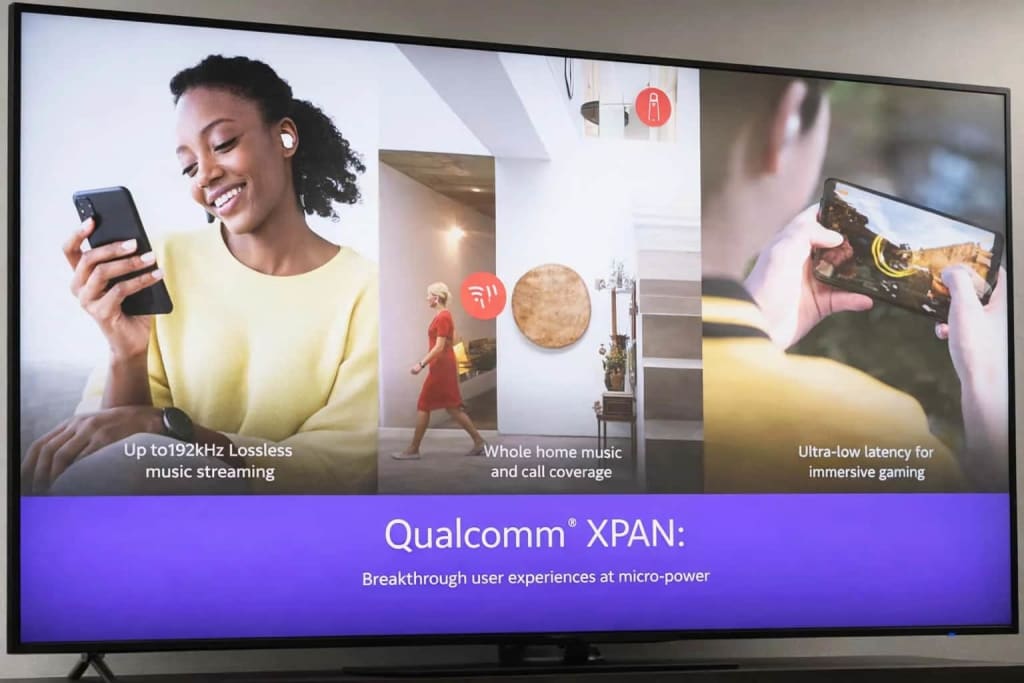
Qualcomm XPAN is a technology that goes beyond the conventional framework of Bluetooth audio by combining it with Wi-Fi. This technology has already been introduced several times on this site, and compatible products have appeared on the market this year. Even so, the number of available products remains limited, and opportunities to experience them in everyday listening conditions are still relatively rare.
At BestTechRadar, we have been tracking the development of these wireless audio technologies over time, especially as XPAN begins to move from technical demonstrations into real consumer products.
Event overview
The event brought together a broad range of participants, including audio professionals, engineers, and media focused on sound quality and wireless technology.
Listening to Next-Generation Bluetooth Technology “XPAN”
During the event, Nigel Burgess, Director of Product Management, and Carrie Zhang, Product Manager at Qualcomm Technologies International, Ltd., gave presentations on the company’s latest technologies. A listening comparison was also carried out using high-end audio equipment to demonstrate the differences between Qualcomm XPAN and conventional Bluetooth. Technical explanations were provided with support from Tsutomu Oshima of Qualcomm Japan.
What are Snapdragon Sound and Qualcomm XPAN?
Qualcomm XPAN stands for Expanded Personal Area Network Technology. In simple terms, it is an audio transmission technology that combines Bluetooth and Wi-Fi, using Qualcomm’s low-power Wi-Fi implementation to carry the audio signal.
According to explanations from Qualcomm representatives, the main advantage of combining Bluetooth and Wi-Fi lies in the ability to take advantage of Wi-Fi’s much wider bandwidth. Compared to Bluetooth, Wi-Fi offers a significantly broader frequency range. The low-power Wi-Fi technology used by Qualcomm XPAN is based on standard Wi-Fi and is designed to operate across the 2.4GHz, 5GHz, and 6GHz bands.
By making use of this bandwidth, Qualcomm XPAN supports lossless transmission of high-resolution audio at up to 96kHz and 24-bit. Its resistance to dropouts is also clearly higher than that of conventional Bluetooth audio. While current implementations are limited to 96kHz and 24-bit, lossless transmission at 192kHz and 24-bit is technically possible, and research into surround audio transmission is still ongoing. Even so, the Wi-Fi used by Qualcomm XPAN is designed to operate with low power consumption, meaning battery life is not expected to drop dramatically compared to existing wireless solutions.
Qualcomm XPAN also supports different connection methods. In addition to direct peer-to-peer connections between a player and earphones, it can also operate through a standard home Wi-Fi router. If this approach becomes more common, users should be able to continue listening without interruptions even when moving farther away from the playback device or when communication conditions change.
Snapdragon Sound as the foundation of XPAN
The foundation of Qualcomm XPAN is Snapdragon Sound.
Snapdragon Sound is a wireless audio platform that integrates Qualcomm technologies such as high-performance processors, on-device AI, premium audio processing, and low-power wireless communication. The goal is to balance sound quality, robustness, and low latency. Within this framework, Qualcomm XPAN is positioned as one of the supported technologies.
One of the key topics within Snapdragon Sound is the Qualcomm aptX Lossless codec. This codec extends Qualcomm aptX Adaptive, which automatically adjusts between sound quality and stability depending on radio conditions. aptX Lossless enables near-lossless transmission of CD-quality audio at 44.1kHz and 16-bit.
The number of earphones and Bluetooth amplifiers compatible with aptX Lossless continues to increase, and USB Bluetooth transmitters have also been released by several manufacturers. As a result, this has become one of the most accessible Qualcomm audio technologies available today.
Listening comparison and measurements
After the overview of Qualcomm XPAN, the event moved on to its main segment: the listening comparison.
The listening system used a Qualcomm XPAN evaluation board, which was shown publicly in Japan for the first time. This board can receive audio from a smartphone via Qualcomm XPAN or conventional Bluetooth using aptX Lossless or SBC, and output the signal digitally. Because it was designed for true wireless earphones, separate boards were used for the left and right channels and then combined for stereo playback.
The digital output was connected to an Accuphase E-800S integrated amplifier with an optional DAC board and played through Bowers & Wilkins 803 D3 speakers, forming a high-end system valued at several million yen.
The session was guided by audio critic Kenzo Konoe, with additional technical explanations provided by Yoshitaka Murayama of Cear Co., Ltd. Cear has worked closely with Qualcomm for more than ten years and has been certified as an Extension Partner, carrying out acoustic measurements based on Snapdragon Sound standards.
Measurement data showed clear differences between SBC, aptX Lossless, and Qualcomm XPAN transmission. SBC exhibited limited dynamic range and waveform accuracy, aptX Lossless performed significantly better, and Qualcomm XPAN came closest to the original signal, with a dynamic range exceeding the limits of human hearing.
Listening impressions reflected these results. As transmission quality improved, background roughness diminished and spatial detail became more apparent. Improvements were especially noticeable in vocal extension, spatial openness, and clarity.
Products on display
At present, Qualcomm XPAN support is limited to a small number of products, including Xiaomi’s 15 Ultra smartphone and the Xiaomi Buds 5 Pro Wi-Fi. This setup allows direct comparison between XPAN, aptX Lossless, and other Bluetooth audio modes.
Additional Snapdragon Sound demonstration devices included models from Sharp, Audio-Technica, Bose, and Cear, highlighting the broader ecosystem built around Qualcomm’s wireless audio platform.
Closing remarks
In closing, Qualcomm representatives described XPAN as a way to enjoy high-quality sound more freely, without being restricted by distance or listening position. They also highlighted future plans to integrate AI more closely with music streaming and content discovery.
From my perspective, XPAN represents one of the more meaningful steps toward narrowing the long-standing gap between wired and wireless audio. While still early in its lifecycle, it offers a clear direction for where high-quality wireless listening is headed.
About the Creator
Keep reading
More stories from Ahmed Fejzic and writers in 01 and other communities.
Commercial and Industrial Electrician vs Electrical Contractor: What’s the Difference?
In commercial and industrial projects, electrical work is rarely straightforward. Large loads, complex systems and strict safety requirements mean that the right expertise is essential. Yet many project managers and business owners are unsure whether they need a commercial and industrial electrician or an electrical contractor.
By Danny Adams4 days ago in 01
Can Other Person Still See Saved Messages If I Delete My Snapchat Account?
If you delete your Snapchat account, then is it possible that other persons can still see your saved messages? One of the most commonly asked questions by a lot of Snapchat users. Don't worry; we will describe all the new Snapchat updates to help you operate your Snapchat account better. So, let’s begin the journey!
By Intelligent Creator5 days ago in 01
Day 4 of Quitting
If this is how sobriety feels, maybe it’s better to go through life a little buzzed… this, along with other hits like, I want to kill myself, I wish I was dead, and I’m going to throw myself off a bridge have been the only thoughts on rotation these past few days. I promise myself that if, in a month, I still feel like this (‘this’ meaning despondent, full of rage, and simultaneously numb) I can go back to smoking. Until mid-February though? Nicotine is off the table.
By sleepy drafts4 days ago in Longevity




Comments
There are no comments for this story
Be the first to respond and start the conversation.