

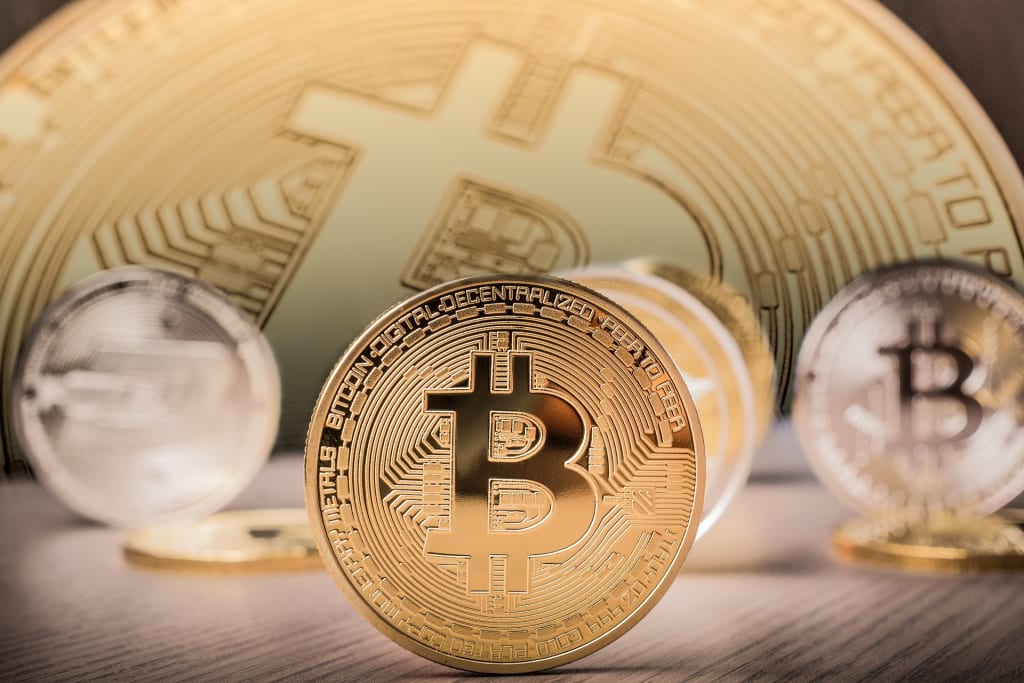
Bitcoin is a decentralized digital currency that was created in 2009 by an unknown person using the pseudonym Satoshi Nakamoto. It operates on a peer-to-peer network without the need for a central authority like a bank or government. Transactions are verified by network nodes through cryptography and recorded in a public distributed ledger called a blockchain.
Bitcoin has several unique features that make it different from traditional currencies. First, it's decentralized, meaning that no single entity controls the Bitcoin network. This makes it resistant to government or institutional control. Second, Bitcoin transactions are irreversible, which means that once a transaction is confirmed, it cannot be reversed. Third, Bitcoin is deflationary, which means that the total supply of Bitcoin is capped at 21 million, making it a scarce asset that some investors view as a hedge against inflation.
Bitcoin can be bought and sold on cryptocurrency exchanges and stored in digital wallets. It can also be used to purchase goods and services at businesses that accept Bitcoin payments.
While Bitcoin has seen significant price fluctuations over the years, its popularity and acceptance as a legitimate form of currency continue to grow. However, like any investment, there are risks associated with Bitcoin, and it's important to do your own research and consider your own risk tolerance before investing.
Bitcoin uses a decentralized peer-to-peer network, which means that transactions are verified by a network of computers around the world. The process of verifying transactions, known as mining, involves solving complex mathematical equations using specialized computer hardware. Miners are rewarded with new bitcoins for their efforts, which helps to incentivize the continued maintenance and growth of the network.
Bitcoin is often referred to as a cryptocurrency because it uses cryptography to secure transactions and control the creation of new units. Transactions on the Bitcoin network are verified using a public key and private key system, which helps to ensure the security and authenticity of each transaction.
One of the key benefits of Bitcoin is its relative anonymity. Transactions on the Bitcoin network do not require users to reveal their identity, which can be appealing to those who value privacy. However, it's worth noting that the public ledger of all Bitcoin transactions is still accessible to anyone, so while the identities of the parties involved may be hidden, the transactions themselves are still recorded and visible.
Bitcoin's price has been known to be quite volatile, with significant fluctuations occurring over short periods of time. While this can make Bitcoin an appealing investment opportunity, it's important to remember that investing in Bitcoin (or any cryptocurrency) can be risky, and it's important to consider your own risk tolerance and investment goals before getting involved.
Overall, Bitcoin has generated a lot of excitement and interest in the financial and technology communities, and it will be interesting to see how the technology and its uses continue to evolve in the coming years.
Bitcoin is considered special and unique for a few reasons:
Decentralization: Bitcoin is a decentralized currency, meaning that it is not controlled by any government or financial institution. Instead, it operates on a peer-to-peer network that allows for transactions to be made directly between users without the need for intermediaries.
Limited Supply: Bitcoin has a limited supply, with a maximum of 21 million coins that will ever be created. This means that unlike fiat currencies that can be endlessly printed, there is a finite amount of bitcoin in existence, which gives it scarcity value.
Security: Transactions on the Bitcoin network are secured through cryptography and a public ledger known as the blockchain. This makes it difficult for anyone to manipulate or counterfeit Bitcoin transactions, and it provides a transparent and immutable record of all transactions on the network.
Anonymity: While transactions on the Bitcoin network are transparent and publicly recorded on the blockchain, users do not need to provide personal information to use Bitcoin. This means that Bitcoin transactions can be made anonymously, which can be appealing to users who value privacy.
Global Acceptance: Bitcoin is accepted as a form of payment by an increasing number of merchants and businesses around the world. It can be used to purchase goods and services, send money internationally, and as a store of value.
Overall, Bitcoin's decentralized nature, limited supply, security, anonymity, and global acceptance make it a unique and valuable currency and investment opportunity. However, as with any investment, there are risks involved, and it's important to do your own research and consider your own risk tolerance before getting involved with Bitcoin or any other cryptocurrency.
About the Creator
MEHMET CALISKAN
6be465ca83422ab5303f52ba68c9181463a2d9eecc505aa11d28f715361fce4e
Keep reading
More stories from MEHMET CALISKAN and writers in 01 and other communities.
How GenAI Workflow Automation is Redefining SaaS Product Engineering in 2026
The landscape of software-as-a-service is undergoing a tectonic shift. We are moving rapidly from static, reactive applications to intelligent, self-optimizing ecosystems. In 2026, the competitive moat for SaaS platforms is no longer just feature availability or aesthetic interfaces, it is the underlying velocity and intelligence of the workflows within.
By ViitorCloud Technologies5 days ago in 01
Trading at Lightning Speed: Why Crypto Arbitrage Bots Dominate Modern Exchanges
Cryptocurrency markets never sleep. Unlike traditional stock exchanges that close at the end of the trading day, crypto exchanges operate 24/7 across different countries and time zones. Prices of the same digital asset can vary slightly from one exchange to another due to liquidity differences, demand-supply imbalance, and transaction speeds. These tiny price gaps create opportunities—and in today’s high-speed digital environment, crypto arbitrage bots are the tools that seize them.
By Nayel Basim Al Shehhi5 days ago in 01
Guard Your Battery
Why are some people so attractive just by standing there? It’s not because they are "likable," but because they don’t need everyone to like them. I realized later that truly charismatic people allow themselves to be criticized, but they never criticize themselves. They never try to please the world; instead, the world stops to watch them.
By Emily Chan - Life and love sharing3 days ago in Poets


Comments
There are no comments for this story
Be the first to respond and start the conversation.