
Belitsoft Announces Research on Custom CRM Development Trends in 2025
The focus of using CRM is switching from a back-office contact database to a strategic front-line operating asset


In 2025, the focus of using CRM has to switch from a back-office contact database to a strategic front-line operating asset. By jumping on this opportunity earlier than competitors, forward-thinking businesses will win the race.
Nowadays, CRMs must work in compliance with how a business runs, not how a software vendor imagines it. Data analytics, AI, automation, prediction capabilities, as well as ultimate security, are expected by default.
The article is created leveraging the custom CRM development portfolio of Belitsoft. Clients have collaborated with Belitsoft custom software development company for five years on average. The agency builds bespoke CRM solutions from scratch if clients’ operational logic is unique and not supported by ready-made CRM platforms. Also, its professionals customize and modernize the current CRM software if core features must be advanced with tailored modules to jump on new opportunities.
Custom Financial CRM System
In the financial domain, customer relationships are rather “engineered” than just handled. In 2025, insurers, banks, and other financial institutions are designing their unique CRM logic because the ready-made model, despite being feature-stuffed, can’t be one-size-fits-all and match the complexity, risks, and regulations in these services.
Customers expect a “know-me” service across the whole user path. But this is hardly possible with the separated databases that a typical financial institution still faces in 2025. And the solution is bespoke.
The most competitive companies create CRMs that integrate with core systems. An insurance agent uploads one interface and sees the claim history, policy documentation, and task workflow. A bank manager can discover a full client profile: accounts, communication channel preferences, loan history, etc. No calling between departments to inquire about pull logs from last month’s call.
CRM platforms now incorporate route underwriting steps, KYC workflows, and tie into backend systems, as well as call APIs. These APIs can run AI models in the background to detect fraud and score AML anomalies. For instance, JPMorgan Chase has trained AI agents and augmented CRM data with them to alert about red flags faster than teams could ever do.
Compliance is what fuels this software to be developed correctly. Some financial companies choose on-premises not because not all CRM SaaS vendors meet FINRA/SEC technical storage policies – especially immutable storage, WORM-compliant archiving, or very specific data residency rules.
Some organizations opt for building a tailored layer on top of a CRM solution, enriched with their unique operational logic, which means automated by design, not tacked on later as a functionality request during monthly provider negotiations. But it doesn’t cancel paying usage licenses.
Custom Healthcare CRM Solution
Today, progressive healthcare organizations are expecting CRM solutions that work more as patient care platforms than just typical sales software to handle prospects. Healthcare providers are investing in tailored systems that align with industry requirements: HIPAA-compliant, EHR-integrated, targeted for action.
In 2025, CRMs push reminders, trigger patient outreach, gather data from call centers, portals, and labs – and deliver all data into a patient profile. Bespoke CRM platforms become irreplaceable for workflow automation and fast context for employees without switching tabs.
Clients want a CRM system that is integrated with EHRs, interacts with wearable APIs, and manages scheduling logic without interrupting when a patient changes providers mid-cycle. We at Belitsoft see demand for solutions that pull out the one key detail (a symptom change, a lab test result, or a skipped appointment) that helps detect the issue before it escalates. For example, if a diabetic patient misses a scheduled lab test, the CRM sends a notification via their preferred communication channel. If they miss again, the system notifies a care manager.
Bespoke CRMs are being more deeply incorporated into clinical workflows – not just for marketing purposes. They are orchestrating interactions across various channels – SMS, email, or video. Moreover, this communication is grounded in the context of the lab status, care journey, risk score, etc. Patients see all this information in one unified interface – delivered via a portal or mobile application developed on top of, or connected to, the CRM system.
Every tailored CRM in this domain gets judged on its built-in ability to protect PHI: permissions, encryption, traceability. These solutions often serve both healthcare providers and patients, which is why each interface is adapted to the role. Generic access, unnecessary data, and anything shareable without consent are unacceptable.
Custom Manufacturing CRM Platform
Manufacturing companies use CRMs to ensure that when a customer orders a product, this order doesn’t get lost in the process between sales and scheduling.
B2B sales paths in the industrial domain have never been linear. Deal negotiations stretch up to half a year, include multiple buyers, and don’t finish after delivery – they move into warranty tracking, service contracts, and spare parts supply. The only way to manage that complex workflow is to make a CRM system part of business operations.
For instance, Wishbone Site Furnishings designed a fully integrated CRM to tie everything: production, inventory, orders, and accounting. The result: orders get directly to job tickets, clients receive automated status updates, and real-time inventory updates, which resulted in 6x revenue rise.
In 2025, manufacturing CRMs are expected to integrate with ERP and product lifecycle systems. The firms want them to handle field service without setting up a dozen extra tools. If an equipment firm wants to transfer IoT sensor information to CRM, be notified about a predicted failure, and initiate a service dispatch before the customer even notices this issue, this level of coordination is possible with tailored development and integration.
A CRM solution that projects demand using insights from incoming requests, quote speed, and delivery capacity provides manufacturing teams with an advantage in resourcing.
Companies also may benefit from embedded analytics to understand which product lines are fueling high request activity but a low conversion rate. The CRM system can flag it, and the marketing department can correct its messaging to increase its performance.
Most bespoke systems are developed modularly. When a new product line launches or a distributor process changes, they need to adjust CRM logic within a week at most, not wait for new vendor licenses approval from procurement. A composable model lets teams add tailored modules – for BOM tracking, distributor support, CAD integration – without rebuilding the entire stack.
The goal of industrial companies is a CRM system that aligns with how the business actually operates – built to line up production, quoting, and service in a single motion.
Custom Retail CRM Software
Businesses, thinking that retail is about selling stuff, still live in the past. 2025 is here to show that it is actually about predicting customers’ behavior. The golden age of “omnichannel” CRM is here, which is translated as “we know what you bought last Wednesday, via which device, what you are likely to buy next, and how to reach out to you again”.
Today, retailers are hooked on capturing every customer movement across websites, mobile apps, offline stores, and social media platforms. Studies keep proving that businesses with a true omnichannel strategy retain nearly 90% of their clients, while the rest consider customer loyalty to be a coin toss.
Nike is a real teacher’s pet in this class. Their CRM strategy for 2025 looks like an exemplary work of digital integration: in-store product scanning, AR try-ons in the mobile app, and a loyalty program that knows if you prefer leggings or shorts. Every click and purchase goes directly to their CRM, so this brand can offer you the right running shoes at just the right moment – whenever you come across the store or do doom scrolling at midnight.
Behind the scenes of all the smooth user experiences is a huge amount of plumbing: inventory, POS systems, bespoke connectors between e-commerce sites, marketing tools, and social media. The customer complaint in the tweet about a delayed shipment gets synced back to their CRM profile. An off-the-shelf solution can’t provide most of this orchestration. It demands bespoke development, integrations, and usually plenty of middleware platforms obsessively running just to keep the data “real-time”.
Retailers who stuck with generic CRMs in the past see a leak of customer flow to competitors who are developing custom CRM ecosystems. Nowadays, if you don’t customize your CRM to personalize user experience across channels, predict their preferences, and encourage them to take action, you will rarely enjoy your retention rate.
CRM Capabilities in 2025
Analytics
A modern CRM solution must “decrypt” collected data. Nowadays, businesses are building analytics into the CRM software itself: predictive churn alerts, attribution sources, conversion heat maps, and a dashboard module. In retail, it means catching which offer is converted in-store after a customer clicks on it in a mobile app. In SaaS, it means understanding which customers are sliding into red. In HR, it shows which recruiter proceeds with interview rounds faster. The best CRM software shows KPIs progress, sends alerts if something goes wrong, and suggests actions.
AI
It is about the stuff that works behind the scenes, scoring prospects, routing tickets, rewriting messages, detecting at-risk accounts, and tagging sentiment. The purpose is to free teams from repetitive, monotonous tasks and allow them to focus on exception management, judgment, and escalation. AI agents can cope with the volume, so your employees don’t snap. And a truly beneficial platform is one whose outcomes staff trust without checking them to the letter.
Compliance
CRM systems are packed with sensitive data. When a company faces a data leakage or mishandles that data, it is a board-level crisis. That is why more businesses are going private or custom: so they can manage how data is processed, who can access it, and how this process is logged. GDPR, HIPAA, CCPA – all these policies are required by default. The CRM solution must adapt quickly after hitting a new privacy law. No CRM system gets taken seriously in healthcare, finance, or government domains if it is built without consent tracking, zero-trust defaults, and audit trails.
Omnichannel
Today, customers switch chats mid-conversation. CRMs that lose these jumps – from a social media platform to email to SMS – are useless, because they stay out of context, duplicate communication, and annoy both sides. The strongest CRMs in 2025 connect everything in one line: the agent gets one view, the client gets one thread, and chat and email are no parallel universes anymore. Designing this means integration with SMS, call logs, email, mobile applications, and gathering all in a unified user history with no chaos.
Customization
Nowadays, most CRM solutions are designed to augment through low-code tools, plug-ins, and modular architecture. It means tweaking the configuration to maintain a new product line or compliance checkpoint, or incorporating a new function without rewriting the entire stack. Successful businesses don’t wait months for a vendor patch; they have hybrid teams that can build in new logic within days.
In 2025, the strongest CRMs are judged by what they are able to prevent: compliance issues, missed follow-ups, wasted activities, and redundant outreach. The second point is about what they make possible, for example, smarter decisions, better retention rate, or coordinated teams.
About the Creator
Dmitry Baraishuk
I am a partner and Chief Innovation Officer (CINO) at a custom software development company Belitsoft (a Noventiq company) with hundreds of successful projects for US-based startups and enterprises. More info here.
Keep reading
More stories from Dmitry Baraishuk and writers in 01 and other communities.
Belitsoft's Guide to the Microsoft Fabric Migration
Microsoft Fabric expands what Power BI Premium already started (dashboards, modeling, ETL, basic AI) by adding the missing pieces (Spark for engineering, real-time pipelines, and full lakehouse architecture) into a full-stack platform. It's official: Power BI Premium per capacity SKUs are being retired. Fabric capacities are the new standard. The move to Fabric isn’t optional anymore.
By Dmitry Baraishuk7 months ago in 01
How to Hire a Mobile App Developer in St. Louis 2026
The regional tech landscape has shifted significantly. The decision to hire a mobile app developer in St. Louis 2026 is now a strategic choice. St. Louis has evolved from a traditional manufacturing hub. It is now a center for agtech and geospatial technology. Financial services also drive the local economy forward.
By Del Rosarioa day ago in 01
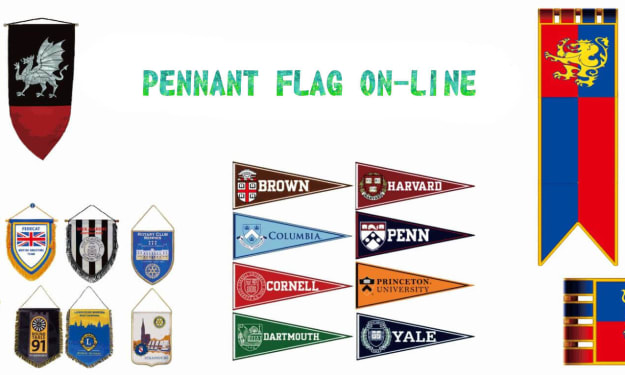
The Enduring Appeal of Pennant Flags in Sports Culture
Sports traditions are often expressed through small but meaningful objects. Jerseys, scarves, and banners help fans show their loyalty, but few items have remained as recognizable as the classic pennant flag. For more than a century, these triangular banners have been associated with team pride, sporting milestones, and the emotional connection between fans and their favorite games.
By charliesamuelabout 10 hours ago in 01



Comments
There are no comments for this story
Be the first to respond and start the conversation.