
Before You Buy: What Every Business Should Know About Generative AI Tools
A practical guide for CTOs and tech leaders to confidently evaluate, compare, and choose the right generative AI tools for business success in 2025.

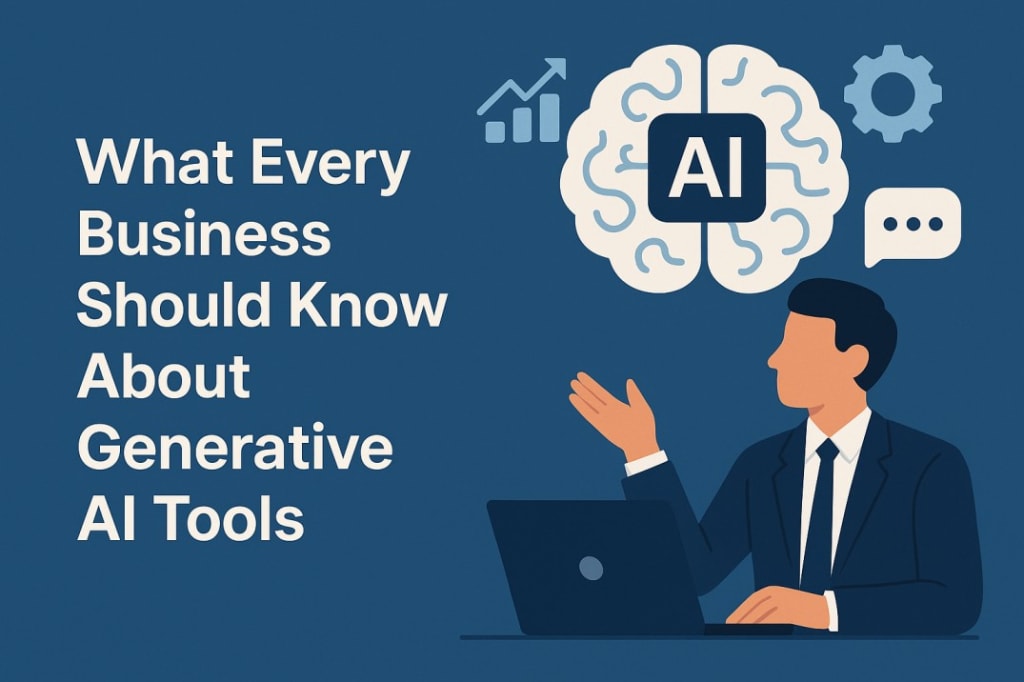
In 2025, it’s no longer a question of if your company will use generative AI — it’s how well you choose the right tools.
From code generation to customer support and marketing content, Generative AI tools are becoming a staple in business operations. But rushing into adoption without a clear understanding can lead to wasted resources and missed opportunities.
So before you sign up for the next “AI magic box,” let’s walk through what CTOs and tech decision-makers really need to know.
Why Businesses Are Betting Big on Generative AI
Let’s be real: the numbers speak for themselves.
According to McKinsey, generative AI could add up to $4.4 trillion annually to the global economy — with sectors like software development, marketing, and customer service seeing the most impact. (Source)
But here's the catch: not every tool delivers ROI. The hype is loud, but value lies in the details.
1. Know What You Actually Need
The first mistake businesses make? Jumping in without identifying clear use cases.
Ask yourself:
- Are you aiming to speed up content creation?
- Do you want better customer interactions?
- Is coding automation the goal?
Generative AI tools are not one-size-fits-all. Some excel in natural language processing. Others are built for image or code generation. Understanding your pain points will lead you to the right category of tools.
Pro Tip: Use this Generative AI Tools Checklist to compare capabilities and match tools to your goals.
2. Evaluate, Don’t Assume
Just because a tool is trending doesn’t mean it fits your enterprise.
Before investing, evaluate tools based on:
- Data privacy & security compliance (especially if you're in finance or healthcare)
- Integration capability with your existing software stack
- Scalability for long-term growth
- Model transparency — Can you trust how it generates output?
These aren’t bonus features — they’re business-critical.
3. Beware of Hidden Costs
Another reason companies regret their AI purchases? Pricing surprises.
Many tools charge by token, API call, or user seat. If your usage spikes, so will your bill.
Take OpenAI’s GPT-4 API for example — it’s powerful but can get expensive fast with high-volume calls.
That’s why every AI tools buying guide for 2025 should include a total cost of ownership (TCO) analysis.
4. Your Team Still Matters
Here’s a myth: “Generative AI will replace entire departments.”
Wrong.
These tools augment human effort — they don’t erase it. For example, content generated by AI still needs human editing. AI-generated code still needs QA.
You’ll need experts to manage the tools, interpret outputs, and fine-tune for your use case. In fact, many companies now Hire Generative AI Developers to manage deployment and customization in-house.
5. Compare Before You Commit
You wouldn’t buy a car without a test drive, right? Treat AI tools the same.
A generative AI tools comparison should include:
- Speed and accuracy
- Model size and limitations
- Compatibility with cloud services
- UI/UX for non-technical teams
Also, don’t just go with ChatGPT or Gemini because they’re popular. Tools like Jasper, Claude, and Perplexity may be better depending on your needs.
6. Look for Enterprise-Grade Support
Bugs, downtimes, integration issues — they’ll happen.
That’s why enterprise generative AI tools should come with:
- 24/7 technical support
- SLAs (Service Level Agreements)
- Training and documentation
- Custom deployment options
And if you're planning to use AI for customer-facing operations like chatbots, don’t go halfway. Instead, Hire Dedicated Chatbot Developers to build scalable, intelligent systems with the right architecture.
7. Prioritize Ethical Use and Bias Management
One of the most overlooked aspects of choosing AI tools is ethics.
Generative AI models are trained on massive datasets — and yes, that often includes biased or outdated information. This means the output can reflect stereotypes, inaccuracies, or worse — discriminatory language.
For example, a Stanford study showed that large language models can generate biased content up to 38% of the time, depending on prompt phrasing and training data quality. (Source)
If your business is operating in regulated or sensitive sectors, this isn't just a PR risk — it's a legal one.
So, when evaluating generative AI tools for business, ask:
- Does the provider allow fine-tuning to reduce bias?
- Is there human-in-the-loop moderation?
- What guardrails are in place?
These aren’t optional — they’re essential for responsible AI adoption.
8. Think Long-Term: Flexibility and Futureproofing
AI moves fast. What works today might be outdated tomorrow.
Before locking into any vendor or platform:
- Check their roadmap — Are they investing in continuous upgrades?
- Confirm API access — Can you integrate it across evolving workflows?
- Look for multi-model support — Tools that allow you to switch between GPT, Claude, LLaMA, etc., give you more control.
You don’t want to be stuck with a tool that can’t evolve alongside your business.
9. Match Tools to Your Team’s Skill Level
Let’s be honest: some AI tools look like they were made by developers for developers.
But not every team is technical.
That’s why ease of use should be part of your AI software selection tips. Ask:
- Is the dashboard clean and intuitive?
- Can marketing or sales teams use it without IT?
- Is there a low-code or no-code option?
If the answer is no, you’ll either be stuck training everyone — or watching adoption fall flat.
A tool that collects dust is a wasted investment.
10. Don’t Skip the Pilot Phase
One of the smartest moves before full adoption? Run a pilot.
Start with a small team, limited data, and one workflow. Test outputs. Track improvements. Measure ROI.
This gives you a safe environment to:
- Compare multiple tools
- Spot issues early
- Get feedback from real users
Then — and only then — scale.
Remember, the best Generative AI adoption for businesses starts small and grows fast once value is proven.
Quick Recap: Your AI Tool Pre-Buying Checklist
Here’s a condensed checklist you can run through before making any decisions:
✅ Identify clear business use cases
✅ Evaluate data privacy and compliance needs
✅ Understand true cost of ownership
✅ Analyze integration and API capabilities
✅ Confirm vendor support and roadmap
✅ Pilot the tool with real users
✅ Plan for ongoing training and governance
✅ Track performance against KPIs
Want the full checklist with tool-by-tool comparison and expert guidance?Download the Generative AI Tools Checklist
Real-World Use Case: Generative AI in Retail
Let’s ground this in a real scenario.
A U.S.-based retail chain recently adopted a generative AI platform for automating product descriptions. The tool sped up content generation by over 85%, but it also caused issues. Why?
- The AI used overly technical language
- It generated culturally inappropriate terms for some regions
- It had trouble integrating with their Shopify CMS
After switching to a more business-focused tool with customizable tone settings and API-friendly structure — and hiring a team of AI developers to integrate it properly — performance improved dramatically.
The lesson? The best Generative AI tools for companies are the ones that fit both the business and the people who use them.
Final Thoughts: AI Should Fit You — Not the Other Way Around
The generative AI gold rush is here. But as with any game-changing technology, the winners won’t be those who jump in first — they’ll be the ones who choose smartly.
Take your time. Do your homework. Build a strategy.
Whether you're in the early research phase or ready to deploy, choosing the right tools is less about chasing trends and more about solving problems.
Looking to bring experts on board to handle implementation, integration, or development?
👉 Hire Dedicated Chatbot Developers
Quick Tip Before You Leave:
Bookmark this guide or share it with your team. And before you make your next move, don’t forget to grab the Generative AI Tools Checklist — it’s your blueprint to making a smart, strategic decision in 2025 and beyond.
About the Creator
kathleenbrown
Technology consultant in leading software development company committed to providing end-to-end IT services in Web, Mobile & Cloud.
Keep reading
More stories from kathleenbrown and writers in 01 and other communities.
Navigating AI App Development Legal Issues: What Every Business Should Know
Artificial Intelligence is changing the way businesses operate. From smarter chatbots to advanced data processing, AI is helping companies move faster and serve better. But with this innovation comes a legal minefield that many businesses overlook.
By kathleenbrown6 months ago in 01
Data Anonymization Techniques to Ensure Privacy in Modern Enterprises
Enterprises today work with massive volumes of data coming from customers, users, employees, and digital systems. This data is critical for analytics, reporting, artificial intelligence, and strategic decision making. However, much of it contains sensitive or personal information that cannot be exposed or misused. With strict data privacy regulations and growing awareness around data protection, organizations must find a way to use data responsibly.
By Vinod Vasava6 days ago in 01
These Billionaires Bet Big On GreenLand—After Trump Took Interest
Topline Just months after President Donald Trump first expressed interest in the United States possibly gaining control over Greenland, some of the richest people in the world—including Jeff Bezos, Bill Gates and Michael Bloomberg—began making strategic investments in the mineral-rich island.
By Dena Falken Esq3 days ago in 01


Comments
There are no comments for this story
Be the first to respond and start the conversation.