
Artificial Intelligence
A Brief History of Artificial Intelligence
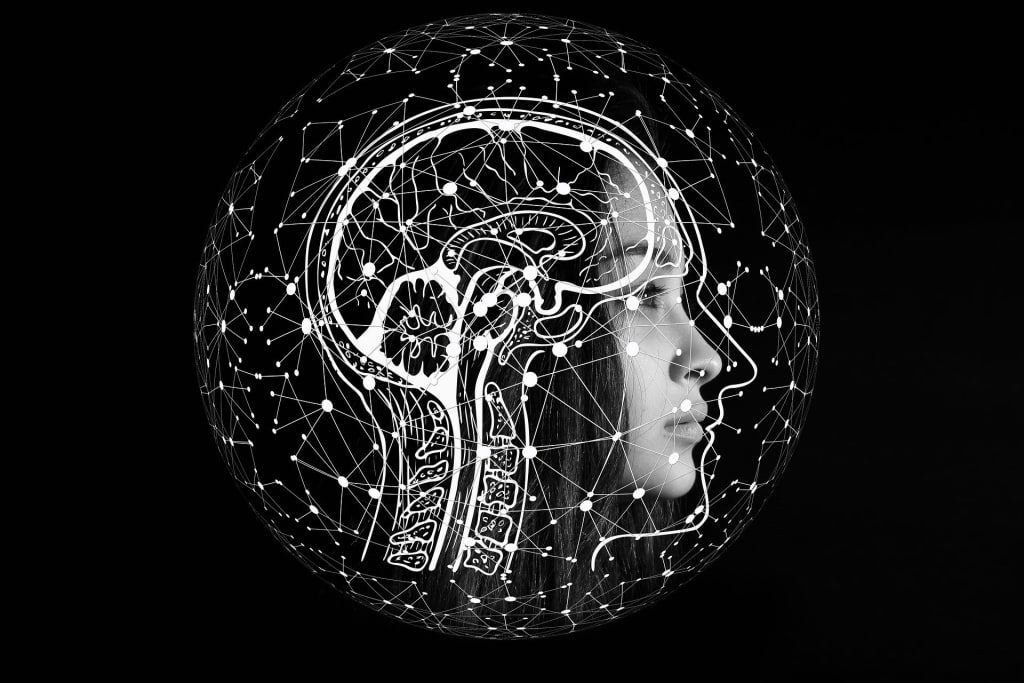
A Brief History of Artificial Intelligence
Artificial Intelligence (AI) is a rapidly evolving field of computer science that aims to create machines that can perform tasks that typically require human intelligence. This includes tasks such as understanding natural language, recognizing objects, and making decisions based on incomplete or ambiguous information. In this article, we will take a brief look at the history of AI and its development over the past few decades.
The early years (1940s-1950s)
The origins of AI can be traced back to the 1940s, when the first electronic computers were being developed. Researchers at that time began to explore the idea of building machines that could perform tasks that required human intelligence. The term "Artificial Intelligence" was coined in 1956, during a conference at Dartmouth College in New Hampshire, USA.
During this time, researchers were developing simple programs that could perform tasks such as playing chess, solving mathematical problems, and simulating human thought processes. However, progress was slow, and researchers faced many challenges, including limited computing power, lack of data, and the absence of algorithms for complex tasks.
The AI winter (1960s-1970s)
In the 1960s and 1970s, progress in AI slowed significantly, and the field entered what is known as the "AI winter." During this time, funding for AI research was cut, and many researchers left the field. This was due in part to the fact that early AI programs had failed to deliver on their promise, and many experts began to doubt whether AI was even possible.
Despite these setbacks, researchers continued to work on AI, and some important breakthroughs were made during this time. For example, in the late 1960s, researchers at Stanford University developed the first computer program that could understand natural language.
The rise of expert systems (1980s)
In the 1980s, the field of AI saw a resurgence of interest, as researchers began to focus on developing expert systems. These were programs that could perform tasks that required specialized knowledge, such as diagnosing medical conditions or predicting stock prices.
Expert systems were based on the idea of "knowledge engineering," which involved gathering information from human experts and encoding it in a computer program. Although expert systems were limited in their capabilities, they represented an important step forward in the development of AI.
The emergence of machine learning (1990s)
In the 1990s, AI saw another major breakthrough with the emergence of machine learning. Machine learning is a subset of AI that involves training computers to recognize patterns in data and make decisions based on that data.
Machine learning algorithms were used in a variety of applications, including speech recognition, computer vision, and natural language processing. One of the most important breakthroughs in machine learning was the development of neural networks, which are computer programs that simulate the structure and function of the human brain.
The modern era of AI (2000s-present)
In the 2000s, AI entered a new era, as researchers began to develop more sophisticated algorithms and techniques for training machines. One of the key developments during this time was the emergence of deep learning, which involves training neural networks with multiple layers.
Deep learning has led to significant advances in computer vision, natural language processing, and other areas of AI. For example, deep learning algorithms are now used to recognize faces in photos, translate between languages, and even generate realistic images and videos.
In recent years, AI has also seen significant applications in industry, with companies using AI to optimize operations, improve customer service, and develop new products and services.
About the Creator
Keep reading
More stories from Hüseyin Kahveci and writers in 01 and other communities.
ChatGPT
ChatGPT is a large language model developed by OpenAI, based on the GPT-3 architecture. It is an artificial intelligence system that has been trained on a massive amount of text data to generate human-like responses to natural language input. ChatGPT is capable of understanding natural language input in a variety of languages, including English, Spanish, French, German, and many others.
By Hüseyin Kahveci3 years ago in 01
How to Launch a Crypto PR Marketing Campaign Efficiently in 2026?
The crypto ecosystem continues to evolve, bringing new challenges and opportunities for projects seeking visibility and credibility. Public relations (PR) in crypto is no longer just about announcements; it involves creating meaningful narratives, managing reputations, and fostering community engagement. In 2026, an efficient crypto PR marketing campaign requires a comprehensive strategy that combines data-driven insights, innovative communication methods, and precise targeting. This blog explores the essential steps and best practices for launching a crypto PR campaign that drives awareness, trust, and long-term engagement.
By Jack santo7 days ago in 01




Comments
There are no comments for this story
Be the first to respond and start the conversation.