
Artificial Intelligence in Cybersecurity
Smart Protection: The Role of AI in Modern Cybersecurity

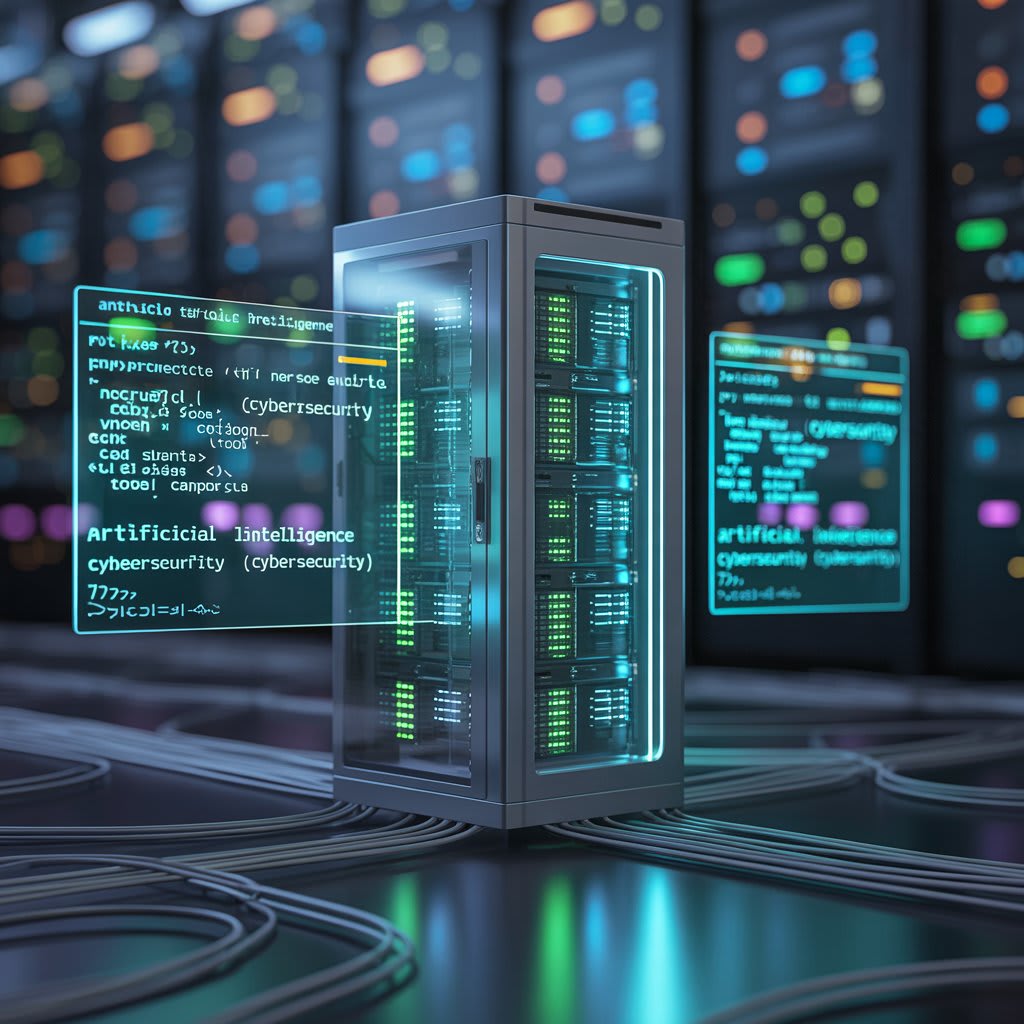
In the digital age, cybersecurity is more critical than ever before. With the rise in cyberattacks, data breaches, and digital fraud, companies and governments around the world are turning to Artificial Intelligence (AI) to protect their data and systems. AI in cybersecurity is now a powerful tool that not only defends against threats but also predicts and prevents them before they even happen. This topic is gaining immense importance in 2025.
🧠 What is AI in Cybersecurity?
AI in cybersecurity refers to the use of machine learning (ML), deep learning, and intelligent algorithms to detect, analyze, and respond to cyber threats in real-time. Unlike traditional methods, which rely on manually coded rules and human monitoring, AI systems learn from massive datasets and improve over time. They can process huge volumes of data faster than any human and spot even the smallest signs of danger.
In short, AI acts like a digital bodyguard—always learning, watching, and reacting to protect users, companies, and governments from cyber threats.
🔍 How AI Works in Cybersecurity
To understand how AI helps, we need to look at a few key features:
Threat Detection:
AI can analyze large volumes of traffic and instantly detect abnormal patterns that could be signs of malware, phishing, or hacking. For example, if a user suddenly logs in from a new country, tries to download sensitive files, and sends them to an unknown server, AI can flag it immediately.
Behavior Analysis:
AI learns what “normal” behavior looks like for a user or device. If anything unusual happens—such as logging in at odd hours, using unknown software, or transferring too much data—it can send alerts or block access.
Incident Response:
Some advanced AI systems can take automatic actions when they detect a threat. They might isolate infected systems, block suspicious IP addresses, or shut down risky operations.
Phishing Detection:
AI models can scan emails and websites to detect fake login pages or malicious links. They check for unusual word patterns, domains, and formatting that suggest a phishing scam.
Fraud Detection:
In financial institutions and e-commerce, AI helps detect payment fraud, identity theft, and unauthorized access by learning from past fraud attempts.
💡 Real-World Examples (2025)
Darktrace: Uses AI to monitor networks and detect cyber threats based on behavioral analysis. It is used by governments and large companies globally.
Google Cloud Security AI: Google has built AI into its cloud security platform to automatically detect and respond to threats in real-time.
IBM Watson for Cybersecurity: Helps security analysts detect and investigate threats faster by using natural language processing (NLP).
✅ Benefits of AI in Cybersecurity
Speed and Scale:
AI can analyze millions of events per second, something human analysts could never do in real-time.
24/7 Protection:
AI systems don’t sleep. They work continuously to monitor networks and devices day and night.
Predictive Capabilities:
AI doesn’t just respond to attacks; it can predict where future attacks might come from using pattern analysis and threat intelligence.
Cost Efficiency:
Although AI systems can be expensive to build or buy, they reduce the need for large cybersecurity teams and prevent massive losses from cybercrime.
⚠️ Challenges and Limitations
Despite its advantages, AI in cybersecurity has some important challenges:
False Positives: AI might detect normal behavior as a threat, causing unnecessary alarms or system blocks.
Data Privacy: AI systems often need access to user data to learn and operate. This can raise privacy concerns.
Adversarial Attacks: Hackers can try to trick AI models by feeding them misleading data, a method called "adversarial machine learning."
Complexity: AI systems can be difficult to understand or control. Human experts still need to supervise and manage them.
Cost of Implementation: Advanced AI tools and training can be costly, making it harder for smaller businesses to adopt them.
🛡️ The Future of AI in Cybersecurity (2025 and Beyond)
The future of cybersecurity will heavily rely on AI. As cyberattacks become more sophisticated, AI must evolve too. New systems will likely become more self-learning, explainable (so humans can understand their decisions), and collaborative—working across different platforms and organizations.
We are also seeing the rise of AI-powered security agents that act like virtual defenders. These bots can patrol digital environments, detect intrusions, and even talk to human users to guide them through security measures.
Additionally, quantum computing will pose new challenges for cybersecurity. AI will play a critical role in developing “post-quantum” cryptographic systems that can withstand future threats.
🔚 Conclusion
AI in cybersecurity is no longer a futuristic concept—it is a vital part of how we protect data and digital infrastructure today. From detecting threats to responding automatically, AI enhances both the speed and accuracy of cybersecurity efforts. However, it is not perfect and must be used responsibly and with human oversight. As cyber threats continue to grow in complexity, AI will remain a key line of defense in the ongoing battle for digital safety.
About the Creator
Keep reading
More stories from AMANAT ALI KHAN and writers in 01 and other communities.
Exploring the Future of AI
The Future of Artificial Intelligence Shaping Tomorrow with Intelligent Machines Artificial Intelligence (AI) is no longer a concept limited to science fiction. It has become one of the most transformative technologies of the 21st century, already playing a significant role in various sectors, from healthcare and education to transportation and finance. As we move further into the future, the potential of AI continues to grow, raising questions about what lies ahead. The future of AI promises exciting opportunities, but it also brings challenges that need thoughtful attention.
By AMANAT ALI KHAN9 months ago in 01
Musk wants up to $134B in OpenAI lawsuit, despite $700B fortune
Elon Musk wants a jaw-dropping $79 billion to $134 billion in damages from OpenAI and Microsoft, claiming the AI company defrauded him by jettisoning its nonprofit mission, Bloomberg first reported. The figure comes from expert witness C. Paul Wazzan, a financial economist whose bio says he has been deposed nearly 100 times and testified at trial more than a dozen times in complex commercial litigation cases.
By Dena Falken Esq6 days ago in 01
The CEO of Everything
They say "jack of all trades, master of none," but they forgot to mention the part where the jack of all trades is also the camera woman, the makeup artist, and the person currently yelling at a tangled Wii microphone cable in a her own bathroom while recording herself singing and trying to make it look realistic and professional. (As professional as you can make it with nothing but a cell phone camera and a mic that doesn't work)
By Sara Wilson6 days ago in Humans


Comments
There are no comments for this story
Be the first to respond and start the conversation.