
Architectural layer used as backend in cloud computing
The backbone of IT backbone
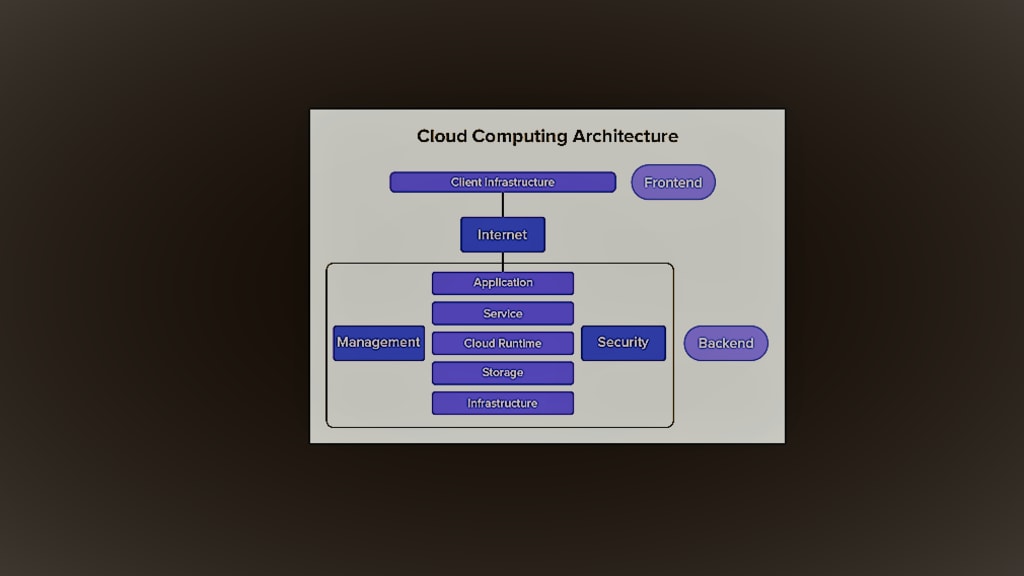
Infrastructure layer:
In cloud computing, the backend layer, also known as the infrastructure layer, is responsible for providing the underlying resources and services that the other layers of the cloud stack rely on. The backend layer typically includes the following components
Physical infrastructure:
1. This includes the servers, storage devices, and networking equipment that make up the cloud infrastructure.
2.The physical infrastructure in cloud computing refers to the physical hardware and equipment that make up the underlying cloud infrastructure. It includes:
Servers: These are the physical machines that host the virtual resources, such as virtual machines, storage, and networks. Cloud providers typically use high-density servers to maximize the number of virtual resources that can be hosted on a single machine.
Storage devices: These are the physical storage devices that are used to store data, such as hard drives and solid-state drives. Cloud providers use a variety of storage technologies, such as SAN (Storage Area Network) and NAS (Network-Attached Storage) to provide storage resources to their customers.
Networking equipment: This includes switches, routers, and firewalls that are used to connect the cloud infrastructure to the internet and other networks. Cloud providers use high-performance networking equipment to ensure fast and reliable connectivity for their customers.
Power and cooling systems: These systems ensure that the cloud infrastructure has a reliable source of power and that the equipment is kept at optimal temperatures to prevent overheating and damage.
Security and monitoring systems: These are the systems that are used to secure and monitor the cloud infrastructure. This can include firewalls, intrusion detection systems, and cameras.
All these physical infrastructure components are used together to provide the underlying resources and services that the other layers of the cloud stack rely on, such as the ability to create and manage virtual machines, storage resources, and networks. Cloud providers invest heavily in their physical infrastructure to ensure that it is highly available, scalable, and secure.
Hypervisor:
A hypervisor is a software layer that allows multiple virtual machines to run on a single physical machine.
This is a technology that allows the creation of virtual resources that are used by other layers of the cloud stack.
When a cloud customer requests a new virtual machine, the cloud provider uses a hypervisor to create a new virtual machine on a physical server.
It allows cloud providers to create multiple virtual machines, each with its own operating system, applications, and data, on a single physical server.
Overall, the use of hypervisors in cloud computing allows cloud providers to create, manage and scale virtual resources efficiently, providing customers with the ability to create and manage their own virtual machines and storage resources.
Virtualization software:
This is software that allows the creation and management of virtual machines, networks and storage. Examples include VMWare, Hyper-V, and KVM.
Virtualization software is a key component of cloud computing, enabling the creation and management of virtual machines, networks, and storage. Virtualization software allows cloud providers to create virtual resources that customers can consume and allows cloud providers to maximize the use of physical resources.
When a cloud customer requests a new virtual machine, the cloud provider uses virtualization software to create a new virtual machine on a physical server. Virtualization software acts as an intermediary between the physical resources (CPU, memory, storage, etc.) of a server and the virtual resources of a virtual machine. It allows cloud providers to create multiple virtual machines, each with its own operating system, applications, and data, on a single physical server.
Common virtualization software platforms used in cloud computing include:
VMware vSphere:
This is a widely used virtualization platform, including his VMware ESXi hypervisor and vCenter Server for management. It provides features such as live migration and high availability.
Hyper-V:
This is Microsoft's virtualization platform that includes the Hyper-V hypervisor and System Center for management. It integrates with Windows Server and provides features such as live migration and high availability.
KVM (Kernel-based Virtual Machine):
It's an open source virtualization platform built into the Linux kernel.
Storage software:
Software that can create and manage storage resources such as block storage and object storage. Some examples are Ceph, GlusterFS, and OpenStack Swift.
Storage software is an integral component of cloud computing, enabling the creation and management of storage resources. Used to provide storage services to other layers of the cloud stack. B. Virtual machines and networks.
Storage software creates and manages virtual storage devices such as virtual hard disks and virtual storage arrays that virtual machines can use. These virtual storage devices can be created on top of physical storage devices such as hard drives and solid state drives and can be used to store data such as VM images and application data. Storage software can also provide advanced features such as data replication, snapshots, and backups that help ensure the availability and durability of data stored in the cloud.
Common storage software platforms used in cloud computing include:
Sef:
It is an open-source distributed storage system that provides object storage and block storage services. Designed for high scalability and fault tolerance.
GlusterFS:
It is an open-source distributed file system that provides file storage services. Designed for high scalability and fault tolerance. OpenStack Swift:
It is an open source object storage system that is part of the OpenStack cloud platform. Designed for high scalability and fault tolerance.
These storage software platforms work in concert with other cloud infrastructure components such as hypervisors and virtualization software to provide a complete and robust storage solution for cloud computing.
Management and Orchestration Software:
This is software that enables automation and management of cloud resources. B. Create, configure, and scale virtual machines and storage resources. Examples of this software are OpenStack, CloudStack, and VMware vCloud Director.
Management and orchestration software is an essential component of cloud computing, enabling automation and management of cloud resources. It is used to control and manage the cloud's underlying infrastructure, including: B. Virtual Machines, Storage, and Networking.
Management and orchestration software provides a set of tools and APIs that you can use to create, configure, and manage your cloud resources. It also provides capabilities such as scaling, monitoring, and logging that help ensure the availability and performance of your cloud resources.
Orchestration software is also used to automate the deployment and management of complex cloud environments such as multi-tier applications and microservices. It allows users to define and launch cloud applications using templates and provides a way to automatically manage and scale cloud resources based on usage.
There are several popular management and orchestration software platforms used in cloud computing.
open stack:
It is an open source cloud computing platform that provides a wide range of tools and services for building and managing cloud infrastructure. This includes components such as Nova (compute), Cinder (storage), Neutron (network) and Keystone (identity).
Cloud stack:
It is an open source cloud computing platform that provides a variety of tools and services for building and managing cloud infrastructure. This includes components such as computing power, storage, and networking.
VMware vCloud Director:
It is a commercial cloud computing platform that offers a variety of tools and services for building and managing clouds.
These components work together to provide the underlying resources and services that other layers of the cloud stack rely on. B. Ability to create and manage virtual machines, storage resources, and networks. The backend tier is responsible for scalability, availability, and security of the cloud infrastructure.
About the Creator
Hari vignesh
content writer
making it as a hobbie
Keep reading
More stories from Hari vignesh and writers in 01 and other communities.
10 Companies Influencing Mobile App Development Costs in 2026
Google’s 2026 infrastructure pivot toward AI Retrieval has officially decoupled mobile development costs from traditional labor-hour models. We are witnessing a tectonic shift where Entity Accountability dictates market entry pricing rather than simple feature complexity.
By Del Rosario5 days ago in 01
How to Succeed at the Benson Directory®
Congratulations and welcome to the Benson Directory® employee #22391! As our newest call handler, you will have the privilege of speaking with dozens of unique and interesting people on a daily basis as well as the opportunity to earn bonuses for high performance. Contained within this handbook you will find a set of ease to follow instructions designed to help you settle in to your new role and begin paving the way to success.
By S. A. Crawford4 days ago in Fiction




Comments
There are no comments for this story
Be the first to respond and start the conversation.