
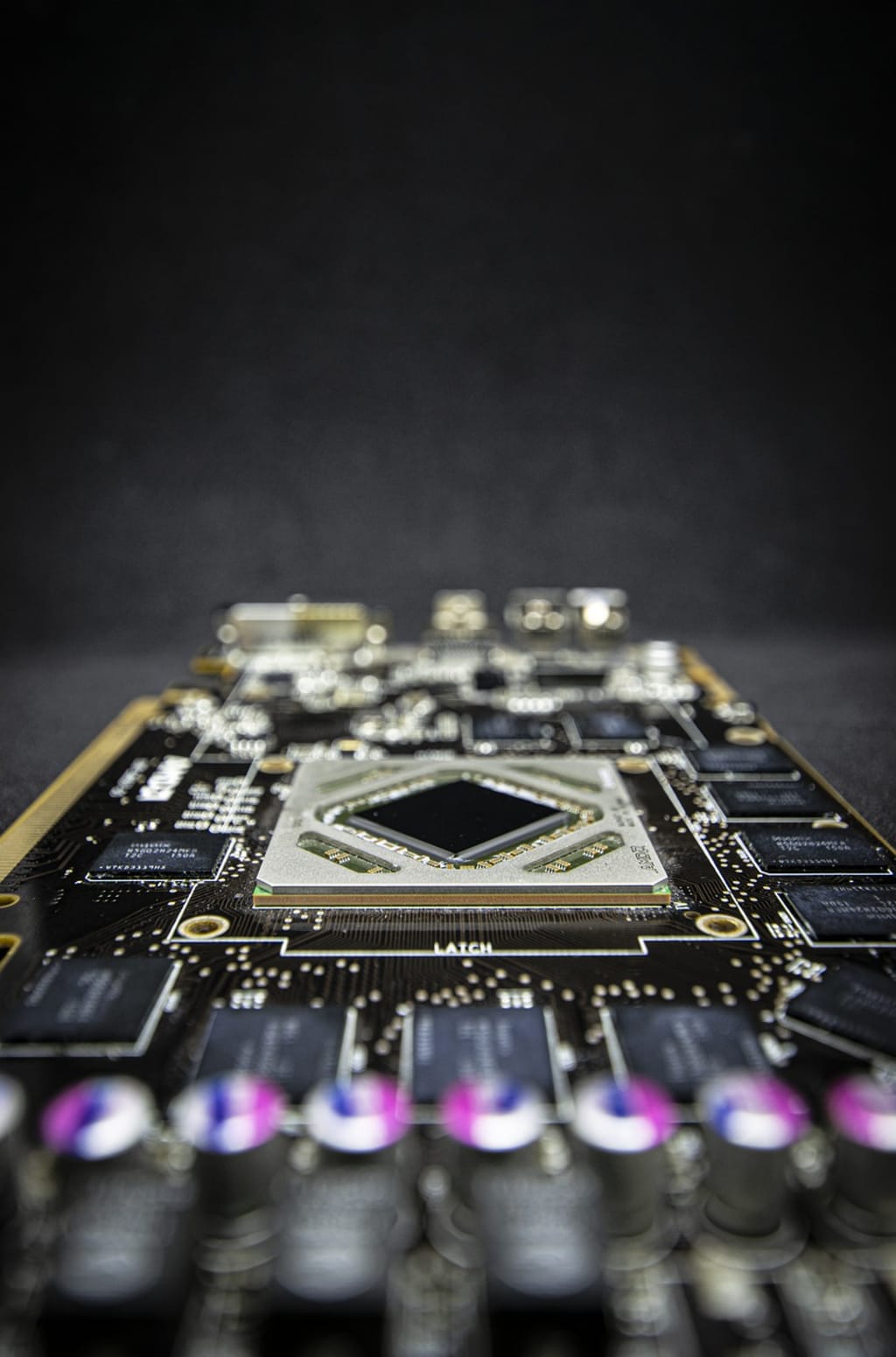
AMD Steps Up the Heat: Affordable Next-Gen Graphics Cards Arrive to Challenge Nvidia's Reign
For years, the narrative in the high-performance graphics card market has largely been dominated by Nvidia. While AMD has consistently offered compelling alternatives, the entry point into the "next-gen" experience, with its advanced features and performance leaps, has often come with a hefty price tag, largely dictated by Nvidia's premium offerings. However, the landscape is finally shifting. AMD is poised to unleash a new wave of more affordable next-generation graphics cards, promising to democratize cutting-edge gaming and creative capabilities and directly challenge Nvidia's established dominance in the mainstream segment.
This move from AMD couldn't come at a more opportune time. As gaming continues to evolve with increasingly demanding titles leveraging technologies like ray tracing and advanced upscaling, and as creative professionals rely on powerful GPUs for tasks ranging from video editing to 3D rendering, the need for accessible high-performance hardware has never been greater. The anticipation surrounding these new AMD cards is palpable, fueled by the promise of bringing next-gen features to a wider audience without breaking the bank.
While specific details regarding the exact models, specifications, and pricing are still eagerly awaited, industry whispers and historical trends suggest that AMD is focusing on delivering a significant performance uplift compared to their previous generation in this more accessible price bracket. This likely means gamers on a tighter budget will finally be able to experience smoother frame rates at higher resolutions, enjoy the visual fidelity enhancements offered by ray tracing, and benefit from advancements in upscaling technologies like AMD's FidelityFX Super Resolution (FSR).
The strategic importance of this move for AMD cannot be overstated. By targeting the more price-sensitive segments of the market, they have the potential to significantly expand their user base and gain crucial market share. Nvidia's stronghold in the mid-range and upper-mid-range categories has often served as a gateway for users to eventually upgrade to their higher-end offerings. By offering compelling performance at more attractive price points, AMD aims to capture these users early on and foster brand loyalty.
Furthermore, a competitive pricing strategy from AMD will inevitably put pressure on Nvidia. Faced with credible alternatives that offer similar next-gen features without the premium cost, Nvidia may be compelled to adjust its own pricing strategies to remain competitive. This increased competition benefits consumers across the board, potentially leading to more affordable graphics card options from both manufacturers.
Beyond gaming, these more accessible next-gen cards from AMD will also be a boon for creative professionals. Tasks like video editing, graphic design, and 3D rendering often demand significant GPU power. By offering cards with increased processing capabilities and larger memory capacities at more reasonable prices, AMD can empower a wider range of creators to enhance their workflows and tackle more demanding projects without the need for ultra-high-end, expensive hardware.
The success of these upcoming AMD cards will hinge on several factors. Performance, of course, will be paramount. They need to offer a tangible and noticeable improvement over previous generations and provide a compelling alternative to Nvidia's offerings in the same price range. Driver stability and software support will also be crucial. AMD has made significant strides in improving its drivers in recent years, and maintaining this momentum will be essential for a positive user experience.
Moreover, the adoption of features like ray tracing and FSR will play a significant role. While Nvidia has been at the forefront of ray tracing technology, AMD's advancements with FSR have provided a strong, open-source alternative for upscaling, boosting performance without significant image quality loss. The performance and implementation of ray tracing on these more affordable cards, coupled with the continued evolution and adoption of FSR, will be key differentiators.
In conclusion, AMD's imminent release of more affordable next-generation graphics cards marks a significant and potentially transformative moment in the GPU market. By aiming to bring cutting-edge features and performance to a wider audience, AMD is not only poised to challenge Nvidia's dominance in crucial market segments but also to accelerate the adoption of advanced gaming and creative technologies. The coming months will be crucial in determining the true impact of these new cards, but the anticipation and potential for a more competitive and consumer-friendly GPU landscape are undeniable. Gamers and creators alike have good reason to be excited about what AMD is about to unleash.
AMD is indeed making significant strides in releasing more affordable next-generation graphics cards to compete with Nvidia. Here's a breakdown of the situation:
AMD's Affordable Next-Gen Push:
* Radeon RX 9000 Series: AMD has unveiled its Radeon RX 9000 series based on the RDNA 4 architecture. This series includes the RX 9070 XT and RX 9070.
* Targeting Mainstream: The launch of the Radeon RX 9060 XT, expected before the summer of 2025 (possibly around Computex in May), is specifically aimed at the mid-range market, directly challenging Nvidia's GeForce RTX 5060 Ti.
* Competitive Pricing: The Radeon RX 9070 XT is priced at an SEP of $599 USD, while the RX 9070 has an SEP of $549 USD. The RX 9060 XT is anticipated to be even more affordable, with potential pricing around $399 for the 16GB version and $299 for the 8GB variant.
* Memory Configurations: The Radeon RX 9060 XT will come in two versions, with 8GB and 16GB of GDDR6 memory, both featuring a 128-bit memory bus.
Competition with Nvidia:
* Nvidia's RTX 50 Series: Nvidia is also expected to release its RTX 50 series, including the RTX 5060 Ti, which will also have 8GB and 16GB versions but with faster GDDR7 memory. This sets the stage for fierce competition in the mid-range segment.
* Market Share Dynamics: In the fourth quarter of 2024, AMD managed to gain approximately 7% of the discrete desktop GPU market share from Nvidia, according to Jon Peddie Research. This shift indicates a growing competitiveness from AMD. However, Nvidia still holds a significant market share.
* Pricing Strategy: AMD has historically been known for offering more cost-effective solutions compared to Nvidia. This strategy is evident in the pricing of the RX 9000 series, aiming to provide high-end performance at more accessible price points.
Benefits of Next-Gen Graphics Cards:
* Enhanced Gaming Performance: Expect smoother frame rates at higher resolutions and improved visual fidelity in demanding games.
* Ray Tracing: Next-gen cards offer improved real-time lighting, shadows, and reflections for more immersive gaming experiences.
* Advanced Upscaling: Technologies like AMD's FidelityFX Super Resolution (FSR) and Nvidia's Deep Learning Super Sampling (DLSS) allow for higher frame rates with minimal impact on image quality.
* Increased Memory Bandwidth: Faster memory technologies like GDDR6 and GDDR7 enable quicker data transfer, benefiting both gaming and creative applications.
* Improved Performance in Creative Applications: Tasks such as video editing, 3D rendering, and graphic design will see significant speed improvements.
* AI Capabilities: Newer GPUs often include dedicated cores for accelerating AI-related tasks, enhancing features like content creation tools and upscaling technologies.
In summary, AMD's release of more affordable next-generation graphics cards, particularly the Radeon RX 9060 XT, is a strategic move to challenge Nvidia in the mainstream market. This increased competition is expected to benefit consumers by providing more options and potentially driving down prices across the board. The advancements in these new cards will bring enhanced gaming experiences and improved performance in creative workloads to a wider range of users.
About the Creator
Cloud Migration: Powering the Future of Digital Transformation
Cloud migration is no longer just an IT upgrade—it’s a practical way to move faster, scale safely, and modernize systems that hold digital transformation back. When done with a clear plan, cloud migration and modernization turn legacy constraints into a foundation for new digital products and better customer experiences.
By ViitorCloud Technologies7 days ago in 01




Comments
There are no comments for this story
Be the first to respond and start the conversation.