
All you need to know about the most powerful weapons of war in Ukraine — drones
The Russians and Ukrainians have integrated drones into every aspect of fighting, from precision fire to intelligence and reconnaissance

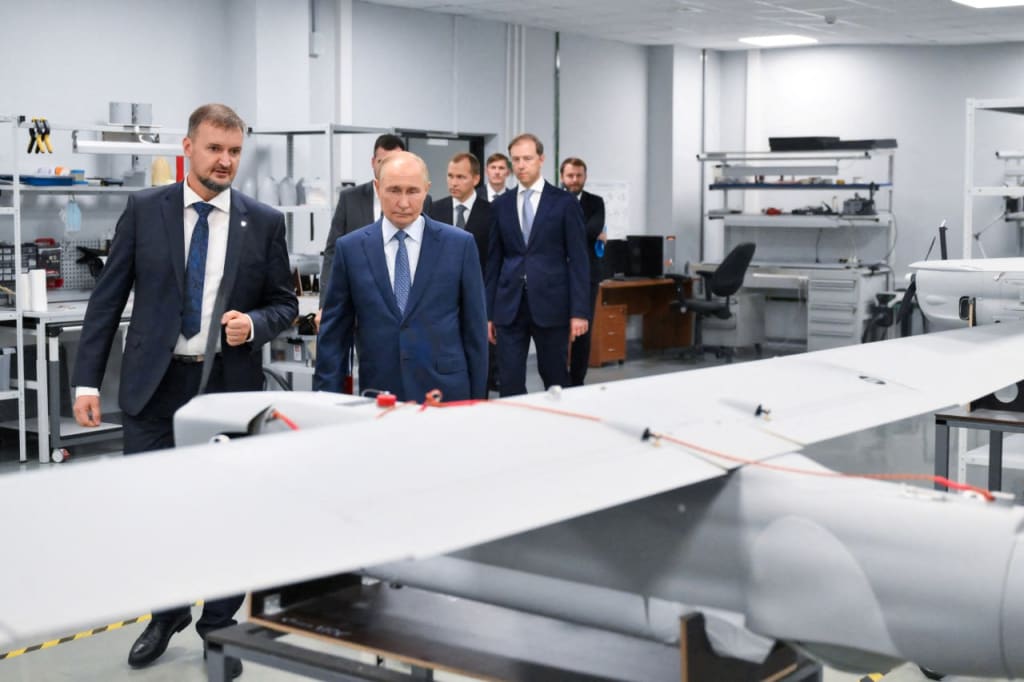
All you need to know about the most powerful weapons of war in Ukraine — drones
The Russians and Ukrainians have integrated drones into every aspect of fighting, from precision fire to intelligence and reconnaissance.
For example, Ukraine's special reconnaissance drone team called “Ochi” give eyes to their artillery helping them to identify targets. The drones are linked to Starlink satellites of the American company SpaceX which supplies high-speed internet connection so everything the drone sees can be streamed to nearby brigades.
Drones have become the definitive weapons fielded in the Russia-Ukraine war. Large surveillance drones patrol high above while smaller drones are used for surveillance and to drop small munitions (grenades, mortar shells, bottles of petrol).
For example, Ukrainian high-school students built drones by welding Chinese-supplied components on to carbon-fibre frames, they were later strapped with explosives in order immobilize armored vehicles and kill artillery brigade operators.
The war also introduced the large Drone Hunter, a six-rotor drone equipped with radar-supported autonomous technology that can launch webs to capture smaller enemy drones.
Drones allow combatants to conduct operations remotely, reducing their exposure to direct combat risks. Drones are extremely economical. Recent advancements in commercially available drones have equipped them with high-level sensors, user-friendly controls, and first-person view capabilities at a lower cost than military-grade systems. These drones, while less durable and less protected than their military grade counterparts, allow forces to absorb losses more easily. The cost implications are substantial if a $500 drone can take out a tank, or if neutralizing a $25,000 drone requires a $250,000 missile.
The Russians and Ukrainians have begun to integrate cutting-edge advancements by deploying drones with robotic machine guns, mine layers and electronic warfare systems. This involves modifying drone bodies by replacing traditional radio-electronic components with fiber-optic systems, significantly improving control over long distances. Fiber-optic drones are immune to terrain related signal degradation and operate at low altitudes, making them harder to detect. Additionally, they evade electronic reconnaissance by emitting no radio signals, enhancing stealth and operational effectiveness on the battlefield.
For example, Russia has Shahed-136 suicide drones that use GPS technology to navigate. Packed with 4G data modems and Ukrainian SIM cards, they can travel using Ukrainian cell-phone towers and Chinese satellite navigation antennas, helping them to dodge Ukrainian electronic warfare defenses.
More recently, AI has been introduced to boost such weapons. AI can process massive data and leveraging algorithms to identify and prioritize potential targets. Drones are equipped with various sensors, including high-resolution cameras, infrared sensors, radar, and light detection and ranging. AI systems are being trained to recognize objects (vehicles, buildings, or people) with deep learning models to get a comprehensive view of the environment in real-time to deliver munitions with high precision.
Many remote-controlled machines, ranging from long-range aircraft and attack boats to inexpensive FPV kamikaze drones, are early versions of weapons that can eventually operate autonomously with AI. Depending on the level of autonomy programmed into the drone, the AI can either autonomously decide to strike or assist human operators by suggesting targets. Autonomous systems operate within predefined rules of engagement, while human operators typically make the final decision. In most cases humans are asked to confirm selected targets and information is sent to battle management systems. This has enabled the time of detection of a target to its destruction to be reduced. Sometimes AI can operate with a high degree of autonomy, making split-second decisions based on complex data analysis.
About the Creator
AHMED KAZEKA
Ahmed Kazeka Is Egyptian youtuber know for his YouTube program ( Ahmed Kazeka). he was born and raised In Red Sea, Egypt, where he started his YouTube channel talking about almost everything in history, science, theories, contradictions
Keep reading
More stories from AHMED KAZEKA and writers in 01 and other communities.
Commercial and Industrial Electrician vs Electrical Contractor: What’s the Difference?
In commercial and industrial projects, electrical work is rarely straightforward. Large loads, complex systems and strict safety requirements mean that the right expertise is essential. Yet many project managers and business owners are unsure whether they need a commercial and industrial electrician or an electrical contractor.
By Danny Adams4 days ago in 01
Can Other Person Still See Saved Messages If I Delete My Snapchat Account?
If you delete your Snapchat account, then is it possible that other persons can still see your saved messages? One of the most commonly asked questions by a lot of Snapchat users. Don't worry; we will describe all the new Snapchat updates to help you operate your Snapchat account better. So, let’s begin the journey!
By Intelligent Creator4 days ago in 01




Comments
There are no comments for this story
Be the first to respond and start the conversation.