
AI Writing Assistants Compared: Which Tool Produces the Most Human-Like Results?
Comparing ChatGPT, Claude, Jasper, Copy.ai, and Writesonic to See Which AI Writing Assistant Produces the Most Natural, Human-Like Content

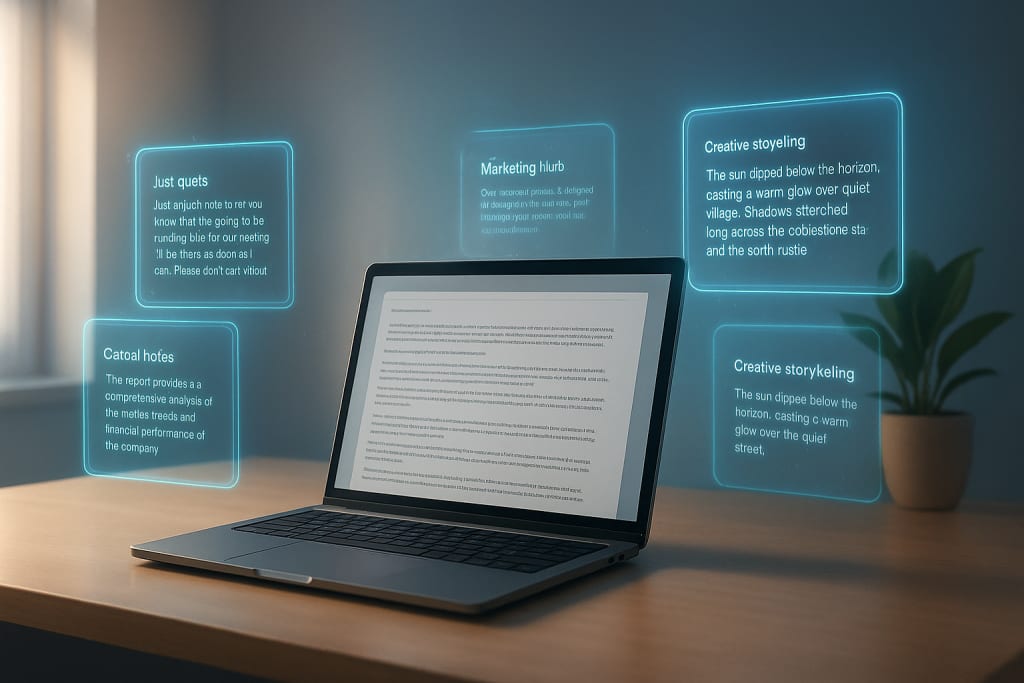
Artificial intelligence is no longer a background technology. It has become an active partner in the creative process. Today, millions of writers, marketers, and businesses lean on AI to generate everything from quick social posts to detailed research articles. But while speed and convenience are obvious benefits, the real test lies in one question: can AI write in a way that feels genuinely human?
This comparison digs into the most popular AI writing assistants of 2025, evaluating their tone, adaptability, and how closely their work mirrors the rhythm and nuance of a human writer.
Why Human-Like Writing Is Crucial
In a digital world where readers skim quickly and competition for attention is fierce, the quality of writing matters more than ever. If content feels robotic, repetitive, or emotionless, audiences disengage almost instantly.
Human writing is dynamic. It blends quick, punchy sentences with longer, more layered thoughts. It uses subtle emotion, cultural references, and creative turns of phrase to keep readers hooked. AI that fails to replicate this balance risks producing text that feels sterile and flat.
Human-like writing also builds trust. Whether it’s a blog post, a sales pitch, or a social update, readers connect with voices that feel authentic. That’s why evaluating which AI comes closest to sounding human isn’t just an academic exercise—it’s about understanding which tools can help businesses and creators truly resonate with their audiences.
The Core Traits of Human-Like AI Writing
When evaluating AI writing assistants, several qualities determine whether their output feels alive or manufactured. Let’s break them down:
- Sentence Variety – Real writing has rhythm. It moves between short and sharp statements, then unfolds into more complex sentences that carry nuance.
- Tone Adaptability – A good AI can switch seamlessly between professional, casual, persuasive, or even playful styles depending on the context.
- Contextual Awareness – Strong AI doesn’t just write sentences. It remembers what came before, creating flow and consistency across a piece of text.
- Creative Nuance – Small details—unexpected word choices, metaphors, and subtle phrasing—make writing feel crafted, not generated.
- Balance of Imperfection – Humans don’t write flawlessly. The best AI mimics this by avoiding overly robotic precision and allowing natural variation.
With these traits in mind, let’s look at how today’s leading writing assistants stack up.
The Leading AI Writing Assistants of 2025
1. ChatGPT (OpenAI)
ChatGPT continues to dominate the field thanks to its conversational style and versatility. It can handle everything from brainstorming story ideas to producing detailed long-form content. What sets it apart is its ability to mimic the flow of natural conversation, weaving sentences together in a way that feels intuitive and alive.
Strengths: Smooth tone transitions, excellent for creative and analytical writing, strong context retention across long passages.
Weaknesses: At times, it can over-explain or produce content that feels a bit “too polished,” lacking the rough edges of human imperfection.
Best For: Writers who need adaptable, natural-sounding content across different formats—blogs, guides, scripts, or creative projects.
2. Claude (Anthropic)
Claude is designed around clarity and safety, but it still produces writing with a natural flow. Its style tends to be professional and measured, with a balanced rhythm that makes it easy to read. Unlike some tools that push creativity at the cost of coherence, Claude leans toward precision while still maintaining warmth.
Strengths: Highly consistent, reliable tone, strong logical structure in long documents.
Weaknesses: Less adventurous in style; can feel reserved when asked for more creative or emotional writing.
Best For: Business communication, research writing, and professional reports where clarity and accuracy are more important than creative flair.
3. Jasper AI
Jasper has carved out a niche in marketing and content creation. It comes preloaded with templates for ads, product descriptions, emails, and SEO-focused articles. While its outputs can be incredibly effective for conversion-driven copy, the human-like quality depends heavily on how prompts are structured. When guided well, Jasper produces snappy, engaging content.
Strengths: Purpose-built for marketing, SEO integration, ready-to-use templates.
Weaknesses: Sometimes formulaic; longer texts may lack depth and variation.
Best For: Marketing teams, copywriters, and entrepreneurs who need quick, conversion-friendly content without starting from scratch.
4. Copy.ai
Copy.ai thrives in short-form creativity. Whether it’s social captions, headlines, or product blurbs, it generates fast, catchy text that grabs attention. However, when tasked with long-form writing, it often struggles to maintain flow and depth, making the results feel more mechanical.
Strengths: Energetic short-form writing, creative bursts for taglines and ads.
Weaknesses: Lacks cohesion in extended pieces, tends toward repetition.
Best For: Quick-hit content like social media posts, slogans, and marketing hooks.
5. Writesonic
Writesonic sits in the middle ground between general-purpose AI and marketing-focused tools. It can generate blog posts, emails, product descriptions, and even chatbot dialogues. Its outputs sound natural when guided by strong prompts, but its long-form writing sometimes requires careful editing to smooth out rough transitions.
Strengths: Versatile with multiple content modes, integrates with SEO workflows.
Weaknesses: Quality varies across formats, less consistent than leaders like ChatGPT.
Best For: Writers who want flexibility across different content types with moderate editing required.
Which AI Feels the Most Human?
The answer depends on the context.
For general writing and storytelling: ChatGPT offers the most natural balance of tone, rhythm, and adaptability. It often produces content that feels like it could have been written by a skilled human.
For professional clarity: Claude shines. Its strength is not flashy creativity but delivering precise, human-like text that feels trustworthy.
For marketing: Jasper dominates with its specialized templates and SEO-driven outputs, though at times it leans too heavily on formulas.
For short bursts of creativity: Copy.ai excels at punchy, human-sounding microcontent.
For versatility with editing: Writesonic provides a wide toolkit but requires human oversight to refine tone and flow.
How to Choose the Right AI Writing Assistant
The “most human-like” AI will vary based on your goals:
- Content creators and bloggers should lean toward ChatGPT for its adaptability.
- Businesses and professionals may prefer Claude’s clarity and precision.
- Marketers will get the most value out of Jasper’s ready-to-go templates.
- Social media managers can benefit from Copy.ai’s quick creative bursts.
- Hybrid writers who need flexibility across multiple formats may find Writesonic a balanced option.
AI writing assistants have reached a point where their text is often indistinguishable from human writing at a glance. But the nuances—sentence rhythm, creativity, and emotional resonance—still make a difference.
The best approach is not to replace human creativity but to use AI as a collaborator. By pairing the speed and consistency of AI with the judgment and voice of a human editor, you get the best of both worlds: writing that’s fast, polished, and still undeniably human.
About the Creator
Richard Bailey
I am currently working on expanding my writing topics and exploring different areas and topics of writing. I have a personal history with a very severe form of treatment-resistant major depressive disorder.
Keep reading
More stories from Richard Bailey and writers in 01 and other communities.
Best AI Gadgets for Students and Remote Workers in 2025: Affordable Everyday Tech That Boosts Productivity
Artificial intelligence is no longer just a buzzword reserved for advanced research or cutting-edge corporations. It has woven itself into everyday life, often in subtle but powerful ways. For students navigating tight academic schedules and remote workers balancing flexibility with discipline, AI-powered gadgets are becoming indispensable. They’re not just futuristic toys—they’re affordable, practical tools that reduce distractions, save time, and enhance learning or productivity.
By Richard Bailey4 months ago in 01
Smart Cloud Security Tips for a Safer Home Network
In these days’s virtual age, cloud offerings have come to be an imperative part of our personal and professional lives. From storing a circle of relatives' snap shots to coping with economic statistics and smart home devices, the cloud offers convenience and accessibility like by no means before. However, with comfort comes a chance. Cyber threats are evolving swiftly, and domestic customers are increasingly turning into targets. Ensuring your house cloud surroundings are secure is now not optionally available—it’s crucial. Here are smart cloud protection recommendations that will help you shield your private home community and private data.
By Muhammad Hanzlaa day ago in 01
Getting Serious About Comedy (Part I)
If I were asked to remark on my life and the childhood that paved some road leading me to this point, I would have to say something about all the funny people who surrounded me for the last 26,872 days (and counting). Somewhere along that road, I became a big fan of laughter and the comedy that spawns it – and, I mean not only my own laughter, but the laughter of others, some of which I have actually been responsible for inducing.
By John Oliver Smith7 days ago in Humor



Comments
There are no comments for this story
Be the first to respond and start the conversation.