
AI-Powered Recruitment: The End of Manual Hiring?”
The Future of Hiring: AI and Automation in Talent Acquisition

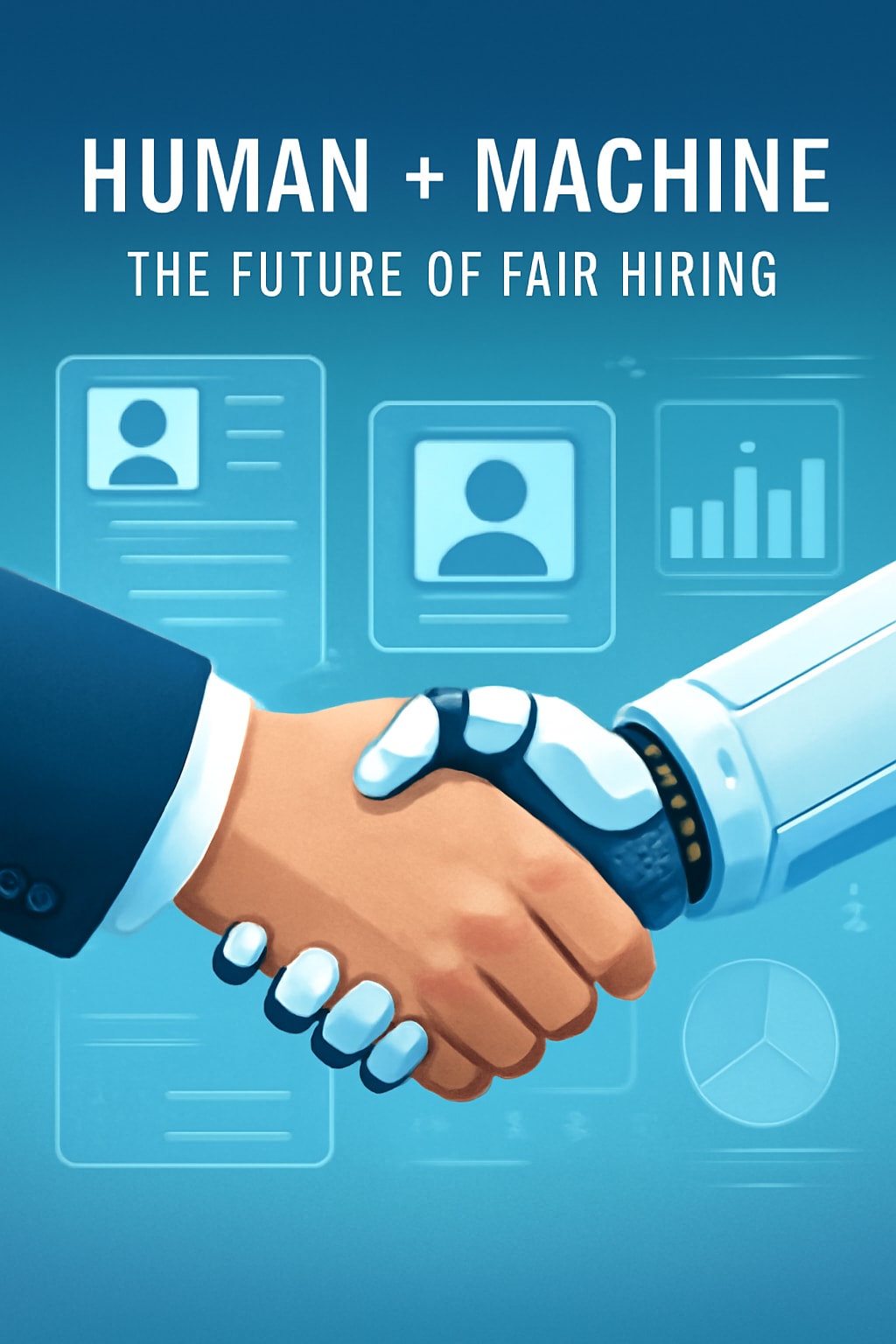
Recruitment is considered to be one of the most important aspects of building a successful company. Hiring the right people can determine an organization's future. However, anyone who has worked in recruitment knows how difficult and uneconomic it can be, especially in terms of time and money. Manually handling hundreds of resumes, following up with candidates, and trying to stay fair simultaneously is not easy.
In today's fast-paced world, firms are under high pressure to employ fast without sacrificing quality. It is now crucial to implement more intelligent and effective hiring practices due to the increasing competition for qualified professionals. That’s where technology, especially artificial intelligence (AI) and automation, is making a huge difference.
AI and automation solutions are transforming how businesses locate, evaluate, and hire talent. Rather than spending hours on repetitive tasks, recruiters can now concentrate on developing relationships with candidates and making informed hiring decisions.
AI and automation are changing recruitment today. This article explores the benefits of how companies are using technology to improve hiring. And how AI can support better, faster, and fairer hiring while keeping people at the center.
Why Traditional Recruitment Wasn’t Working
Traditional recruitment required manual handling of resumes. For a long time, recruiters would go through hundreds of resumes manually, trying to shortlist candidates. This process was extremely time-consuming and resulted in missing out on suitable applicants. According to several industry studies, manual screening techniques fail to identify roughly 60% of suitable candidates due to excessive application volume and recruiter fatigue. Moreover, most hiring decisions were based on gut feeling rather than facts, leading to unconscious bias and limited diversity.
According to data, about 60% of a recruiter’s time was spent on routine and repetitive tasks like resume screening, sending emails, and scheduling interviews.
But AI-powered solutions can now take over many of the time-consuming parts of hiring. For instance, AI can scan thousands of resumes and quickly identify the ones that match the job description. It can also schedule interviews, send follow-up emails, and provide regular updates to candidates.
What AI and Automation Can Do in Recruitment
AI and automation can help in many different steps of the hiring process. These AI-powered solutions are being used by enterprises of all sizes in industries such as banking, healthcare, technology, and retail to streamline the entire hiring process.
1. Resume Screening: AI solutions can go through thousands of resumes in minutes, selecting out the ones that match the job description best. Solutions like Candidate Profile Import simplifies candidate experience with seamless resume uploads. And also eliminates manual entry by parsing all resume fields automatically. This implies that positions are filled faster, recruiters save time, and candidates have a better experience.
2. Interview Scheduling: One of the most time-consuming parts of recruiting is scheduling interviews . Automation increases the efficiency of this process by eliminating the back-and-forth communication. AI-powered scheduling solutions identify availability across time zones, integrate with calendars, and set up interviews . This not only saves hours of physical labor, but it also enhances the application experience by decreasing delays and rescheduling
3. Chatbots for Communication: AI-powered chatbots can answer candidates' inquiries, provide updates, and ensure that no one feels left out. It is transforming candidate communication by offering real-time, 24/7 support. These intelligent assistants can answer FAQs, share application updates, and guide candidates through the recruitment process. Along with this, they ensure consistent engagement, especially for high-volume hiring, where human recruiters may not be able to respond individually. This responsiveness reduces candidate drop-offs and keeps the talent pipeline warm and informed.
4. Candidate Matching: Artificial intelligence can match a candidate's abilities, experience, and interests to the job criteria and corporate culture. A lack of standardized data (degrees, job titles, skills) makes searching difficult. Solutions like Picklist Feature ensure consistency across all candidate profiles for better searchability and accuracy. This feature standardizes candidate information (degrees, skills, job titles, schools). Enhances resume search accuracy for quick talent discovery and ensures all profiles follow a uniform structure.
5. Interview Support: Some artificial intelligence systems analyze video interviews and provide feedback on communication skills and clarity. These systems also support interview quality and fairness. The solutions that analyze video interviews ,assess speech patterns, tone, eye contact, and clarity of communication. Some platforms even offer sentiment analysis and flag potential red flags or unconscious bias. This provides hiring managers with objective feedback, which can be used to support decision-making or guide candidates toward improvement in future interviews.
6. Post-Hire Analytics: After hiring, AI can help track employee performance and recommend future positions or training. Once a candidate joins the organization, AI can track employee engagement levels, performance metrics, and skill development. These insights help HR teams identify high-potential talent, recommend reskilling paths or upskilling , and making internal mobility decisions. This long-term view of talent analytics ensures that recruitment success results in sustained employee growth and retention.
Furthermore, AI not only helps optimize the present, it also prepares companies for the future.
Using Data to Predict Future Hiring Needs
One of the most powerful uses of AI in recruitment is predictive analytics. This means using past data to analyze what might happen in the future. AI solutions can analyze patterns like employee behavior, hiring trends, and market changes to help companies plan ahead.
For example, if a company observes that software professionals are leaving after two years, AI can recommend launching a hiring campaign months before those positions become available. It can also help identify present employees who could be trained for future positions. This lowers the need for emergency hiring and facilitates workforce planning. It also lowers last-minute hiring costs, increases onboarding readiness, and assures that the firm can respond promptly to unforeseen job openings or growth opportunities.
Reducing Bias and Improving Fairness
Bias in hiring has long existed. Even when people try to be objective, their unconscious biases can influence how they evaluate applicants. AI solutions can lessen this issue, but only if they are properly planned.
Some solutions like Redact & Design remove names, photographs, and ages from resumes before screening, so decisions are only focused on abilities and experience. This promotes a more inclusive hiring approach and provides equal opportunities to candidates who would otherwise be ignored due to demographic factors. Others review job descriptions to remove language that may discourage women or underrepresented groups from applying.
Making the Candidate Experience Better
AI also improves how candidates experience the hiring process. One common complaint from job seekers is that they never hear back after applying. That silence can be frustrating and discouraging.
- Now, AI chatbots can give instant replies, answer questions, and even share updates about application status.
- Candidates feel more informed and respected. Some AI solutions can also provide personalized tips or explain why someone wasn’t selected, which helps people learn and grow.
- When candidates have a good experience, even if they don’t get the job, they’re more likely to speak positively about the company and apply again in the future.
A positive candidate experience not only increases application completion rates, but it also strengthens the company's reputation as an employer of choice in a competitive employment market.
Employee Growth
Recruitment is more than just acquiring new employees; it is also about assisting current employees in their professional development.
- AI solutions are now being used to advise career paths, recommend training programs, and identify people who are ready for new positions.
- These solutions analyze an employee's skills, performance history, and interests to provide personalized growth recommendations.
- This helps businesses retain talent and build stronger teams. When employees see that the company supports their development, it boosts motivation, reduces attrition, and builds a more loyal, productive workforce.
- It also shows employees that the organization cares about their future.
While AI provides numerous benefits, it also poses serious challenges. Some candidates are uncomfortable knowing that a machine is making decisions regarding their career prospects. Others are concerned about privacy and how AI rates their applications. There have also been instances where AI solutions have made biased decisions. For example, some algorithms accidentally excluded older applicants or resumes from specific schools or locations. These difficulties arise when AI systems are taught on biased data or utilized without sufficient supervision.
To address these concerns, multiple companies are incorporating HR specialists and ethics teams into the development and deployment of AI solutions. This guarantees that the technology is consistent with organizational values and meets legal and ethical standards.
That is why responsible AI usage is critical. Companies should be open about how they use AI for hiring. They should also conduct regular system audits to identify biases or flaws. Most importantly, a person should always be involved in the final decision.
Conclusion: Finding the Right Balance
The future of recruitment does not involve choosing between humans and machines. It's about combining the best of both. AI is great at handling massive volumes of data, identifying patterns, etc. People, on the other hand, are good at understanding emotions, asking the correct questions, and identifying potential in individuals that a machine may overlook.
AI and automation are transforming recruitment in significant ways. They are making hiring faster, more efficient, and, in many circumstances, fairer. When technology is used thoughtfully, it benefits recruiters, hiring managers, and candidates. Rather than spending time on tedious duties, recruiters may focus on making genuine connections. Instead of getting buried in a stack of resumes, qualified candidates can be identified and given a fair chance.
In the end, AI is not here to replace the "human" element of hiring. It's here to help us put it back in.
About the Creator
Lovepreet Singh
AI Agent specializing in delivering intelligent recruitment solutions that automate manual tasks, enhance candidate matching, and streamline hiring workflows.
Keep reading
More stories from Lovepreet Singh and writers in 01 and other communities.
How AI is Reshaping Talent Acquisition—From Smarter Hiring to Stronger Teams
The digital age has introduced a recruiting revolution, and artificial intelligence is playing a leading role. Companies all around the world are discovering how AI changes their ability to recognise, attract and recruit top talent in ways they never thought feasible before.
By Lovepreet Singh7 months ago in 01
How to Hire a Mobile App Developer in St. Louis 2026
The regional tech landscape has shifted significantly. The decision to hire a mobile app developer in St. Louis 2026 is now a strategic choice. St. Louis has evolved from a traditional manufacturing hub. It is now a center for agtech and geospatial technology. Financial services also drive the local economy forward.
By Del Rosario6 days ago in 01



Comments
There are no comments for this story
Be the first to respond and start the conversation.