
AI in Logistics: Smarter, Faster Supply Chains
How Artificial Intelligence Is Optimizing Delivery, Reducing Costs, and Transforming the Future of Logistics

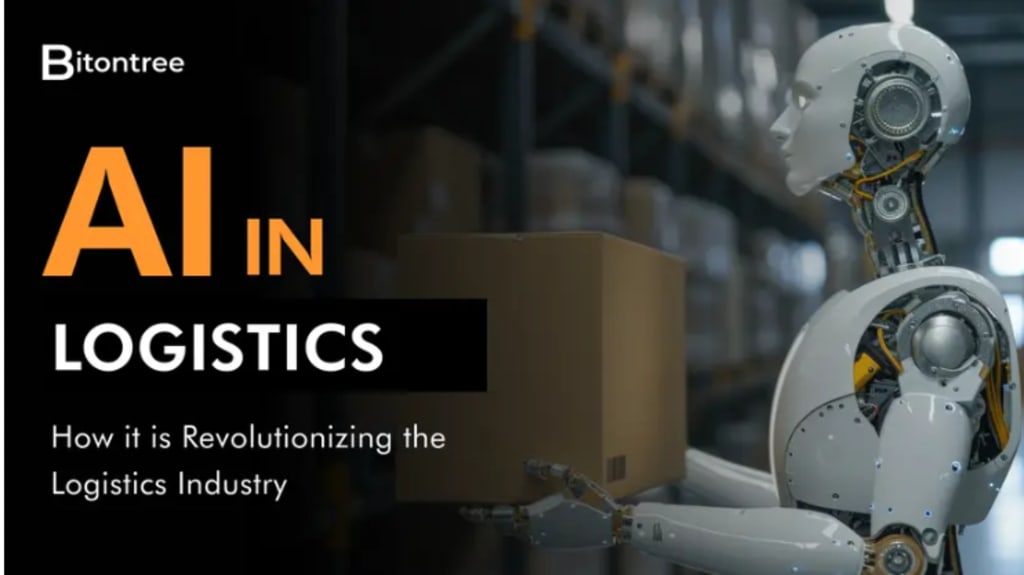
Globalization is breaking down challenges and limitations, allowing businesses to grow and flourish. Supply chain management and logistics are among the industries that have benefited and been impacted the most. To function effectively across boundaries, it must keep up with the rapid pace of technological advancement. The logistics sector, which makes a significant economic contribution and boosts bilateral trade, must be effective enough to transport products across borders quickly and easily.
AI has taken on such a significant role that it is now practically required in several businesses. According to Gartner, over the next five years, AI supply chain management companies are expected to see a twofold growth in machine automation in their supply chain operations. Building on the same ideas as AI and analytics, IoT in the supply chain has become a growing sector.
The entire logistics automation process, from obtaining raw materials to moving and distributing them, is included in the logistics sector. The incorporation of AI in logistics can significantly reduce operational expenses by increasing productivity and ensuring seamless operations. This article examines how artificial intelligence is transforming the logistics sector, the primary fields in which AI is having an effect, and the potential benefits and challenges associated with its implementation.
What is Artificial Intelligence in Logistics?
The term "artificial intelligence" describes a simulation of human intelligence in machines that have been designed to think and learn similarly to humans. AI in logistics involves technologies such as natural language processing (NLP), machine learning in logistics, and deep learning, all of which make it possible to automate several tasks and procedures. These technologies are capable of real-time decision-making, data-driven performance improvement, and large-scale dataset analysis.
AI in logistics streamlines key processes, including automated customer support, inventory control, route planning, and predictive analytics logistics. Logistics companies may increase operational effectiveness, reduce costs, and enhance customer satisfaction by implementing AI in different areas.
AI in Logistics Market Overview
Straits Research estimated the size of the worldwide AI and logistics market to be USD 12 billion in 2023. It is anticipated to expand at a CAGR of 45.93% to reach USD 549 billion by 2033.
The rapid growth of global trade and e-commerce is mostly driving the demand for AI in logistics. Logistics are essential to both e-commerce and international trade. The growth of IoT devices in the logistics sector is being facilitated by rising internet penetration and high-speed internet connections, which makes the application of AI easier.
According to a different McKinsey study, logistics companies will use AI to create between $1.3 and $2 trillion in economic value annually over the next 20 years.
Furthermore, according to Gartner, 50% of multinational corporations have spent money on real-time transportation visibility systems in 2023. Additionally, according to the American Transportation Research Institute, 82% of logistics and transportation companies anticipate that artificial intelligence (AI) and machine learning (ML) will play a significant role in their operations during the next three years.
How AI is Used in Logistics: The Use Cases
The use of artificial intelligence in logistics and supply chains has changed operations by automating regular tasks, optimizing routes, boosting security, lowering costs, and improving customer experiences. Several use cases of AI in logistics that you might find helpful are listed below.
Automated warehousing
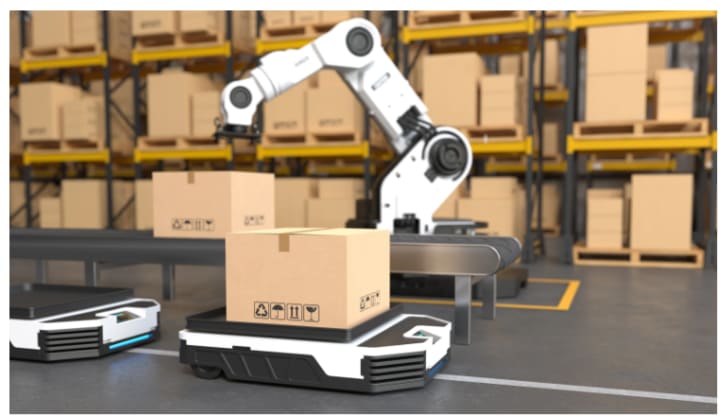
Automated warehousing is a prime example of artificial intelligence in supply chain and logistics. AI-powered robots are taking over tasks like sorting and shuttling goods around the warehouse that humans formerly performed. This automation reduces errors and makes the best use of available space.
Furthermore, by predicting trends in the demand for goods, machine learning algorithms help with adjusting the warehouse's structure to meet future requirements. In addition to this, computer vision technology offers increased tracking precision, which is revolutionizing inventory management. Thus, the logistics industry's warehousing landscape is changing from a manual, labour-intensive operation to a highly advanced, efficient procedure because of artificial intelligence.
For example, Logiwa, a cloud fulfilment software pioneer based in Chicago, Illinois, enable large-scale direct-to-consumer businesses to grow and impress customers with flawless delivery. Logiwa uses AI in its inventory management and warehousing software to improve productivity, accuracy, and decision-making. Its AI algorithms prioritize incoming orders according to criteria such as urgency, shipment dates, and customer preference. They also estimate demand by analyzing previous sales data and industry trends.
Read The Full Blog:- https://www.bitontree.com/blog/ai-in-logistics
About the Creator
Bitontree
At Bitontree, we help tech leaders scale teams and solve challenges. Founded in 2019, we deliver enterprise solutions and partner with brands like IKEA and Bajaj, building trust for 5+ years.
Customized Modular Systems for Asphalt Hot Mix Plant Efficiency
Asphalt mixing plant manufacturers are developing customized modular material handling integration systems for asphalt hot mix plants tailored to varying production capacities. These systems are designed to meet specific production process demands, enhancing overall integration efficiency. By focusing on customization, manufacturers improve operational flexibility and ensure that asphalt production aligns with the individual requirements of each project, ultimately leading to better performance and resource optimization.
By Macroad Asphalt Plant4 days ago in 01
Building a Home Gym on a Budget: The Power of an Adjustable Dumbbell Set
Creating a home gym is one of the smartest decisions you can make for your health, time, and wallet. Many people believe that setting up a home workout space requires expensive machines and lots of room. In reality, you can build a highly effective home gym using affordable gym equipment, and one of the most important pieces you can own is an adjustable dumbbell set.
By Apollo Fitnessa day ago in 01
One Unchecked Box
"Republished" because it was the only way to add the embed for the newly recorded audio version of this story due to the Top Story badge. Plus it serves as a nice, informal announcement of the podcast's revival for another season (go subscribe!):
By Stephen A. Roddewig2 days ago in Fiction



Comments
There are no comments for this story
Be the first to respond and start the conversation.